In case anyone is wondering, this is not sudden. This is not improvised. And this is certainly not accidental.

In case anyone is wondering, this is not sudden. This is not improvised. And this is certainly not accidental.
Sgt. Brad “Iceman” Colbert: “I was one of those unfortunates adopted by upper middle-class professionals and nurtured in an environment of learning, art and a socio-religious culture steeped in more than 2000 years of Talmudic tradition. Not everyone is lucky enough to have been raised in a whiskey tango trailer park…”
There’s something darkly funny about learning theology from comedians, prestige television, war dramas, and a paranoid FBI agent chasing demons.
The closest I got to Jesus was crawling into one of the traditional birth grotto sites in Bethlehem. What I entered was the Grotto of the Nativity beneath the Church of the Nativity in Bethlehem. The physical act of me crawling or bowing low is not accidental there. It is built into the architecture.

To enter the church itself, every visitor must pass through what is known as the Door of Humility. The stone doorway stands roughly four feet high. It was reduced in size centuries ago to prevent looters from riding in on horseback, but today it forces every pilgrim, tourist, skeptic, and believer alike to bend down. No one walks in upright. Everyone bows.
Once inside the ancient basilica, you descend narrow stone stairs into the subterranean cave believed by many Christians to mark the birthplace of Jesus.
Fox Mulder: “You know, they say when you talk to God it’s prayer, but when God talks to you, it’s schizophrenia.”
The grotto itself is small, roughly twelve meters long and three meters wide. To reach the fourteen-point silver star set beneath a marble altar marking the traditional site of the birth, visitors kneel or crouch low. You do not stand tall there. You press close to stone. You wait your turn. You lower yourself.
That embodied humility stays with you. You cannot muscle your way in. You cannot posture. The space removes your height.
That contrast is the story.
This is not an attack on faith.
It is an examination of power.
If you want to understand modern America, from Christian nationalism to culture wars to the moral branding of billionaires, you have to examine the distance between the teachings attributed to Jesus of Nazareth and the political systems that invoke him.
Fox Mulder: “Religion has masqueraded as the paranormal since the dawn of time to justify some of the most horrible acts in history.”
The earliest Jesus movement was not aligned with state authority. It emerged in Roman-occupied Judea among the poor, colonized, and socially marginal. Jesus was a Jewish teacher operating out of Galilee, a working-class region far from imperial prestige. The core themes attributed to him were direct and destabilizing: the poor come first, the meek inherit, love your enemies, blessed are the peacemakers.
According to the gospels, he rode into Jerusalem on a donkey. Roman officials entered cities on war horses surrounded by soldiers and banners. One image projected domination. The other projected humility. Within days, he was arrested and executed by the state.
That image matters. A teacher proclaiming a kingdom not of Caesar, entering the city without an army, then being killed by imperial authority. It is difficult to reconcile that narrative with modern movements that equate Christianity with state control.
Within a few centuries, however, Christianity moved from persecuted sect to legalized and eventually imperial religion under Constantine. Once the faith fused with state machinery, its moral vocabulary could be mobilized for conquest. That shift altered history.
Fox Mulder: “He may well have His reasons but He seems to use a lot of psychotics to carry out His job orders.”
Christianity has been invoked to justify the Crusades, the Spanish Inquisition, the Doctrine of Discovery, European colonization, chattel slavery in the Americas, and segregationist theology. The cross has stood beside empire more than once.
When Christopher Columbus brutalized the Taíno people in the Caribbean, the violence unfolded under Christian banners. Yet within that same religious framework emerged figures such as Bartolomé de las Casas, who condemned Spanish atrocities and argued for Indigenous rights.

In the American South, pro-slavery theologians quoted scripture to defend human bondage. At the same time, abolitionists such as Frederick Douglass, alongside Quakers and Harriet Tubman, grounded their resistance in biblical moral claims.

During the rise of Nazism, Adolf Hitler appropriated Christian symbolism for nationalist purposes, while Dietrich Bonhoeffer resisted in the name of Christ and paid with his life.
Every time Christianity has fused with authoritarian power, resistance has also emerged from within Christianity itself. That pattern repeats because the source texts contain internal tension. They can be read as tools of empire or as indictments of empire.
One of the clearest passages often cited in this debate appears in Matthew 25:31 to 46, sometimes called the judgment of nations. The standard presented there is not doctrinal purity or national strength. It is simple and concrete. Feed the hungry. Clothe the naked. Care for the sick. Visit prisoners. Welcome the stranger.
There is no reference to wealth accumulation as proof of blessing.
There is no endorsement of punishing outsiders.
The moral test is how the vulnerable are treated.
That framework creates friction in a political culture that often equates strength with dominance. In contemporary America, some movements identify themselves as defenders of Christian values while pursuing policies focused on border enforcement, punitive criminal justice, deregulation that benefits concentrated wealth, and cultural control through legislation.
Supporters argue that such policies preserve order, protect religious freedom, and defend traditional values. Critics argue that these agendas conflict with the ethical priorities attributed to Jesus, particularly concerning immigrants, the poor, and prisoners. The disagreement is not merely theological. It is political and sociological.
Commentator and author John Fugelsang has spoken on Morning Joe that the teachings of Jesus read as radically countercultural when compared with modern strongman politics. Whether one agrees with him or not, the contrast he highlights is real. Strongman politics emphasizes order, loyalty, and dominance. The gospel narratives emphasize humility, enemy love, and solidarity with the marginalized.
The attraction of power is not uniquely modern. Political authority offers stability, identity, and a sense of moral clarity. When faith becomes intertwined with that authority, it can supply divine validation for policy preferences. For many believers, political alignment feels like moral responsibility. For others, it feels like a betrayal of the faith’s core teachings.
Another tension emerges around wealth. Prosperity theology, popular in some American churches, teaches that material success reflects divine favor. Yet the New Testament contains repeated warnings about the spiritual dangers of wealth. The famous line about a camel passing through the eye of a needle underscores that tension. The gap between those warnings and the celebration of affluence in certain religious circles fuels ongoing debate about what Christianity actually demands.
Throughout history, reform movements have arisen within Christianity to challenge its alignment with coercive power. Francis of Assisi rejected violence during the Crusades and pursued peace. Abolitionists invoked scripture against slaveholders. Civil rights leaders such as Martin Luther King Jr. framed desegregation not as rebellion against Christianity but as fidelity to its moral vision.
The tension that began with a man entering a city on a donkey while an empire ruled from horseback has not disappeared. It has merely changed form. Whether one sees Jesus as divine, human, mythic, or symbolic, the ethical framework associated with his name continues to collide with political authority.
And perhaps that is why the memory of crawling into that grotto matters.
The architecture forces humility. The politics surrounding his name often do not.
Explore New JerseySunset Daily News
A profound shift is underway inside American political and economic thought. Long viewed as a defining element of “tough on crime” policy, the death penalty
From a campaign-strategy and political-science perspective, the February 11 oversight hearing involving Attorney General Pam Bondi
Source: The Pam Bondi Hearing Exposed How Democrats Are Squandering One of the Last Tools They Have Left
When “Family Business” Becomes Public Business.For more than a decade, American politics has been haunted by a convenient distraction
“Corporations Are People, My Friend” — When Profit Becomes a License to Exploit the Planet, From Taiji’s Coves to the Clouds Above Us
Source: When Profit Becomes a License to Exploit the Planet, From Taiji’s Coves to the Clouds Above Us
Anger is an easy currency in American politics. It is loud, it spreads quickly, and it creates the illusion of engagement.
There are moments in a nation’s history when failure stops being abstract. It stops being about polling errors, campaign messaging, or post-election
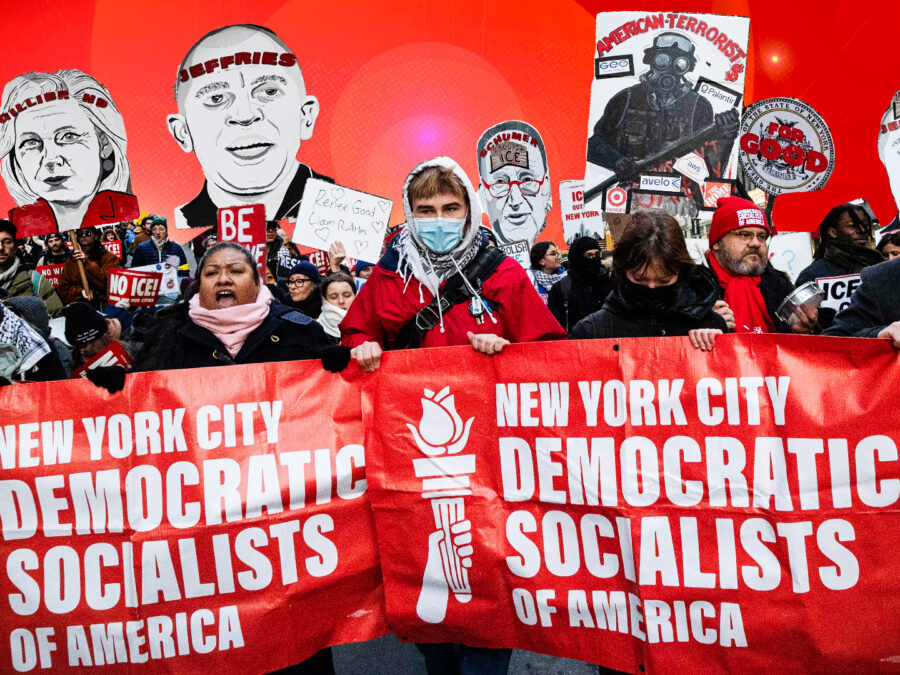
Source: The Democrats’ Are To Blame For the Tragic Death of Renee Nicole Good
Investment decisions matter — not just for financial markets, but for the climate. In 2025, venture capital and private equity investors made headlines
For all the money, consultants, polling, and media infrastructure surrounding the modern Democratic Party, there remains a staggering and almost inexplicable