Corporations Are People, My Friend: Survivor is Not Hard – Stop Being Delusional!
For a show that has built its brand on the mythology of hardship, endurance, and the human instinct to survive, the long-running reality competition Survivor has always relied on a carefully constructed illusion. That illusion—now in its fiftieth season—is that contestants are battling nature in a raw fight for survival.
But when a modern television production with a multimillion-dollar budget, a full medical infrastructure, evacuation helicopters, and a network safety team decides to hand out captive animals to contestants for entertainment drama, the question becomes unavoidable:
“Is this survival—or simply stupidity, not to mention hypocrisy and delusion?”
The controversy surrounding the show’s repeated use of live chickens as “food dilemmas” reveals something much deeper than a minor production choice. It exposes a longstanding ethical contradiction at the center of one of television’s most famous reality franchises.
Because the truth is simple: no one on that island is actually surviving anything in the real sense of the word.
And when a program with enormous resources stages the killing of animals for dramatic tension rather than necessity, the line between storytelling and exploitation becomes impossible to ignore.
The Myth of “Survival” on Modern Reality Television
The premise of Survivor has always been marketed as a test of endurance: strangers stranded in harsh environments, forced to rely on their instincts, their alliances, and the land around them.
But that narrative collapsed under even basic scrutiny.
Contestants on the show operate under one of the most controlled survival environments in television history. Every player is monitored continuously by production crews, safety teams, and medical professionals. If someone becomes seriously ill, injured, dehydrated, or malnourished, intervention is immediate.
Medical tents exist off-camera. Doctors are on standby around the clock. Emergency evacuation helicopters are positioned within reach. IV fluids, antibiotics, surgical supplies, and full diagnostic capabilities are available at a moment’s notice.
This isn’t speculation—it’s part of the show’s documented production structure.
When contestants suffer injuries or health complications, they are often treated within minutes by medical staff. In more serious situations, players are removed from the game entirely and transported to hospitals.
In other words, the environment may be uncomfortable, but it is never life-threatening in the way the show’s marketing suggests.
Which makes the “survival” argument surrounding the use of live animals increasingly difficult to defend.
Because if contestants are protected from genuine starvation, dehydration, and fatal injury by a production team worth millions of dollars, then the presence of captive animals is not a necessity.
It’s a choice.
The Chicken Dilemma: Manufactured Drama Disguised as Survival
One of the most controversial recurring moments in the history of Survivor is when tribes are given cages of live chickens as a reward or supply drop.
Producers frame the situation as a moral decision: keep the birds alive for eggs, or kill them immediately for protein.
Host Jeff Probst has publicly described the scenario as a “moral dilemma,” designed to force contestants to confront difficult decisions about survival and hunger.
But critics argue that the dilemma itself is artificial. The chickens are already being kept in captivity and then used to generate profit, no different from animals exploited in a circus. How is that any different from training an elephant to perform tricks or keeping an ape confined in a zoo enclosure for public entertainment?
The damage is already done. These animals cannot survive in that territory. In many ways, they are doomed before they even arrive. There is also the question of how long they are kept in captivity before the show even begins, and then they must be transported by plane to remote filming locations. Many viewers still remember the time several chickens nearly drowned after being thrown into the ocean in cages for the sake of a dramatic moment.
It is odd behavior. It is irresponsible behavior. And ultimately, it is reckless behavior.
Besides that, the chickens are not wild animals that contestants hunted or captured themselves. They are domesticated livestock transported by production crews, kept in captivity, and then delivered to contestants specifically to create conflict and television drama.
If the show were truly about survival in the wild, the logic would be very different.
Contestants would hunt. They would trap animals. They have always been able to fish or forage.
They would obtain food the same way humans have done throughout history—through effort, skill, and direct engagement with their environment.
Instead, production literally hands them animals in cages.
That isn’t survival.
It’s a scripted scenario designed to provoke reactions.
The Legal Loophole That Allows It
From a legal standpoint, CBS and the producers of Survivor are not violating U.S. law by providing chickens to contestants for consumption.
American law allows the slaughter of animals for food, and broadcasting such acts is not illegal. The 2019 federal PACT Act—designed to combat extreme animal cruelty such as “crushing” videos—does not prohibit the killing of livestock intended for consumption. The term often used to justify this is “sustenance.”
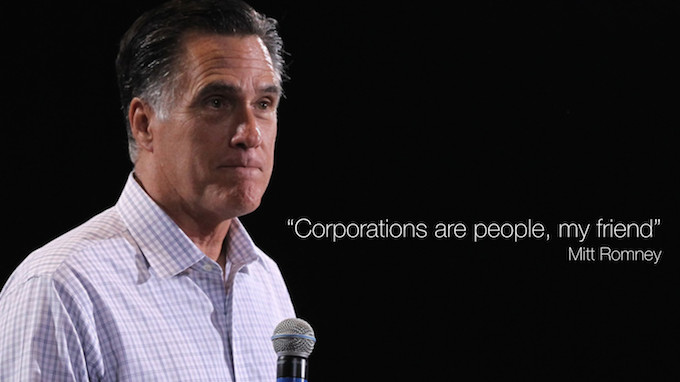
From a Corporations Are People, My Friend point of view, there is no moral clause in the 14th Amendment, and therefore companies are generally expected to focus on generating profit and revenue before showing any semblance of moral responsibility.
In other words, the show operates within the boundaries of existing law.
But legality does not automatically equal ethical justification.
Television productions make editorial decisions constantly—what to show, what not to show, what narratives to construct.
Choosing to stage the killing of animals in captivity for dramatic tension is not a legal requirement.
It’s a creative decision.
And that decision has been criticized for decades.
Animal Welfare Concerns and Longstanding Backlash
Animal advocacy groups have repeatedly criticized the show’s use of animals for entertainment.
Organizations including PETA and United Poultry Concerns have argued that killing animals for dramatic television moments is unnecessary, particularly in a controlled production environment where starvation is never truly at stake.
Critics also raise another serious concern: contestant inexperience.
Most reality show participants are not trained in humane slaughter techniques. Improper handling or killing methods can cause prolonged suffering for animals—an outcome animal welfare advocates say is entirely avoidable.
In response to criticism, the show often avoids airing the actual killing of animals, cutting away before the moment occurs.
That is not a valid excuse, since editing does not change the reality behind the scenes.
The animals are still placed into captivity for the purpose of creating that moment.
The Game Show Reality
Strip away the mythology, and Survivor is not actually a survival program.
It is a competition game show.
Its core mechanics revolve around alliances, social manipulation, strategic voting, and psychological gameplay. The winner is determined not by hunting ability or wilderness skills, but by a jury of eliminated players evaluating social relationships and strategy.
In that sense, the show has evolved into something much closer to other reality competitions like Big Brother than an authentic survival scenario.
And there is nothing inherently wrong with that.
But the disconnect becomes glaring when the show attempts to maintain the aesthetic of wilderness survival while simultaneously operating as a carefully engineered television production.
Because if the central challenge of the show is social strategy rather than survival, then the inclusion of animals becomes even harder to justify.
The Illusion of Hardship
The reality is that contestants endure discomfort, hunger, and exhaustion during filming. Those conditions are real.
But the show’s structure ensures that no participant is ever allowed to deteriorate to the point of genuine life-threatening starvation.
If that point were ever reached, medical staff would intervene immediately.
That safety net exists because modern television production cannot legally or ethically allow contestants to die or suffer permanent harm.
Which leads to an obvious contradiction.
If the show ensures contestants will never starve to death, then providing live animals for slaughter cannot be defended as a necessary survival mechanism.
It becomes what critics have argued all along: Aninals being is for entertainment and as a way to make money.
A Production Choice That Doesn’t Need to Exist
Television evolves constantly.
Reality shows reinvent themselves, adjust formats, and respond to cultural shifts.
For a franchise as successful and long-lasting as Survivor, eliminating the use of captive animals would not damage the show’s premise.
If anything, it could strengthen it.
Contestants could rely entirely on fishing, foraging, and natural food sources. The narrative could focus more heavily on strategy, resilience, and teamwork—elements that already define the show’s most memorable moments.
Instead, production periodically returns to a controversial device that critics say exists only to manufacture drama.
And that decision increasingly feels out of step with the modern conversation about animal welfare and ethical entertainment.
A Question the Show Can No Longer Avoid
Reality television has always thrived on tension and difficult choices.
But there is a growing difference between authentic challenges and staged dilemmas involving captive animals.
If Survivor truly wants to maintain the credibility of its survival narrative, then the most logical step forward may be the simplest one:
Stop handing contestants animals.
Let players hunt if they can. Let them fish if they’re capable. Let them forage and adapt to the environment around them.
That would be survival.
Delivering chickens in cages to contestants on a multimillion-dollar television set is something else entirely.
Survivor 50 has been promoted as a season built around the idea that the fans would vote on everything. That premise is exactly why I decided to give the show a chance and start watching this season. I believed that if the audience truly had a voice in shaping the game, it would reflect a broader sense of what viewers actually want to see. But one major decision seems to have been made without asking the fans at all: the use of live chickens.
If the entire season is supposed to be driven by fan voting, then why wasn’t America asked whether contestants should be given live chickens to kill for food? That seems like a significant decision that directly involves animal life, and it would have been easy to include it as one of the questions put to the audience. Instead, CBS and the Survivor production staff made that choice themselves while still promoting the idea that viewers were voting on the direction of the game.
That’s where the frustration comes in. The show encouraged viewers to believe they had a say in how things would unfold, yet when it came to something as consequential as the use of live animals, the audience was never given the opportunity to weigh in. I genuinely believed that if the question had been asked, many viewers would have voted against using live chickens in the game. But we’ll never know, because the producers never asked.
When a season is marketed as being controlled by fan votes, selectively leaving out certain decisions undermines that entire premise. If the show truly wanted the audience to shape the experience, it should have trusted viewers enough to ask them about every major aspect of the game—including whether live animals should be part of it at all. By avoiding that question, the production made its own decision while still claiming the season belongs to the fans.
And after fifty seasons, audiences are increasingly recognizing the difference.
Today at the Sunset Entertainment & Media Companies
War, Messaging Failures, and the Strange Political Theater of American Power in 2026
Corporations Are People, My Friend In the modern American political ecosystem, public narratives often move faster than facts. The result is a strange collision of political messaging, geopolitical conflict, media spectacle, and public frustration. Few moments illustrate that collision more clearly than the current global landscape in 2026, a moment where the United States finds
Sgt. Brad “Iceman” Colbert: “I was one of those unfortunates adopted by upper middle-class professionals and nurtured in an environment of learning, art and a socio-religious culture steeped in more than 2000 years of Talmudic tradition. Not everyone is lucky enough to have been raised in a whiskey tango trailer park…”
There’s something darkly funny about learning theology from comedians, prestige television, war dramas, and a paranoid FBI agent chasing demons.
The closest I got to Jesus was crawling into one of the traditional birth grotto sites in Bethlehem. What I entered was the Grotto of the Nativity beneath the Church of the Nativity in Bethlehem. The physical act of me crawling or bowing low is not accidental there. It is built into the architecture.
To enter the church itself, every visitor must pass through what is known as the Door of Humility. The stone doorway stands roughly four feet high. It was reduced in size centuries ago to prevent looters from riding in on horseback, but today it forces every pilgrim, tourist, skeptic, and believer alike to bend down. No one walks in upright. Everyone bows.
Once inside the ancient basilica, you descend narrow stone stairs into the subterranean cave believed by many Christians to mark the birthplace of Jesus.
Fox Mulder: “You know, they say when you talk to God it’s prayer, but when God talks to you, it’s schizophrenia.”
The grotto itself is small, roughly twelve meters long and three meters wide. To reach the fourteen-point silver star set beneath a marble altar marking the traditional site of the birth, visitors kneel or crouch low. You do not stand tall there. You press close to stone. You wait your turn. You lower yourself.
That embodied humility stays with you. You cannot muscle your way in. You cannot posture. The space removes your height.
That contrast is the story.
This is not an attack on faith.
It is an examination of power.
If you want to understand modern America, from Christian nationalism to culture wars to the moral branding of billionaires, you have to examine the distance between the teachings attributed to Jesus of Nazareth and the political systems that invoke him.
Fox Mulder: “Religion has masqueraded as the paranormal since the dawn of time to justify some of the most horrible acts in history.”
The earliest Jesus movement was not aligned with state authority. It emerged in Roman-occupied Judea among the poor, colonized, and socially marginal. Jesus was a Jewish teacher operating out of Galilee, a working-class region far from imperial prestige. The core themes attributed to him were direct and destabilizing: the poor come first, the meek inherit, love your enemies, blessed are the peacemakers.
According to the gospels, he rode into Jerusalem on a donkey. Roman officials entered cities on war horses surrounded by soldiers and banners. One image projected domination. The other projected humility. Within days, he was arrested and executed by the state.
That image matters. A teacher proclaiming a kingdom not of Caesar, entering the city without an army, then being killed by imperial authority. It is difficult to reconcile that narrative with modern movements that equate Christianity with state control.
Within a few centuries, however, Christianity moved from persecuted sect to legalized and eventually imperial religion under Constantine. Once the faith fused with state machinery, its moral vocabulary could be mobilized for conquest. That shift altered history.
Fox Mulder: “He may well have His reasons but He seems to use a lot of psychotics to carry out His job orders.”
Christianity has been invoked to justify the Crusades, the Spanish Inquisition, the Doctrine of Discovery, European colonization, chattel slavery in the Americas, and segregationist theology. The cross has stood beside empire more than once.
When Christopher Columbus brutalized the Taíno people in the Caribbean, the violence unfolded under Christian banners. Yet within that same religious framework emerged figures such as Bartolomé de las Casas, who condemned Spanish atrocities and argued for Indigenous rights.
In the American South, pro-slavery theologians quoted scripture to defend human bondage. At the same time, abolitionists such as Frederick Douglass, alongside Quakers and Harriet Tubman, grounded their resistance in biblical moral claims.
During the rise of Nazism, Adolf Hitler appropriated Christian symbolism for nationalist purposes, while Dietrich Bonhoeffer resisted in the name of Christ and paid with his life.
Every time Christianity has fused with authoritarian power, resistance has also emerged from within Christianity itself. That pattern repeats because the source texts contain internal tension. They can be read as tools of empire or as indictments of empire.
One of the clearest passages often cited in this debate appears in Matthew 25:31 to 46, sometimes called the judgment of nations. The standard presented there is not doctrinal purity or national strength. It is simple and concrete. Feed the hungry. Clothe the naked. Care for the sick. Visit prisoners. Welcome the stranger.
There is no reference to wealth accumulation as proof of blessing.
There is no endorsement of punishing outsiders.
The moral test is how the vulnerable are treated.
That framework creates friction in a political culture that often equates strength with dominance. In contemporary America, some movements identify themselves as defenders of Christian values while pursuing policies focused on border enforcement, punitive criminal justice, deregulation that benefits concentrated wealth, and cultural control through legislation.
Supporters argue that such policies preserve order, protect religious freedom, and defend traditional values. Critics argue that these agendas conflict with the ethical priorities attributed to Jesus, particularly concerning immigrants, the poor, and prisoners. The disagreement is not merely theological. It is political and sociological.
Commentator and author John Fugelsang has spoken on Morning Joe that the teachings of Jesus read as radically countercultural when compared with modern strongman politics. Whether one agrees with him or not, the contrast he highlights is real. Strongman politics emphasizes order, loyalty, and dominance. The gospel narratives emphasize humility, enemy love, and solidarity with the marginalized.
The attraction of power is not uniquely modern. Political authority offers stability, identity, and a sense of moral clarity. When faith becomes intertwined with that authority, it can supply divine validation for policy preferences. For many believers, political alignment feels like moral responsibility. For others, it feels like a betrayal of the faith’s core teachings.
Another tension emerges around wealth. Prosperity theology, popular in some American churches, teaches that material success reflects divine favor. Yet the New Testament contains repeated warnings about the spiritual dangers of wealth. The famous line about a camel passing through the eye of a needle underscores that tension. The gap between those warnings and the celebration of affluence in certain religious circles fuels ongoing debate about what Christianity actually demands.
Throughout history, reform movements have arisen within Christianity to challenge its alignment with coercive power. Francis of Assisi rejected violence during the Crusades and pursued peace. Abolitionists invoked scripture against slaveholders. Civil rights leaders such as Martin Luther King Jr. framed desegregation not as rebellion against Christianity but as fidelity to its moral vision.
The tension that began with a man entering a city on a donkey while an empire ruled from horseback has not disappeared. It has merely changed form. Whether one sees Jesus as divine, human, mythic, or symbolic, the ethical framework associated with his name continues to collide with political authority.
And perhaps that is why the memory of crawling into that grotto matters.
The architecture forces humility. The politics surrounding his name often do not.
Today at the Sunset Entertainment & Media Companies
A profound shift is underway inside American political and economic thought. Long viewed as a defining element of “tough on crime” policy, the death penalty