Balanced Budget Amendment Fails in the House as Congress Rejects Its Own Opportunity to Rein in Spending
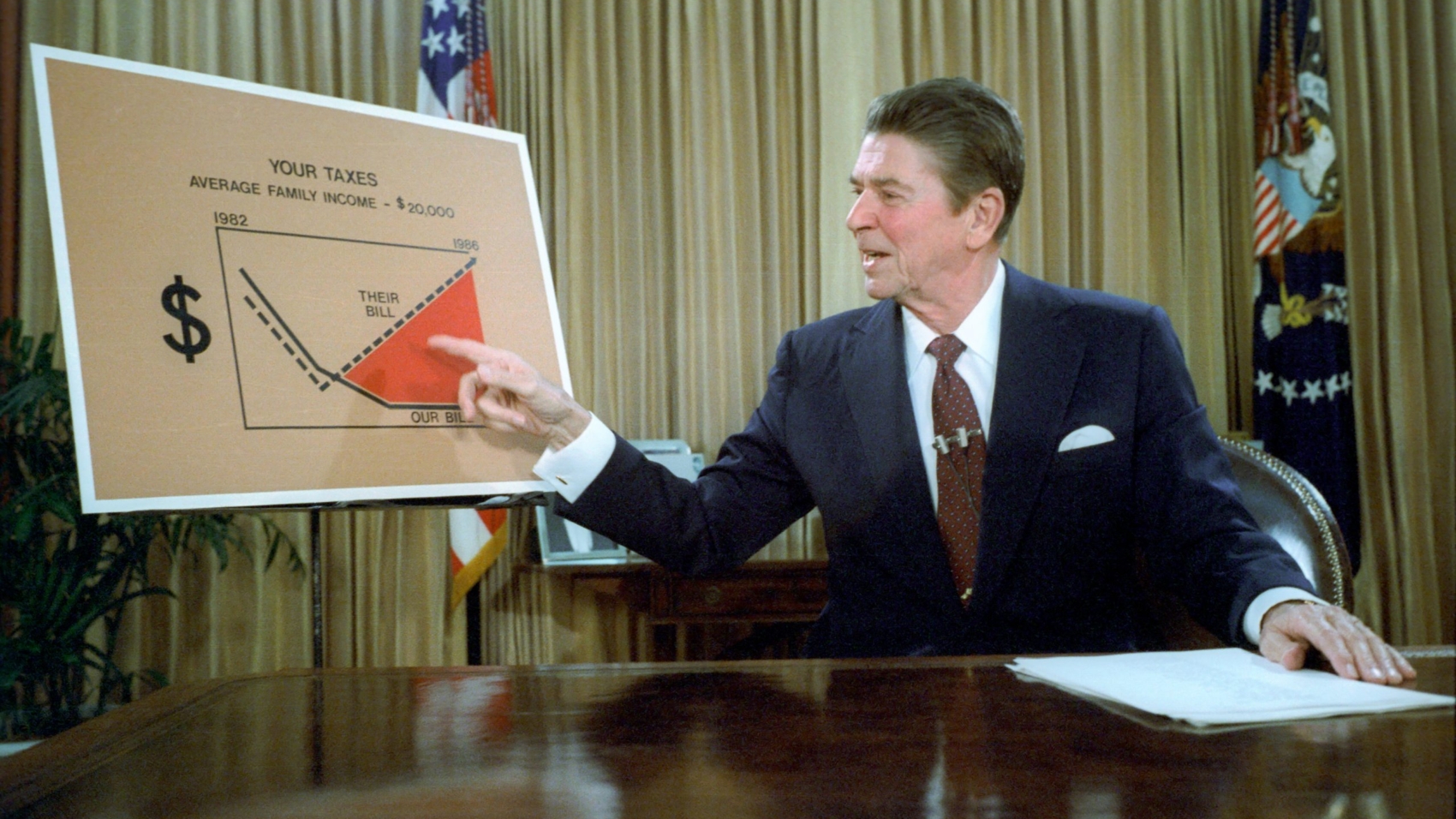
Source: Congress Can’t Even Pass a Bill to Balance the Budget – They Are Not Even Trying!

Balanced Budget Amendment Fails in the House as Congress Rejects Its Own Opportunity to Rein in Spending
Source: Congress Can’t Even Pass a Bill to Balance the Budget – They Are Not Even Trying!

The problem is not complicated. Democrats are bad at messaging, and Republicans are very good at it. That gap is deciding what people believe
Source: Democrats Still Don’t Understand Messaging—And It will Continue to Cost Them

As March draws to a close, the global dance music community turns its full attention to downtown Miami, where the Ultra Music Festival 2026 is set
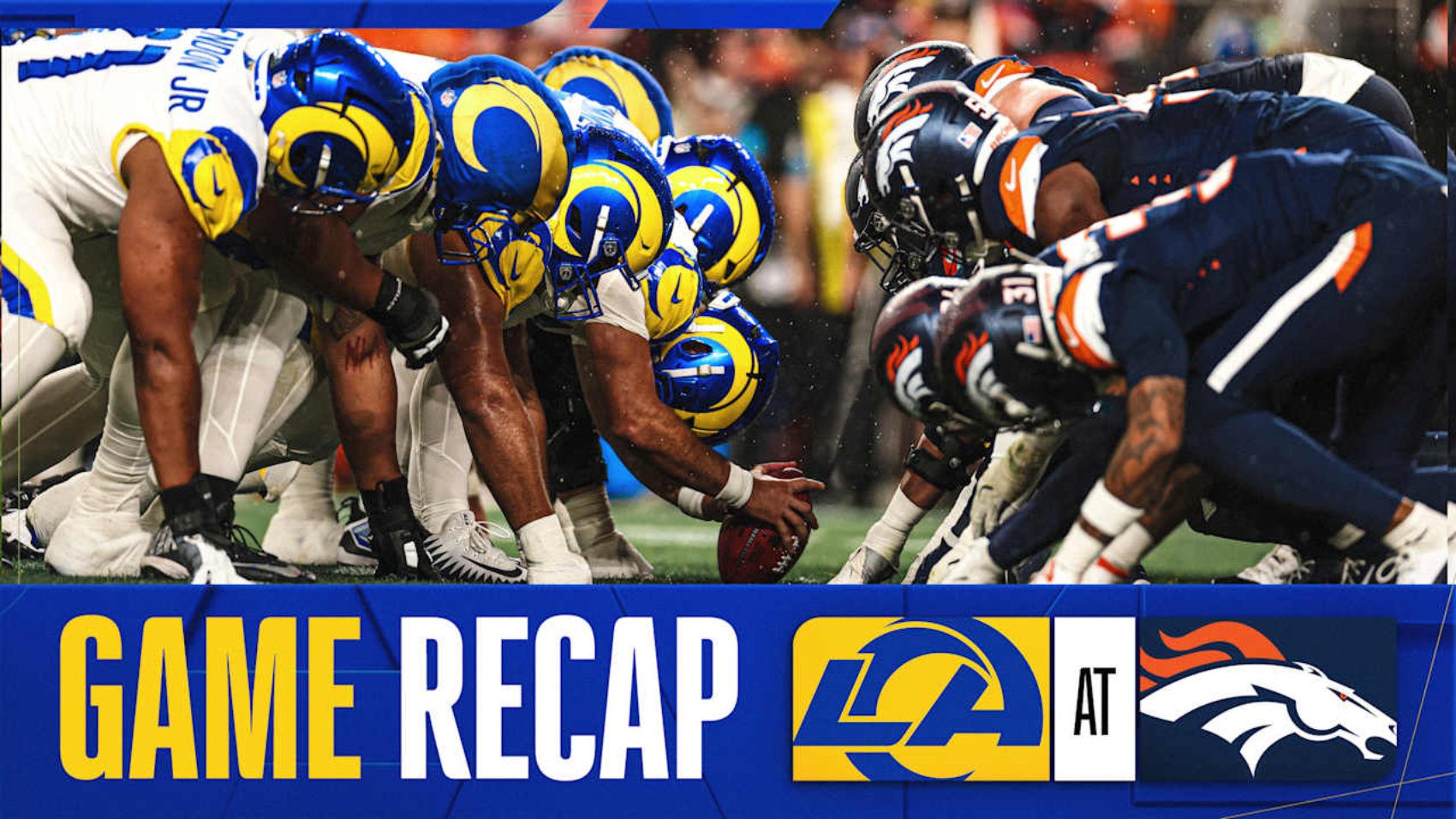
The funniest thing about the NFL in March is how quickly chaos gets mistaken for truth. A rumor catches one gust of wind, gets repeated often enough, and suddenly people start talking about it like it was a front-office master plan all along. I got a notification about it on my phone during a very confusing breakfast. Not only was the rumor confusing, but I was also baffled that this breakfast place thought it was acceptable to cook waffles in a microwave. But anyway, that is exactly what happened with the Los Angeles Rams and the Davante Adams noise over the weekend.
Let’s shut that down right away.
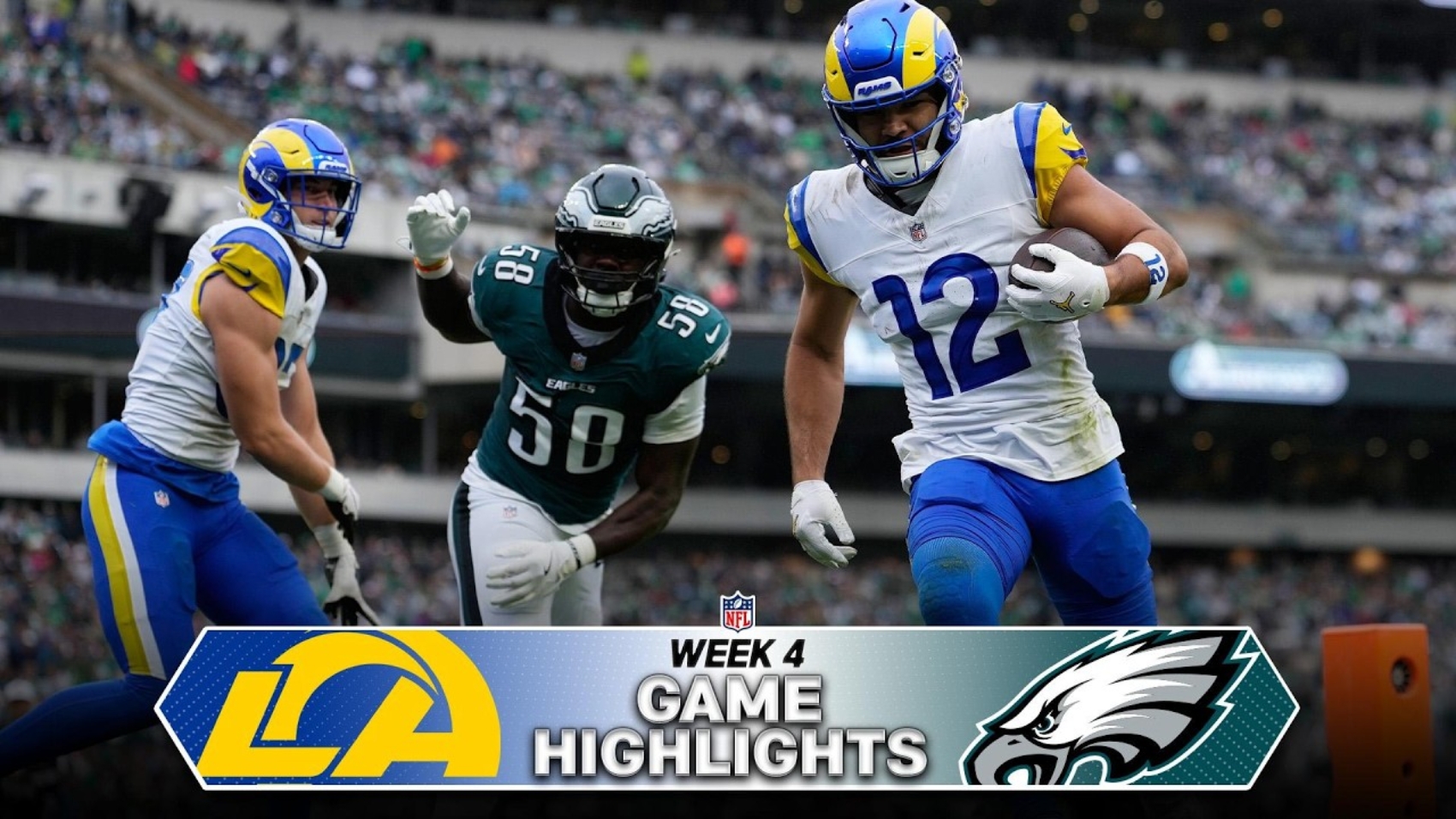
Davante Adams was not “going somewhere.” He was not on some clear runway out of Los Angeles. He was not being lined up in any direct swap for A.J. Brown. And if that rumor had been presented as a certainty from the beginning, it deserved to be challenged from the beginning. The only specific report that the Rams were exploring moving Adams while looking into Brown came from a single league-source report, while separate reporting confirmed Los Angeles had legitimate interest in Brown without broad, independent confirmation of some full-blown, organized Adams exit plan. Sean McVay had already said in February that he “absolutely” expected Adams back and had no reason to believe otherwise, which makes the louder version of the rumor look even shakier now.
And then came the simplest reality check of all: Adams’ $6 million roster bonus hit on March 16, and the Rams let it hit. That does not magically prove there were never exploratory conversations anywhere in the background, because teams check on everything this time of year. But it absolutely does mean the breathless version of the story got ahead of the facts. If the Rams truly had some urgent, committed plan to dump Adams, they did not execute it before that trigger date. Instead, they moved forward with him still on the roster, still tied to Matthew Stafford, and still sitting in the middle of a passing game that was one of the most dangerous in football when healthy.
Let’s also clear something up for the geniuses pushing that rumor. In the 2025 NFL regular season, Davante Adams led the entire league in receiving touchdowns with 14 while playing for the Los Angeles Rams. A player producing at that level was never realistically going anywhere. The idea that the Rams were preparing to move on from the league’s touchdown leader never made sense to begin with.
Even after missing the final three games of the season with a hamstring injury, Adams still finished the year with 60 receptions for 789 yards and those league-leading 14 touchdown catches, proving once again how dangerous he remains in the red zone and in high-leverage situations.
His performance also made history, as he became the first player in NFL history to lead the league in touchdown receptions with three different franchises—the Green Bay Packers, the Las Vegas Raiders, and now the Los Angeles Rams. When you step back and look at the production and the chemistry he developed with Matthew Stafford, it becomes obvious why the Rams had no real reason to move him.
The plan is already in place, and Adams remains a major part of it. That matters, by the way, because once you stop reacting to rumors and actually look at the roster, the Rams’ offseason becomes much easier to read. Everything is much clearer now.
This is the part where everything changes.
A few days ago, it was fair to stare at this team and think cornerback had to be a Day 1 draft priority. That was the glaring hole. That was the spot people circled. That was where I was most angry after the year ended. That was the part of the defense that felt unfinished. Then the Rams went out and changed the entire conversation in a hurry. They traded for Trent McDuffie, gave him a four-year extension worth $124 million, signed Jaylen Watson to a three-year deal, and brought back Kam Curl. In one wave, they turned the secondary from the weak point into a strength. More importantly, they did exactly what Les Snead says he wants to do every year: use free agency and trades to remove desperation from the draft.
That is why this week feels different now that I had to breathe and think about our plan.
This is not a roster screaming for rescue anymore. This is not a roster begging to be patched together. This is a roster that already looks like a force and now gets to draft from a position of comfort instead of panic—or better yet, desperation—or both is where we were at two weeks ago.
Right now, the roster is solid at almost every level, and it’s wild how locking down the cornerback position—what I consider the most difficult position in football to execute successfully—can change the entire outlook of a defense.
When that spot is secured, the entire defense becomes stronger, even beyond the defensive backs themselves. It changes how everything functions. Because of that, I’m not even sure the Rams need to force an edge rusher anymore. That was originally my thinking when the team had two first-round picks before using No. 29 in the trade for Trent McDuffie. But now the equation looks completely different.
Remember too, Byron Young and Jared Verse are nothing to sneeze at. Both are edge rushers for the Rams and are already becoming imposing forces on that defensive front.

The Rams still hold the No. 13 overall pick, the one they originally acquired from Atlanta, even after sending their own No. 29 pick to Kansas City in the McDuffie trade. So instead of using that premium selection to chase a need at corner, the Rams can aim higher. They can take a genuine difference-maker. They can target somebody who changes games right away. They can draft impact, not survival.
That is why the entire draft board should be viewed through a different lens now. By that, I mean I see it very differently than I did even a few days ago.
The Rams do not need to force a corner. They do not need to force safety. They do not need to reach for another flashy receiver just because there was one wild week of internet noise around A.J. Brown. The offense already got an important bit of stability with Tyler Higbee returning on a two-year deal, and the bigger point remains the same: if Stafford is upright and Adams and Puka Nacua are both on the field, this offense is not lacking headline talent for up to three more years of togetherness. The Rams’ own site acknowledged that, after free agency, mock drafts suddenly had them linked to more offensive weapons at No. 13 because the earlier pressure to fix the secondary was gone. But that is where the Rams now have flexibility instead of obligation.
And that brings us to the real football conversation.
After taking that breath, letting the shock of the cornerback moves wear off, and laying the whole roster out to look at it straight on, the Rams really don’t need much in terms of figuring out what the team still needs—if that makes sense. In other words, everything is much more concise now.
They need the right thing.
There is a difference.
That is why the entire draft board should be viewed through a different lens now. And by that, I mean I’m looking at it very differently than I was even a few days ago. I was honestly trying to push thinking about it off a few more weeks.
If there is an elite edge player sitting there at No. 13 who can arrive as an immediate closer, then that is still a very clean answer. Nobody should ever apologize for adding a pass rusher who can end drives, finish games, and tilt a playoff pocket in the fourth quarter. There is no such thing as too much pressure when January football arrives.
But the more interesting development is this: now that the back end has been fortified, the Rams may not have to force the outside pass-rush conversation the way some people assumed.
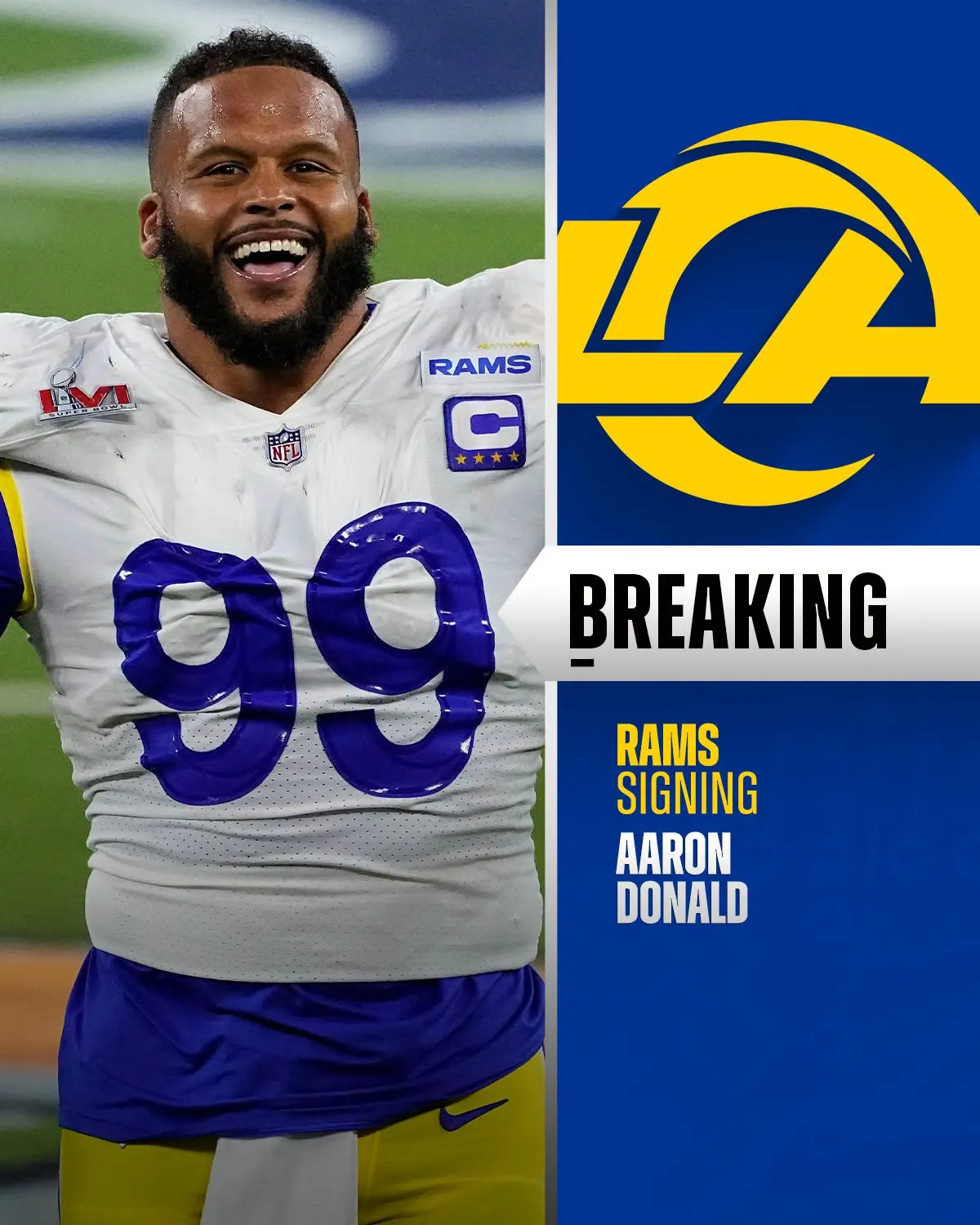
Like we mentioned, Jared Verse is already in house. Byron Young is already in house. Remember, those two are nothing to sneeze at. They are legitimate edge rushers and imposing forces already developing on this defensive front. Both are also still growing, and both stand to benefit from tighter coverage behind them. Better corners can buy a defensive front an extra beat, and in the NFL that extra beat is often the difference between a pressure and a sack. We saw that for years when Aaron Donald was collapsing pockets—quarterbacks simply didn’t have time. By the Super Bowl, that defense was swallowing up offenses, walking through the line and stopping plays before they could even develop behind the line of scrimmage.
So if the Rams do stay on defense at No. 13, the most compelling non-edge idea may actually be the one that is finally starting to come into focus: an inside disruptor. A true interior difference-maker who can impact the game on Day One.
That is the shift.
Not because edge suddenly stopped mattering. It always matters. But because the Rams no longer have to shop from desperation, they can think more specifically about how to make a good defense become a scary one.
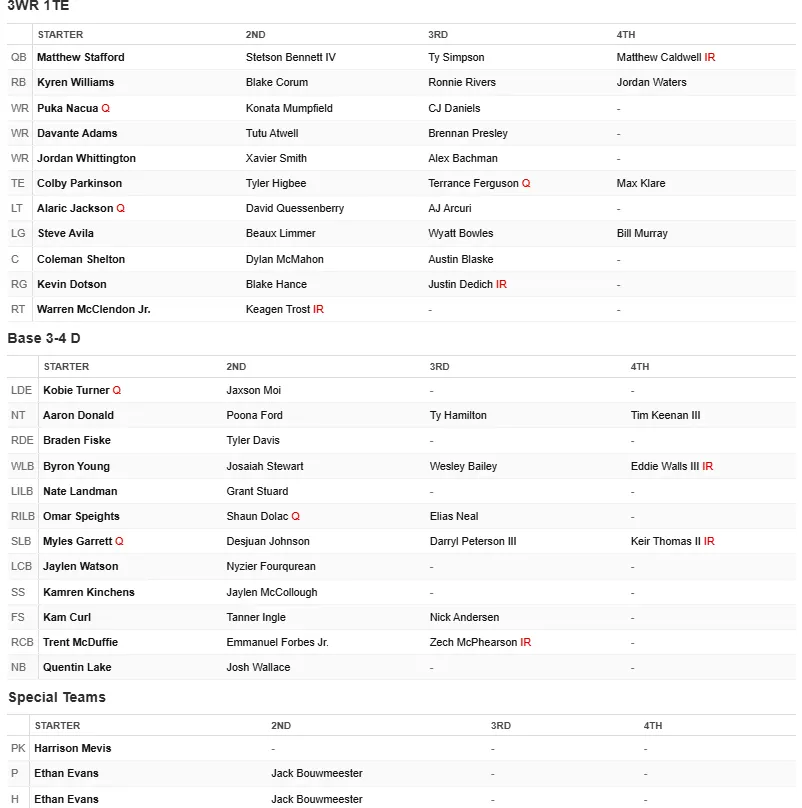
An interior force next to Kobie Turner could completely change the geometry of the defensive front. It could collapse the pocket faster, muddy the quarterback’s sightlines, and create cleaner one-on-one matchups for the edge players already on the roster. If the right interior defender is there, the Rams should absolutely be open to that. They should not draft for the old hole when the old hole has already been filled.
At the same time, the Rams still need to think about finding Day One game breakers.
That is the real challenge facing Les Snead right now. Finding a “Day One Game Breaker” at No. 13 while simultaneously planning for the post-Matthew Stafford era is the needle he has to thread. If you want a player who can change the game the second he steps onto the field, the board usually splits into two directions.
The first path is the defensive game breaker.
If Arvell Reese is there at 13, he is exactly that type of player. He is one of the most explosive defensive prospects in the 2026 class and has been ranked among the top edge or outside linebacker prospects in the draft by multiple major evaluators. His burst forces quarterbacks to throw earlier than they want to, which directly benefits the secondary. That is exactly how corners like Trent McDuffie and Jaylen Watson end up with interceptions—quarterbacks rush throws because the pressure is real. Reese’s explosiveness and block-destruction ability are the exact traits teams chase when they want a defender who changes the math of a game.
The comparison everyone makes when they talk about a closer is Von Miller, and that is not accidental. If the Rams want that kind of game-tilting presence, Reese is one name, but he is not the only one. David Bailey out of Texas Tech, Rueben Bain Jr. out of Miami, R Mason Thomas out of Oklahoma, and T.J. Parker out of Clemson are all part of the real 2026 edge conversation and all fit the broader point here: if Los Angeles wants a true heat-seeking pass rusher at 13, this class does offer them legitimate options.
But there is also the second path the Rams cannot ignore: planning for life after Matthew Stafford.
Depending on how the next one to three years unfold—and depending on Stafford’s health—the Rams eventually need someone ready to take over. If a quarterback unexpectedly slides, the Rams may need to consider that option.
Ty Simpson from Alabama could fit that type of developmental mold. He has the arm talent and the pocket-passing skill set that make the Stafford comparison understandable, and he is already viewed as one of the better quarterback prospects in this class. Carson Beck is another possibility if the board gets strange, and there are evaluators who also like the broader top of this quarterback group built around names like Fernando Mendoza and Garrett Nussmeier. But the larger point stays the same: if the Rams are thinking long term, the successor conversation is real, even if the timing has to be right.
Let me be clear about one thing: the Rams should not be drafting a quarterback with the No. 13 pick. That pick needs to be reserved for a true Day One game breaker—someone who can impact the roster immediately, whether that’s an elite edge rusher or a dominant defensive lineman. The goal at that spot is to strengthen a team that already looks like a contender, not to reach for a long-term project when there are still players available who can make an immediate difference on Sundays.
That doesn’t mean the quarterback conversation disappears entirely. It just needs to happen at the right point in the draft. Ideally, the Rams would look for a developmental quarterback later—somewhere around the fourth round if the board breaks the right way. That gives the team a young player who can begin learning Sean McVay’s system without the pressure of having to play immediately, especially with Matthew Stafford still firmly in control of the offense. The same logic applies to the kicking situation. The Rams should absolutely address that as well, but it belongs in the middle-to-late rounds—somewhere in the fourth or sixth round—where they can bring in competition without sacrificing premium draft capital.
The key to this entire strategy is that the Rams still held onto their second-round pick (No. 61), and that is huge. Even after making the aggressive move to acquire Trent McDuffie, keeping that pick gives Les Snead flexibility in the sweet spot of the draft. That is the range where the Rams could grab a high-end offensive tackle to protect Stafford, or even take a calculated swing at a future quarterback if someone like Ty Simpson or Carson Beck happens to slide further than expected.
When you step back and look at the draft capital the Rams still hold, the plan becomes pretty clear. The first round is where they should hunt for the big impact player. The second round becomes the insurance policy—either reinforcing the offensive line or taking a developmental quarterback if the value lines up. The third round adds depth, likely somewhere in the defensive backfield or linebacker group, and the late rounds are where the Rams can finally address special teams and stabilize the kicking situation.
So the draft “war chest” now looks something like this:
Round 1 (No. 13): The game breaker—edge rusher or defensive line disruptor.
Round 2 (No. 61): The insurance—offensive tackle or developmental quarterback.
Round 3 (No. 93): Depth—possibly safety or linebacker.
Late rounds (6–7): Special teams help, including a kicker.
Yes, the Rams did give up their fifth-round pick in the trade package with Kansas City, but holding onto that second-round selection keeps the entire strategy intact. With that pick still in hand, Les Snead has enough ammunition to be dangerous—and more importantly, enough flexibility to keep building a roster that already looks much closer to complete than it did just a week ago.
There is even a wild-card offensive scenario if the Rams decide to lean fully into overwhelming firepower.
Denzel Boston from Washington is a 6-foot-4 receiver who would create absolute nightmares in the red zone, and Carnell Tate from Ohio State is another one of the top wide receivers in this class. Imagine a red-zone offense featuring Davante Adams, Puka Nacua, and another big-bodied target with that kind of size—not to mention Tyler Higbee at tight end, who is huge as well. Stafford wouldn’t have to thread needles anymore. He could simply throw the ball where only his giant target could reach it. That is the kind of move that could extend Stafford’s career, because it reduces the need for perfect throws and tight-window passes.
Of course, there is also a completely different type of “game breaker” the Rams desperately need to address: special teams.
Last season, special teams were awful across the board. That cannot happen again if this team expects to compete deep into the postseason. A real special-teams game changer might not even be a kicker—it could be a return specialist. One that does not fumble would be ideal.
A late-round speed threat like Zachariah Branch could flip field position instantly and give the Rams something they have lacked for years: explosive return yardage that sets the offense up with short fields.
And yes, offensive line depth still matters. It always matters. Every year, every team has to address its offensive line situation. There was a time when the Rams rarely had to worry about it because they had players who stayed with the team for decades as offensive linemen. There was even a stretch when the team had essentially the same offensive line for about six years in a row. Maybe longer.
If the top defensive playmakers are gone, the Rams could pivot to offensive tackle. The current 2026 tackle class is led by names like Francis Mauigoa, Spencer Fano, Monroe Freeling, Caleb Lomu, and Kadyn Proctor. Those are the types of players who could anchor the offensive line for years while protecting Stafford’s blind side.
Right now on defense, the Rams are leaning heavily on Byron Young and Jared Verse as their primary edge rushers. They have both shown promise, but neither has yet demanded consistent double teams. Adding a blue-chip edge player would finally give the defense that fear factor coming off the outside.
And if the Rams—meaning me—truly want that Von Miller-type impact player, the guy who can take over a game in the fourth quarter, then Arvell Reese, David Bailey, or R Mason Thomas are the names that now belong in this conversation, not the ones from last year’s class. That is the correction. That is the real 2026 conversation. And that is the kind of player who could push this defense over the hump.
But even without that addition, the reality is this: the defense might already be in a better position than people realize.
With Trent McDuffie leading the secondary, coverage should hold longer. That gives players like Jared Verse and Byron Young an extra half second to get to the quarterback. In the NFL, that half second can be everything.
Meanwhile, Kobie Turner is still ascending after recording nine sacks as a rookie.
So yes, the defense is already good.
But if the Rams hit on the right player at No. 13—whether that’s an elite edge closer, a dominant interior disruptor like Peter Woods or Caleb Banks, or even a long-term quarterback successor—the defense and the roster as a whole could become something much more dangerous. Woods and Banks, in particular, are among the more highly regarded interior defensive linemen in the actual 2026 class, and both fit the broader idea of adding force next to Kobie Turner instead of chasing an old need that has already been addressed.
And that is the real point here. The Rams no longer need to draft from panic. They can draft for impact.
That is why the post-trade version of this team is easier to understand than the pre-trade version.
The cornerback trade did not just improve the secondary. It simplified the Rams’ identity for me at least. It made this part of my life and job a lot easier and much more concise.
Now you can see the remaining checklist for what it really is.
To be clear, offensive line still matters because offensive line always matters. Stafford is the center of the whole operation, and the Rams have made it clear their entire 2026 approach is about maximizing the window with him. His $40 million salary for 2026 became fully guaranteed on March 16, which tells you everything you need to know about the organization’s commitment to the current timeline. This is not a patient, long-horizon reset. This is a win-now team. And win-now teams do not get cute about protection. They keep feeding the line, even when the line looks solid. If the Rams use one of their five picks on an offensive lineman, nobody should blink. If they use two, even better.
That said, No. 13 feels too valuable now to spend on a mere insurance policy unless the board falls in a very specific way. That pick should be for a real immediate-impact player. Somebody who can be felt right away. Somebody who adds violence, disruption, or stability at a level this roster cannot currently match. That is why the conversation comes back to the front seven more than anything else. If there is a true Day 1 force available, that is the luxury of what the Rams have created for themselves with the McDuffie-Watson-Curl stretch. They have earned the right to swing for impact.
Special teams, meanwhile, remain the area fans are most justified in distrusting. That needs to be discussed and addressed like yesterday too.
The Rams did make a meaningful move there by signing long snapper Joe Cardona to a two-year deal, and that matters more than casual fans often admit. Good special teams start with execution, and execution starts with reliability. But stabilizing the snap does not solve the broader anxiety. It does not erase the memory of missed extra points—unless the issue somehow traces back to the center from last year—because our kickers missed plenty of field goals and extra points last season. It does not suddenly create full confidence in the kicking game. It simply means one piece of the special-teams mess has been addressed.
That brings us to the kicking situation, which still needs to be addressed, even if the Rams have already taken a step toward stabilizing it.
Joshua Karty is no longer part of the picture after being waived, which means the Rams have effectively turned the page and are now looking toward Harrison Mevis as the current option in the building. The team tendered Mevis as an exclusive rights free agent on March 2, securing him for the upcoming season after he was initially added to the practice squad in November of 2025.
Mevis, known as “The Thiccer Kicker,” already has a bit of a reputation for that massive leg strength, and honestly he reminds me a little of Tom Dempsey. That comparison is only half joking, but it fits when you watch the way he can drive the ball. He has the type of leg that can hit from deep range without much hesitation. After a strong 2025 season in the UFL with the Birmingham Stallions, where he went 21-for-23 on field goals, the Rams clearly saw enough to bring him into the organization and keep him under contract.
But leg strength has never really been the Rams’ problem.
The issue has been reliability.
Last season the kicking situation became a headache because the misses weren’t coming from impossible distances—they were coming on the kicks that should be automatic. Extra points. Short field goals. Those are the ones that drive myself and Coach McVay crazy, and they should. Missed PATs change the entire flow of a game. Suddenly coaches are chasing points, going for two earlier than they want to, and making strategic decisions they shouldn’t have to make.
That’s why kicker still belongs somewhere on the draft board, even if it’s not anywhere near the top.
The Rams can absolutely live with a late-round solution here. A sixth- or seventh-round kicker would make perfect sense, especially if the front office wants real competition in training camp, which we need to have this year. Bring in another leg, let him compete with Mevis, and make it very simple: the guy who makes the kicks stays.
Special teams are one of those areas that people love to ignore until they start costing games. And last season proved how quickly those problems can snowball. Field-position swings, missed points, momentum shifts—it all adds up.
So while the Rams don’t need to panic about kicker the way they did about the secondary earlier this offseason, they still need to finish the job.
If Mevis becomes the answer, great. If a late-round rookie wins the job, even better. Either way, the Rams cannot go into a season with Super Bowl expectations and pretend that special teams are an afterthought.
Because when everything else on the roster is starting to look this complete, the smallest details suddenly become the ones that decide championships.
And last, there is the longer-range issue sitting quietly behind all of this.
Eventually, whether the window is one year, two years, or three, the Rams are going to have to think about life after Stafford. That remains true no matter how aggressive the current offseason has been. But that does not mean the successor conversation has to hijack this particular moment. The roster now is strong enough that the primary responsibility of pick No. 13 should be helping the 2026 Rams, not just the 2028 Rams. The quarterback succession plan can develop on its own timeline if the board does not present something extraordinary. Right now, the main story is simpler: Los Angeles has done enough early work to make the first round about adding force, not filling fear.
Which is exactly where we want to be.
Corporations Are People, My Friend
For a show that has built its brand on the mythology of hardship, endurance, and the human instinct to survive, the long-running reality competition Survivor has always relied on a carefully constructed illusion. That illusion—now in its fiftieth season—is that contestants are battling nature in a raw fight for survival.
But when a modern television production with a multimillion-dollar budget, a full medical infrastructure, evacuation helicopters, and a network safety team decides to hand out captive animals to contestants for entertainment drama, the question becomes unavoidable:
“Is this survival—or simply stupidity, not to mention hypocrisy and delusion?”
The controversy surrounding the show’s repeated use of live chickens as “food dilemmas” reveals something much deeper than a minor production choice. It exposes a longstanding ethical contradiction at the center of one of television’s most famous reality franchises.
Because the truth is simple: no one on that island is actually surviving anything in the real sense of the word.
And when a program with enormous resources stages the killing of animals for dramatic tension rather than necessity, the line between storytelling and exploitation becomes impossible to ignore.
The premise of Survivor has always been marketed as a test of endurance: strangers stranded in harsh environments, forced to rely on their instincts, their alliances, and the land around them.
But that narrative collapsed under even basic scrutiny.
Contestants on the show operate under one of the most controlled survival environments in television history. Every player is monitored continuously by production crews, safety teams, and medical professionals. If someone becomes seriously ill, injured, dehydrated, or malnourished, intervention is immediate.
Medical tents exist off-camera. Doctors are on standby around the clock. Emergency evacuation helicopters are positioned within reach. IV fluids, antibiotics, surgical supplies, and full diagnostic capabilities are available at a moment’s notice.
This isn’t speculation—it’s part of the show’s documented production structure.
When contestants suffer injuries or health complications, they are often treated within minutes by medical staff. In more serious situations, players are removed from the game entirely and transported to hospitals.
In other words, the environment may be uncomfortable, but it is never life-threatening in the way the show’s marketing suggests.
Which makes the “survival” argument surrounding the use of live animals increasingly difficult to defend.
Because if contestants are protected from genuine starvation, dehydration, and fatal injury by a production team worth millions of dollars, then the presence of captive animals is not a necessity.
It’s a choice.
One of the most controversial recurring moments in the history of Survivor is when tribes are given cages of live chickens as a reward or supply drop.
Producers frame the situation as a moral decision: keep the birds alive for eggs, or kill them immediately for protein.
Host Jeff Probst has publicly described the scenario as a “moral dilemma,” designed to force contestants to confront difficult decisions about survival and hunger.
But critics argue that the dilemma itself is artificial. The chickens are already being kept in captivity and then used to generate profit, no different from animals exploited in a circus. How is that any different from training an elephant to perform tricks or keeping an ape confined in a zoo enclosure for public entertainment?
The damage is already done. These animals cannot survive in that territory. In many ways, they are doomed before they even arrive. There is also the question of how long they are kept in captivity before the show even begins, and then they must be transported by plane to remote filming locations. Many viewers still remember the time several chickens nearly drowned after being thrown into the ocean in cages for the sake of a dramatic moment.
It is odd behavior. It is irresponsible behavior. And ultimately, it is reckless behavior.
Besides that, the chickens are not wild animals that contestants hunted or captured themselves. They are domesticated livestock transported by production crews, kept in captivity, and then delivered to contestants specifically to create conflict and television drama.
If the show were truly about survival in the wild, the logic would be very different.
Contestants would hunt. They would trap animals. They have always been able to fish or forage.
They would obtain food the same way humans have done throughout history—through effort, skill, and direct engagement with their environment.
Instead, production literally hands them animals in cages.
That isn’t survival.
It’s a scripted scenario designed to provoke reactions.
From a legal standpoint, CBS and the producers of Survivor are not violating U.S. law by providing chickens to contestants for consumption.
American law allows the slaughter of animals for food, and broadcasting such acts is not illegal. The 2019 federal PACT Act—designed to combat extreme animal cruelty such as “crushing” videos—does not prohibit the killing of livestock intended for consumption. The term often used to justify this is “sustenance.”
From a Corporations Are People, My Friend point of view, there is no moral clause in the 14th Amendment, and therefore companies are generally expected to focus on generating profit and revenue before showing any semblance of moral responsibility.
In other words, the show operates within the boundaries of existing law.
But legality does not automatically equal ethical justification.
Television productions make editorial decisions constantly—what to show, what not to show, what narratives to construct.
Choosing to stage the killing of animals in captivity for dramatic tension is not a legal requirement.
It’s a creative decision.
And that decision has been criticized for decades.
Animal advocacy groups have repeatedly criticized the show’s use of animals for entertainment.
Organizations including PETA and United Poultry Concerns have argued that killing animals for dramatic television moments is unnecessary, particularly in a controlled production environment where starvation is never truly at stake.
Critics also raise another serious concern: contestant inexperience.
Most reality show participants are not trained in humane slaughter techniques. Improper handling or killing methods can cause prolonged suffering for animals—an outcome animal welfare advocates say is entirely avoidable.
In response to criticism, the show often avoids airing the actual killing of animals, cutting away before the moment occurs.
That is not a valid excuse, since editing does not change the reality behind the scenes.
The animals are still placed into captivity for the purpose of creating that moment.
Strip away the mythology, and Survivor is not actually a survival program.
It is a competition game show.
Its core mechanics revolve around alliances, social manipulation, strategic voting, and psychological gameplay. The winner is determined not by hunting ability or wilderness skills, but by a jury of eliminated players evaluating social relationships and strategy.
In that sense, the show has evolved into something much closer to other reality competitions like Big Brother than an authentic survival scenario.
And there is nothing inherently wrong with that.
But the disconnect becomes glaring when the show attempts to maintain the aesthetic of wilderness survival while simultaneously operating as a carefully engineered television production.
Because if the central challenge of the show is social strategy rather than survival, then the inclusion of animals becomes even harder to justify.
The reality is that contestants endure discomfort, hunger, and exhaustion during filming. Those conditions are real.
But the show’s structure ensures that no participant is ever allowed to deteriorate to the point of genuine life-threatening starvation.
If that point were ever reached, medical staff would intervene immediately.
That safety net exists because modern television production cannot legally or ethically allow contestants to die or suffer permanent harm.
Which leads to an obvious contradiction.
If the show ensures contestants will never starve to death, then providing live animals for slaughter cannot be defended as a necessary survival mechanism.
It becomes what critics have argued all along: Aninals being is for entertainment and as a way to make money.
Television evolves constantly.
Reality shows reinvent themselves, adjust formats, and respond to cultural shifts.
For a franchise as successful and long-lasting as Survivor, eliminating the use of captive animals would not damage the show’s premise.
If anything, it could strengthen it.
Contestants could rely entirely on fishing, foraging, and natural food sources. The narrative could focus more heavily on strategy, resilience, and teamwork—elements that already define the show’s most memorable moments.
Instead, production periodically returns to a controversial device that critics say exists only to manufacture drama.
And that decision increasingly feels out of step with the modern conversation about animal welfare and ethical entertainment.
Reality television has always thrived on tension and difficult choices.
But there is a growing difference between authentic challenges and staged dilemmas involving captive animals.
If Survivor truly wants to maintain the credibility of its survival narrative, then the most logical step forward may be the simplest one:
Stop handing contestants animals.
Let players hunt if they can. Let them fish if they’re capable. Let them forage and adapt to the environment around them.
That would be survival.
Delivering chickens in cages to contestants on a multimillion-dollar television set is something else entirely.
Survivor 50 has been promoted as a season built around the idea that the fans would vote on everything. That premise is exactly why I decided to give the show a chance and start watching this season. I believed that if the audience truly had a voice in shaping the game, it would reflect a broader sense of what viewers actually want to see. But one major decision seems to have been made without asking the fans at all: the use of live chickens.
If the entire season is supposed to be driven by fan voting, then why wasn’t America asked whether contestants should be given live chickens to kill for food? That seems like a significant decision that directly involves animal life, and it would have been easy to include it as one of the questions put to the audience. Instead, CBS and the Survivor production staff made that choice themselves while still promoting the idea that viewers were voting on the direction of the game.
That’s where the frustration comes in. The show encouraged viewers to believe they had a say in how things would unfold, yet when it came to something as consequential as the use of live animals, the audience was never given the opportunity to weigh in. I genuinely believed that if the question had been asked, many viewers would have voted against using live chickens in the game. But we’ll never know, because the producers never asked.
When a season is marketed as being controlled by fan votes, selectively leaving out certain decisions undermines that entire premise. If the show truly wanted the audience to shape the experience, it should have trusted viewers enough to ask them about every major aspect of the game—including whether live animals should be part of it at all. By avoiding that question, the production made its own decision while still claiming the season belongs to the fans.
And after fifty seasons, audiences are increasingly recognizing the difference.

Pickleball is no longer just a fast-growing recreational sport. It has become part of a larger lifestyle movement—one that blends competition
Source: The Vending Lot Pickleball Collection Is Turning Everyday Play Into Pop-Culture Performance
The Los Angeles Rams entered the 2026 offseason in a position that I personally find great from a roster-building standpoint. They have exceeded anything I anticapted by leaps and bounds. After watching them make that deep playoff run to reach the NFC Championship Game, I came away with the feeling that this team isn’t entering a rebuilding phase at all. In my view, they are doing exactly what a contender should do after falling just short — they are adjusting, reinforcing weaknesses, and trying to maximize what is still a very real championship window.
As the 2026 NFL league year officially opens Today, several of the Rams’ offseason moves became finalized, including key contracts, trades, and roster adjustments that had been building throughout the early days of free agency. When I step back and look at the bigger picture, I don’t see random transactions or short-term decisions. What I see is a deliberate attempt to strengthen specific parts of the roster while keeping long-term flexibility intact.
Even the Quarterback issue can be stretched for up to three years if every thing moves forward the way its moving now. From my perspective its been pretty clear, the Rams approached this offseason with a clear objective: improve the defense, especially reinforce the secondary, stabilize special teams, and maintain the offensive structure that helped them reach the NFC Championship Game in the first place.
There’s an odd dichotomy to how last season ended, and despite the frustration that still lingers in my brain, the Seahawks winning the Super Bowl ultimately is appropriate when everything was said and done. At the same time, I can’t shake the feeling that the team actually peaked somewhere around Week 9, give or take. From my perspective, the rest of the season often felt like we were chasing that earlier level of perfection once the injuries started piling up and mnoreover, when they were healed to come back to play.
Even when players began returning and the roster slowly got healthier, the team never quite managed to recapture that same rhythm. It was choppy. We would let up a ton of points but score more most games. By the time the final game arrived, they looked exhausted. They were barely covering recievers those games. And yet the irony of the entire season is that they still could have won not only that last game, but also most of the games they ended up losing along the way. Aside from maybe one matchup, nearly every loss felt like a game the rams either could have won — or in some cases, probably should have. Too often, they didn’t get beaten as much as they handed those games away. That is what angered me to no end last season.
That’s why, when I look at the moves the organization has already made this offseason, I can’t help but feel totally encouraged. The Rams clearly aren’t listening to me Thank God and nor are they standing still. In fact, they’ve already surpassed my admittedly terrible idea of simply waiting until the draft to address the cornerback issues. Instead, what I’m seeing is a front office that took of those iisues in weeks or better yet, in one day if consider the year jusdt starts today.
The Rams, of course, had to prioritize defensive versatility because if you think back to their playoff run, one of the biggest things that stood out was how important defensive adaptability is in the modern NFL. I’ve even called cornerback the most impossible position in football. At that spot, you almost have to allow for a huge percentage of mistakes — giving up catches, touchdowns, and even big plays — because that’s simply the reality of the position. Even the best defensive backs in the league will still allow plenty of touchdowns over the course of a season.
That said, you still need players who can make big plays when it matters. Someone like Jalen Ramsey is a perfect example of that, because you really can’t criticize the play at that position unless the cornerback simply gives up on it. Unfortunately, we had players who did exactly that this year. Just think about the Hail Mary in the playoff game, or the number of times opposing wide receivers were several steps ahead of our cornerbacks. That wasn’t normal.
On top of that, the league right now is dominated by explosive passing attacks, creative offensive play design, and quarterbacks who are more than capable of exploiting even the smallest coverage breakdown.
Because of that, I believe the Rams entered this offseason knowing their secondary needed to become more versatile and more aggressive.
To me, the most striking element of their offseason so far is how aggressively they addressed the cornerback position.
The Rams didn’t just tweak the secondary — they completely reshaped it. They also did it in one day if you consider the Season 2026 started today.
The biggest move of the Rams’ offseason, is clearly the trade for All-Pro cornerback Trent McDuffie.
When I first saw this move come together, my immediate reaction was that the Rams were sending a very clear message about their priorities. They wanted a true difference-maker in the secondary — someone capable of locking down receivers, playing multiple coverage roles, and bringing an edge to the defense.
McDuffie fits that description perfectly.
From what I’ve seen watching him play, he’s one of the most complete defensive backs in the league. He can play outside corner, move into the slot, blitz when needed, and contribute in run support. Those kinds of players are incredibly valuable in today’s NFL because they give defensive coordinators the freedom to disguise coverages and create pressure in different ways.
The Rams didn’t just acquire McDuffie — they also made a major long-term commitment to him with a $124 million contract extension that includes $100 million guaranteed. That deal makes him the highest-paid cornerback in NFL history, which tells me the Rams see him as a cornerstone of their defense moving forward.
From my perspective, this move immediately raises the ceiling of the entire Rams defense.
Then, adding Jaylen Watson makes the secondary even stronger again, at the drop of a dime. What I find especially interesting is that the Rams didn’t stop after landing McDuffie. They went right back to the same pipeline and added another former Kansas City defensive back — Jaylen Watson. I never saw that coming.
Watson agreed to a three-year deal worth $51 million with $34 million guaranteed, and I see him as an excellent complement to McDuffie.
Where McDuffie offers versatility and coverage instincts, Watson brings size and physicality on the outside. I think that combination by far gives the Rams a much more balanced cornerback group than they had previously. It is not even close. From my perspective, Watson has the type of skill set that allows him to match up against bigger receivers, disrupt routes at the line of scrimmage, and challenge contested catches.
With both Watson and McDuffie now in the lineup, the Rams secondary has the potential to become one of the more dynamic defensive backfields in the NFC.
Keeping Kam Curl is another smart move because, if nothing else, he made some big plays this year. He was noticeable right away and remained visible throughout most of the season. Overall, I thought he played well.
While the additions to the secondary grabbed headlines, I personally think one of the most important decisions the Rams made was re-signing safety Kam Curl. Curl agreed to a three-year deal worth $36 million, with the potential to reach $39 million and $24 million guaranteed. When I look at that contract and compare it to his impact on the field, I see tremendous value.
Curl is also exactly the type of player every modern defense needs. He can play deep safety, support the run, blitz off the edge, and rotate into different coverage responsibilities.
That kind of versatility is incredibly important because it allows the defense to disguise its intentions before the snap.
When I watch Curl play, I see someone who understands the flow of the game and can react quickly to offensive adjustments. Keeping him in Los Angeles ensures that the Rams maintain continuity in the secondary even as they introduce new pieces.
Another move that stood out to me was the return of Tyler Higbee, who remains one of the longest-tenured players on the Rams roster. Higbee signed a two-year deal worth up to $8 million, and while that may not be the flashiest move of the offseason, I personally think it’s an important one. We were choosing between many Tight Ends in teh first place and we have eyes on one in the upcoming draft.
From my perspective, Higbee brings something every successful team needs: experience and leadership, along with being a solid player. He just needs to stay healthy, which seems to be difficult for him every year. Even when injuries limited his playing time last season, he remained a trusted presence within the offense. He understands the Rams’ system, knows how to read defenses, and provides stability within the tight end group. But again, we had two other tight ends who also played well last season.
I also think his presence benefits younger players in that position room. Having a veteran who understands preparation, film study, and game-day adjustments can accelerate the development of younger teammates. I do not really want Higbee to go anywhere. I would love for him to play out his career here with the team.
For those reasons, I believe bringing Higbee back was a solid move.
One of the quieter moves that I actually find interesting is the signing of long snapper Joe Cardona, a two-time Super Bowl champion. Special teams rarely receive the same attention as offense or defense, but in my experience analyzing the game, those units often determine the outcome of close contests. Our Special Teams last season was horrible on every level.
Cardona developed a reputation in New England as one of the most reliable long snappers in football. Beyond his technical consistency, he’s also known as a respected leader.
As a graduate of the United States Naval Academy, he also brings discipline and professionalism that coaches value tremendously. Adding a veteran like Cardona helps stabilize the entire kicking operation — from punts to field goals to extra points.
Those are the types of moves that may not dominate headlines but can make a huge difference over the course of a season. In our case, it solves alot rather fast.
There are also other depth moves that I believe help stabilize the roster, in addition to the bigger signings and trades, the Rams also made several smaller moves that I believe help maintain roster stability.
Wide receiver Xavier Smith, offensive lineman Justin Dedich, and kicker Harrison Mevis were all retained through exclusive rights tenders.
I’m still on the fence when it comes to Xavier Smith, but if he can prove that he’ll catch the ball 100% of the time when fielding a kick or punt on special teams, I’d love to be proven wrong there at least. Right now, I don’t fully trust it, but I do see the potential — especially if he can eliminate the drops and never mishandle another punt or kick return again.
The same goes for Harrison Mevis, whom I refer to as the poor man’s Tom Dempsey. He still needs some work. Like I alluded to just above, I think it’s his style that really throws me off. At the same time, he does perform well, and he did a solid job last season. Still, I felt on edge with every field goal or extra point attempt. Maybe the Josh Karty situation scarred me a bit, because I still can’t believe how poorly that turned out. I really thought Karty had the potential to become one of the best kickers in the league, but he ended up missing more than he made and was eventually benched. I feel awful about that situation.
Therefore, right now I’m still on the fence about our kicking game. I feel like we need a more sure-handed player — someone we can truly count on and depend on without feeling nervous every time he lines up for a kick. I would still allow Mevis the chance to prove me wrong here, which I would welcome, but I also feel like we may see some movement at that position during the offseason.
While these moves might not generate major headlines, I personally see them as important for maintaining depth across the roster.
Smith does offer receiving depth and special teams contributions if does not fumble, Dedich provides versatility along the offensive line which was very supsect last season, and Mevis did prove himself to be a remarkably reliable kicker last season. It just was not pretty on all levels here but they did do well in broad scheme of things.
So, keeping players like this around allows the Rams to maintain continuity while focusing their bigger investments on premium positions.
Most imprtantly is why Offensive Line depth is still an issue and therfore another move I found notable was the decision to bring back David Quessenberry, who provides depth along the offensive line.
For teams with championship ambitions, offensive line depth is something I always pay attention to. Especially with Matt Stafford at quarterback, who is not a runner and needs to be protected from the defense, that protection is key to our ability to win a Super Bowl this year. The problem is that injuries at that position are almost inevitable during a long NFL season, and having experienced players ready to step in can make a huge difference. We simply did not have that this year by any means, and I felt horrible about it (it was cringe worthy at times watching our Offenseive Lineman).
Quessenberry may not always be in the spotlight, but his ability to serve as a swing tackle provides valuable insurance behind the starters.
In my opinion, moves like this reflect the Rams’ understanding that roster depth is just as important as star power.
One development was the retirement of cornerback Darious Williams, who stepped away from the NFL after eight seasons. His decision also created financial flexibility for the Rams by freeing roughly $7.5 million in salary cap space.
Another longtime Ram, offensive tackle Rob Havenstein, also chose to retire earlier in the offseason. Havenstein had been a key piece of the Rams offensive line for years and played an important role during the team’s Super Bowl run.
There were also changes on the coaching staff. Mike LaFleur departed to become the head coach of the Arizona Cardinals, prompting the Rams to promote Nate Scheelhaase to offensive coordinator.
That promotion signals the organization’s desire to maintain offensive continuity while introducing new ideas within the system.
What is left if you consider the draft capital and salary cap flexibility that stll give the Rams options? Because even after making several major moves, the Rams remain in a strong position financially.
The 2026 NFL salary cap has been set at $301.2 million, the highest in league history, and the Rams entered the new league year with approximately $42 million in available cap space. As of the start of the 2026 league year today, March 11, 2026, the Los Angeles Rams have approximately $20.5 million in available salary cap space.
This figure has fluctuated significantly over the last 48 hours as high-profile signings and trades became official:
Top 2026 Cap Hits: The Rams’ current financial landscape is dominated by five major contracts:
| Player | 2026 Cap Hit |
|---|---|
| Matthew Stafford (QB) | $48.3 million |
| Davante Adams (WR) | $28.0 million |
| Alaric Jackson (LT) | $25.4 million |
| Kevin Dotson (G) | $17.4 million |
| Trent McDuffie (CB) | $13.6 million |
Note: The Rams can still generate over $50 million in additional space through “simple restructures” of the Stafford, Adams, and Jackson contracts if they choose to make another big move in free agency. That level of flexibility gives the front office room to continue making adjustments if opportunities arise.
The Rams also still possess seven selections in the 2026 NFL Draft, including a valuable 13th overall pick acquired from Atlanta.
Their current draft capital includes:
Round 1 — Pick No. 13
Round 2 — Pick No. 61
Round 3 — Pick No. 93
Round 6 — Pick No. 207 or 210
Round 7 — Picks No. 232, 251, and 252
The team also received two seventh-round compensatory selections, giving them additional opportunities to add developmental talent later in the draft.
Retaining that first-round pick at No. 13 while still acquiring McDuffie was an extremely important part of the Rams’ offseason strategy.
It really makes us look great. When I step back and evaluate everything the Rams have done so far, I see a team that is carefully strengthening areas of need while still maintaining flexibility for future moves. At the same time, they’ve already exceeded anything I came up with. So again, in my opinion, the key themes of their offseason are clear:
The Rams are clearly refining a roster that already proved it could compete deep into the playoffs.
Right now, not only are the Rams still very much in the Super Bowl conversation, but I also think Vegas even has them as the number one team to get there next year. As I look at the Rams’ offseason moves collectively, I come away with the impression that this team still believes its championship window is wide open.
And honestly, I can understand why. Consider how we lost every game last year/this year, then look at the combination of veteran leadership, defensive upgrades, roster depth, and draft flexibility positions the Rams to remain one of the most intriguing contenders in the NFC.
There are still months of offseason activity ahead, and more changes will certainly come. But if the moves made so far translate onto the field the way I believe they could, the Los Angeles Rams once again find themselves in the center of the NFL’s championship race when this season begins.
Overall, following the official start of the 2026 league year on Today, the Los Angeles Rams hold the No. 13 overall pick (acquired from Atlanta) as their primary draft asset. Having addressed their major cornerback needs through free agency today, draft experts now project the Rams will pivot toward elite offensive playmakers or offensive line stability.
Top Draft Projections (No. 13 Overall) as of March 11, 2026, the following prospects are most frequently linked to the Rams:
| Prospect | Position | School | Analysis |
|---|---|---|---|
| Kenyon Sadiq | TE | Oregon | A “freakish” athlete who ran a 4.39 40-yard dash at the combine. Experts from ESPN and USA TODAY see him as a hybrid weapon for Sean McVay’s “12” and “13” personnel looks. |
| Makai Lemon | WR | USC | The Biletnikoff Award winner (79 rec, 1,156 yards in 2025). PFF and NFL.com suggest he could be the “shooting guard” to Puka Nacua’s “power forward” style. |
| Monroe Freeling | OT | Georgia | Regarded as the “best pure left tackle prospect” in the class. With Rob Havenstein’s retirement today, some mocks suggest the Rams must prioritize Stafford’s protection over new weapons. |
| Avieon Terrell | CB | Clemson | Despite the McDuffie trade, The Athletic notes the Rams’ secondary still needs a “complete makeover” and could double-dip with the combine’s top-performing corner. |
Draft Strategy Shift

Live Jam Goes Inside the Explosive 2026 Country Touring Season and the Rise of the Live Country Radio Show

The War on Drugs’ Live Drugs Again Captures the Power of the Stage as “Live From The Vault” Keeps the Spirit of Live Music Alive Every Saturday Night
Source: Live From The Vault: The War on Drugs’ Live Drugs Again

Sometimes the best offseason plans are the ones that get blown up by a front office that sees the board differently. That is exactly what happened this week when the Los Angeles Rams agreed to a blockbuster trade with the Kansas City Chiefs that brings two-time All-Pro cornerback Trent McDuffie to Los Angeles.
The move immediately reshapes the Rams’ defensive outlook and, more importantly, alters how the team approaches both free agency and the 2026 NFL Draft.
From an analyst’s perspective, the trade is interesting because it actually exceeded what many observers, like myself, expected the Rams to do. My initial thinking was that Los Angeles might need to address the secondary through the draft, possibly targeting a cornerback with the 13th overall pick. In fact, one of the recent mock drafts circulating earlier this week suggested the Rams might go in a completely different direction and select a wide receiver at that spot, which implied that the cornerback position could still be filled later or that the player I wanted them to pick would already have been drafted earlier than No. 13.
But that entire scenario changed overnight.
Instead of hoping the right defensive back would fall to them in the draft, the Rams used their No. 29 pick and additional draft capital to acquire a proven veteran in McDuffie. When you step back and look at it that way, the team essentially used what would have been a late first-round gamble to secure one of the league’s most established cornerbacks.
For many fans following the Rams closely, the move came as a surprise. It wasn’t even on my radar let alone in most early offseason projections.
Yet it also highlights something important about the way the Rams operate: they are not a franchise that waits patiently for long rebuilds. Neither am I. I don’t rebuild well.
That approach can be difficult for fans who prefer aggressive roster building and quick solutions rather than multi-year rebuilding cycles. For some people like me, rebuilding seasons simply don’t sit well. Sports loyalty often creates a mindset where a team always feels closer to contention than the standings suggest.
Philadelphia Flyers fans know that feeling well. The Flyers last won the Stanley Cup in the mid-1970s, yet many longtime supporters still talk about the team as if those championship years were yesterday. The memories are vivid for me which is maybe why I act that way, especially moments like the final game on May 19, 1974 that secured the franchise’s first title. But decades later the team continues to search for another championship.
The Rams, by contrast, rarely operate with that kind of long rebuilding horizon. Their front office prefers to address problems quickly, and the McDuffie trade is another example of that philosophy in action.
The deal, agreed to on March 4, 2026, sends Trent McDuffie from Kansas City to Los Angeles in exchange for multiple draft selections.
Trade Breakdown
Los Angeles Rams: Trent McDuffie 25-year-old cornerback, two-time All-Pro and two-time Super Bowl champion
Kansas City Chiefs: 2026 1st-round pick – No. 29 overall
The trade cannot become official until the new NFL league year begins on March 11, but the agreement is already sending ripples through the league.
For Los Angeles, the reasoning is clear. With quarterback Matthew Stafford entering his age-38 season, the Rams are attempting to maximize the remaining championship window around their veteran quarterback.
The secondary was also a clear weakness. The Rams ranked 22nd in passing yards allowed during the 2025 season and were facing the possibility of losing multiple defensive backs to free agency. Adding McDuffie immediately stabilizes that unit.
The move also mirrors the organization’s earlier strategy when it traded for Jalen Ramsey in 2019, sacrificing significant draft capital to land an elite cornerback in his mid-20s. That gamble ultimately paid off with a Super Bowl victory two seasons later.
For the Chiefs, the trade reflects a different situation. Kansas City is navigating a more complicated salary-cap structure after missing the playoffs in 2025. Moving McDuffie clears his $13.6 million guaranteed salary for the upcoming season while giving the team additional draft picks.
Chiefs quarterback Patrick Mahomes offered a brief but telling reaction on social media after the trade news broke: “Damn..”
Even after acquiring McDuffie, the Rams remain in a relatively strong financial position.
The team currently has approximately $27.46 million in available cap space. McDuffie carries a $13.63 million cap hit for the 2026 season under his fifth-year option.
However, the expectation around the league is that the Rams will negotiate a long-term extension with the cornerback before the season begins.
Such a deal could actually lower his immediate cap hit if structured with a smaller base salary and a signing bonus spread across multiple seasons. Cornerback salaries at the top of the market now exceed $30 million per year, meaning McDuffie could soon join the highest-paid defensive backs in the NFL.
The Rams also appear well positioned financially in the long term. After shedding several large contracts over the past two seasons, projections suggest the team could have more than $181 million in cap space by 2027.
Future financial priorities include potential extensions for key players from the 2023 draft class, most notably wide receiver Puka Nacua and pass rusher Byron Young.
There are also additional moves that could create even more cap flexibility. Releasing veteran cornerback Darious Williams would save roughly $7.5 million, while simple contract restructures for Matthew Stafford or Davante Adams could free up more than $20 million.
The McDuffie trade does not necessarily mean the Rams are finished adjusting their roster.
General manager Les Snead has repeatedly emphasized that the team’s “macro philosophy” is to use free agency to fill major roster holes before the draft begins.
That strategy prevents the Rams from being forced into reaching for positional needs when draft day arrives.
Several names have already surfaced as potential targets.
At edge rusher, both Maxx Crosby and Trey Hendrickson have been mentioned as potential high-impact additions if the Rams pursue another aggressive move.
At wide receiver, the potential departure of Tutu Atwell could create an opening for a speed threat to complement Puka Nacua and Davante Adams. Possible fits include Rashid Shaheed or Alec Pierce.
Linebacker is another area where the team could look for reinforcement, with Nakobe Dean frequently mentioned as a player who could add speed and physicality to the middle of the defense.
Even the secondary could see additional depth signings. Possible targets include Jaylen Watson, Riq Woolen, and Jamel Dean.
Despite trading the No. 29 pick to Kansas City, the Rams still hold a valuable first-round selection.
The team retains the 13th overall pick, along with several additional selections.
Remaining Rams Draft Picks
The No. 13 pick gives Los Angeles flexibility.
Some mock drafts still link the Rams to cornerbacks such as Mansoor Delane or Colton Hood, even after the McDuffie trade.
Others believe the team could pivot toward offense. Tight end Kenyon Sadiq has been mentioned as a potential target, particularly with Tyler Higbee aging and dealing with injuries.
Another intriguing possibility is quarterback Ty Simpson, who could eventually become Matthew Stafford’s successor.
Snead acknowledged that the Rams are already thinking about life after Stafford, though the team insists it will not force the decision prematurely.
The Rams also face several internal personnel decisions.
Safety Kamren Curl may leave in free agency due to his rising market value. Meanwhile, the team is expected to prioritize re-signing cornerback Roger McCreary, who proved to be a versatile and cost-effective contributor late last season.
On the offensive line, Snead has already expressed interest in building a long-term partnership with guard Kevin Dotson, signaling that the team views him as part of the offensive core.
The McDuffie deal ultimately removes one of the Rams’ biggest roster questions entering the offseason.
Instead of entering the draft hoping the right cornerback prospect is available, the team now has a proven player at the position.
That allows the front office to step back, reassess the roster, and approach both free agency and the draft with far greater flexibility.
For fans who follow the Rams closely, the move also serves as another reminder that the organization rarely follows predictable paths.
Sometimes the plan changes.
Sometimes the front office sees a solution that nobody else expected.
And sometimes the move that wasn’t even on the radar becomes the one that defines the entire offseason.
Explore New Jersey / Sunset Daily News
Corporations Are People, My FriendSunset Entertainment