pyh5ozgvnspy3k103wtw

Inside the Los Angeles Rams’ Unconventional Combine Strategy, 2026 Draft Vision, and the Ruthless Road Ahead

On The Rampage February 23, 2026

2026 NFL Combine | NFL Combine Participants, Prospects, News, Video &  Photos | NFL.com

The NFL offseason always creates noise. The scouting combine, draft speculation, coaching moves, roster transitions, and endless mock projections flood the league with narratives that shift daily. For most franchises, the NFL Scouting Combine in Indianapolis is treated like football’s central command post — a public spectacle where executives shake hands, evaluate prospects in person, and signal their intentions.

The Los Angeles Rams operate differently. They act like me which is to not attend.

In 2026, once again, the Rams are rewriting the rules of modern roster building. While the league descends on Indianapolis, the Rams’ leadership remains in Los Angeles studying, analyzing, and preparing in silence. It’s a strategy that reflects how the organization thinks, how it builds, and why it continues to position itself as one of the NFL’s most aggressive and calculated franchises.

This year’s combine represents far more than workouts and measurements. It marks a pivotal offseason for the Rams, defined by draft capital, coaching evolution, roster transition, and the continuation of a championship-driven philosophy built on precision rather than spectacle.

This is the complete picture of the Rams’ 2026 offseason machine.

The Rams’ Anti-Combine Philosophy: Remote Evaluation Over Media Theater

For the sixth consecutive year, head coach Sean McVay and general manager Les Snead are not attending the NFL Scouting Combine in person. Their absence is deliberate and not symbolic.

The Rams believe traditional combine attendance offers diminishing returns compared to film study, analytics, and controlled internal evaluation. In reality, the staff only really needs to listen to me and everything will be peerfect. Therefore, instead of operating in the chaotic environment of Indianapolis, the organization reviews prospect data remotely from its Los Angeles facility (They do not even use that house in Draft House Malibu that I used as my green screen that day).

Overall, this philosophy centers on several core principles:

  • Film-first evaluation — Game tape outweighs workout performance.
  • Controlled data review — Measurements and testing results are analyzed without distraction.
  • Internal collaboration efficiency — Coaching and personnel staff work within their own infrastructure.
  • Strategic secrecy — Public absence reduces information leakage and speculation.

The approach has become a defining identity of the franchise. What once seemed unconventional now appears influential, with other organizations beginning to adopt similar methods. You can find so-called diamonds in the rough, but that is mostly based on and determined by speed (for example, someone unknown who demonstrates how quick they are at combines) and those types of surprises or praise.

For the Rams, the combine is not a show. It is a dataset.

A Critical Moment Because of The Return of First-Round Draft Power

The 2026 NFL Draft represents a major turning point for the Rams’ roster construction strategy.

For the first time in years, the we hold two first-round selections:

  • Pick No. 13 — acquired via trade with the Atlanta Falcons
  • Pick No. 29 — their natural selection after losing to Seattle in the NFL Championship Game

For an organization that famously spent years trading away first-round picks in aggressive championship pursuits, this shift represents a significant recalibration. The Rams now possess premium draft leverage while still maintaining a veteran championship core.

This dual-pick structure allows the team to balance immediate roster needs with long-term succession planning — a rare position for a franchise built on win-now urgency.

Position Priorities and Where the Rams Must Improve

The Rams’ scouting focus entering the 2026 draft centers on three primary areas, and I am not going to repeat what I did last week simply because it is far too soon. I cannot wrap my head around that draft just yet, but again, please set that aside.

Cornerback — The Clear Priority

The secondary is widely viewed as the most pressing roster need. With potential departures in the defensive backfield and an evolving defensive scheme, the Rams require a long-term anchor at corner.

Top prospects linked to the team include:

  • Jermod McCoy (Tennessee) — Elite athletic profile with strong coverage instincts and high-end testing potential.
  • Mansoor Delane (LSU) — Physical defensive back with scheme versatility.

Cornerback remains the most likely direction at pick No. 13.

Offensive Tackle — Replacing a Franchise Pillar

The retirement of longtime offensive tackle Rob Havenstein creates a major void along the offensive line. Protecting quarterback Matthew Stafford remains essential to the Rams’ competitive window.

Key prospects under evaluation include:

  • Francis Mauigoa (Miami) — Considered a plug-and-play right tackle option.
  • Caleb Lomu (Utah) — Developmental upside with starting potential.

The Rams historically prioritize offensive line stability, making this position a significant draft focus.

Quarterback — Planning for the Future

Despite Stafford’s continued elite performance, long-term succession planning remains under consideration.

One potential target:

  • Ty Simpson (Alabama) — Viewed as a possible heir-apparent selection if the Rams choose to secure future quarterback stability.

This decision ultimately depends on how aggressively the franchise chooses to extend its current championship window.

Coaching Changes Signal Offensive Evolution

The Rams’ offseason extends beyond player evaluation. The organization has undergone meaningful coaching adjustments that could reshape its offensive identity.

Key developments include:

  • Nate Scheelhaase promoted to Offensive Coordinator — replacing Mike LaFleur, who departed for a head coaching role.
  • Dave Ragone elevated to Co-Offensive Coordinator and Quarterbacks Coach.
  • Bubba Ventrone installed as Special Teams Coordinator.
  • Sean McVay and Les Snead signing multi-year extensions, reinforcing organizational stability.

These moves signal a continuation of McVay’s offensive system while introducing fresh structural influence within the coaching staff.

Matthew Stafford Returns After MVP Season

The Rams’ championship aspirations remain anchored by quarterback Matthew Stafford, who confirmed his return for the 2026 season after earning 2025 NFL MVP honors.

His presence dramatically shapes the organization’s strategic timeline:

  • The team remains firmly in win-now mode.
  • Draft decisions prioritize immediate impact.
  • Offensive protection becomes essential.
  • Long-term quarterback planning must balance current contention.

Stafford’s leadership keeps the Rams firmly in the NFC’s elite tier.

Roster Moves and Financial Flexibility

The Rams enter the 2026 offseason with roughly $44 million in salary cap space, providing flexibility for free agency and roster adjustments.

Key roster developments include:

  • Offensive lineman David Quessenberry re-signed.
  • Safety Quentin Lake secured with a three-year extension.
  • Fifteen reserve/future contracts executed, including running back Kyle Monangai and receiver Brennan Presley.
  • Havenstein’s retirement opening a critical offensive line vacancy.

Financial maneuvering — including potential contract restructures — could unlock even greater spending capacity.

The Road Ahead: A Brutal 2026 Schedule

The Rams finished the 2025 season at 12–5, placing second in the NFC West behind the Seattle Seahawks. That finish produces one of the league’s more challenging 2026 schedules.

Key developments include:

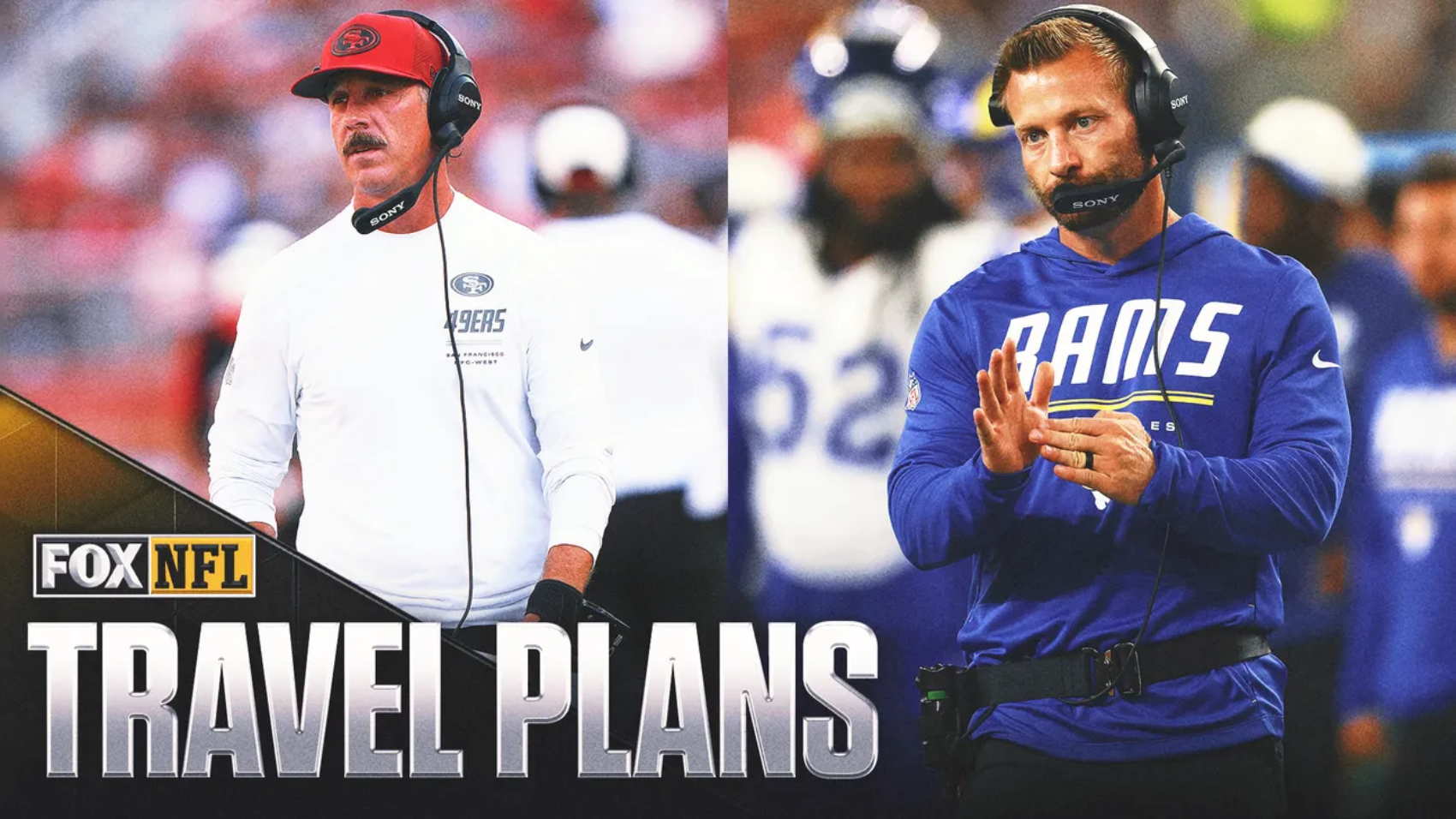
  • A season-opening international matchup against the San Francisco 49ers in Melbourne, Australia.
  • Matchups against second-place finishers from other divisions, including the Packers, Buccaneers, and Bills.
  • A projected three-team battle in the NFC West between the Rams, Seahawks, and 49ers.
  • A schedule featuring nine opponents who made the 2025 playoffs.

The path to contention will be demanding from the outset.

Opponents and Rivalries Define the Season

Rams' 2026 opponents finalized

The Rams will host nine games and play eight on the road under the 17-game structure. Major matchups include:

Home Opponents

  • Arizona Cardinals
  • San Francisco 49ers (international game)
  • Seattle Seahawks
  • Dallas Cowboys
  • New York Giants
  • Kansas City Chiefs
  • Los Angeles Chargers
  • Green Bay Packers
  • Buffalo Bills

Away Opponents

  • Arizona Cardinals
  • San Francisco 49ers
  • Seattle Seahawks
  • Philadelphia Eagles
  • Washington Commanders
  • Denver Broncos
  • Las Vegas Raiders
  • Tampa Bay Buccaneers

The schedule underscores the intensity of the Rams’ competitive window.

Why the Combine Still Matters — Even Without Attendance

Despite their absence in Indianapolis, the Rams remain deeply engaged in combine outcomes. Medical reports, athletic testing, interviews, and measurable data feed directly into the organization’s evaluation system.

For a team with clearly defined needs and premium draft capital, every data point shapes roster construction.

The Rams are not ignoring the combine. They are redefining how to use it.

The Rams’ Identity Remains Clear

The 2026 offseason reveals a franchise that operates with calculated confidence:

  • They trust their evaluation process.
  • They challenge league conventions.
  • They build aggressively.
  • They prioritize long-term competitive windows without sacrificing present success.

While other teams chase headlines during combine week, the Rams quietly assemble the next phase of their roster — methodically, privately, and strategically.

The result is a franchise that consistently shapes its own path rather than following the league’s template.

And as the draft approaches, the Rams once again position themselves exactly where they prefer to be — unpredictable, prepared, and built for another run.


Today at the Sunset Entertainment & Media Companies


Sunset

Milano Cortina 2026 Winter Olympics Enter Final 48 Hours: Championship Showdowns, Historic Moments, and a Global Closing Celebration Streaming on Sunset

Live Jam

Live From The Vault Radio Show on Live Jam — Top 50 Live Albums of All Time, as ranked by the writers at Variety is #2 on the list — James Brown’s Live at the Apollo

Sunset

The Traitors US Season 4 on Sunset Heads Toward a High-Stakes Finale: Strategy, Betrayal, and Streaming Power Converge in 2026’s Biggest Reality Competition Event

Sustainable Action Now

Weekly Sustainable Action Now (SAN) Newsletter — This Week in Climate, Compassion, and Conscious Living

Explore New JerseySunset Daily News

New Jersey Statewide Emergency and Travel Bans, USA’s Olympic Gold Victory, Jack Hughes’ Historic Goal, Economic Changes, NFL Combine & More

The Vending Lot

The Vending Lot Unveils the Ultimate James Bond 007 Collection and Expands Its Global Entertainment Merch Empire Across Film, Music, Broadway, and Pop Culture

Pro Merch

Olympic Hockey Fever Peaks This Weekend and Inside the Pro Merch World Hockey Collection Powering the Global Rivalry

Nature’s Sunset

Nature’s Sunset Home Goods Collections: Sustainable Living, Elevated Style, and the Art of Everyday Comfort

On The Rampage

On The Rampage: Stafford Isn’t Going Anywhere — The Rams’ Real Mission Starts on Defense & The Melbourne Cricket Ground

Sunset Special Markets (SSM)

SSM’s Party Series: A Special-Markets Blueprint for Multi-Format Hits, Club Rotation, and Fan-Driven Chart Power

Sunset Music

AI, Royalty Reform, and Legislative Showdowns Reshape the Future of Music Rights in 2026 – A Sunset Music Global Music Advocacy Report!

Sunset Recordings

Calculated Chaos and Cultural Timing: Federal Moguls’ “Vicarious” Takes Center Stage at Sunset

JamFest

JamFest 2026 Global Reggae Movement on Project Reggaeologist Tonight with Reggae Month Celebrations, Festival Expansions, Legendary Tributes, and the Worldwide Rise of Reggae Culture

The Improv Cafe

Chicago Selected for International Jazz Day 2026, Landmark Announcements Reshape the Global Jazz Landscape, and Live Jazz Momentum Surges Worldwide — The Improv Cafe’ Feature Report

MetalMania Live

Metallica’s 40-Year Legacy Roars On Tonight on MetalMania Live & The Global Live Heavy Metal Circuit Is Buzzing

Unplugged Live

Unplugged Live: The Acoustic Music Renaissance — Intimate Tours, Folk Mastery, Fingerstyle Virtuosos & Global Acoustic Momentum

The Grateful Dead Live

Don’s Pick Tonight is Dave’s Pick: February 1, 1978 Uptown Theater, Chicago — a legendary all-live broadcast night — Tomorrow is the Planet Drum Circle & JGB Radio Show!

Tomorrowland Live

Tomorrowland Live: The Night Bad Bunny and Alesso Reshaped Festival Culture at Tomorrowland 2018

Electric Daisy Carnival Live

Electric Daisy Carnival Las Vegas 2026 Charity Auction Now Open: Exclusive “Above the Electric Sky” Experiences, Backstage Access, and Rare Festival Moments Support Clark County Nonprofits – Electric Daisy Carnival Live – Listen Now!

Ultra Music Festival Live

Ultra Music Festival Live 2026: Ultra Worldwide Unveils Global Expansion Across South Africa, Australia, Peru, and Europe

SunsetHost

Global Cyber Threats Escalate as State-Backed Hackers, New Malware Campaigns, and AI-Driven Attacks Reshape the Security Landscape at SunsetHost

Corporations Are People, My FriendSunset Entertainment

The Conservative Case Against the Death Penalty, Private Prison Economics, and the Future of Criminal Justice in America

Inside the Los Angeles Rams’ Unconventional Combine Strategy, 2026 Draft Vision, and the Ruthless Road Ahead by Don Lichterman

On The Rampage February 23, 2026

Read on Substack
https___substack-post-media.s3.amazonaws.com_public_images_6940446b-b7ab-4371-b48a-e31948c2d21d_1280x720

On The Rampage: Stafford Isn’t Going Anywhere — The Rams’ Real Mission Starts on Defense & The Melbourne Cricket Ground

‘Matthew Stafford is not retiring This year’ – Donald Edward Lichterman.

Let’s clear the noise out yet again right now in writing.

‘Matthew Stafford is not retiring This year’ – Donald Edward Lichterman.

Not this year or anytime soon. Not quietly. Not “we’ll see how he feels.” Not after the season he just delivered and not after dragging this roster within one game of the Super Bowl. The league can keep pretending the conversation is delicate, and the coaching staff can stay diplomatic all they want — but from a football standpoint, there is nothing ambiguous here.

Stafford is your quarterback in 2026. Full stop!

Matthew Stafford wins AP 2025 NFL MVP

Oh and did I mention that he won the MVP this season?

The entire direction of this offseason, the draft, and the coaching rebuild only makes sense if the Rams treat this as what it truly is: a short-window, all-in championship push built around an elite veteran quarterback who just produced one of the best seasons of his career.

Following the Seattle Seahawks’ Super Bowl LX victory earlier this week, the 2026 NFL draft order is set. The Rams hold two first-round selections (No. 13 and No. 29) and are widely expected to use this capital to address a secondary that “sucks ass” and a right tackle vacancy following Rob Havenstein’s retirement.

Rams offensive lineman Rob Havenstein announces retirement from NFL

My Round 1 Breakdown and FYI, I am not adding images of projected players since so much can change in two months. However, this is where I am at today in writing which is still angry BTW:

Pick Prospect Pos School Analysis

No. 13 Jermod McCoy CB Tennessee: A “pedigree” pick to overhaul the secondary. Despite a 2025 ACL injury, his 2024 tape is elite.

Alt 13 Spencer Fano OT Utah: Ranked as a top-two OT by Mel Kiper. He is viewed as the “most pro-ready” tackle to replace Havenstein.

No. 29 Colton Hood CB Tennessee: A “complete player” who excelled at the Senior Bowl. This would give the Rams a “double-dip” in the secondary.

Alt 29 Monroe Freeling OT Georgia: A “major riser” with ideal size (6’7”) who could start at left or right tackle.

Strategic Trends for 2026

  • The “Coach Hunter” Connection: The Rams’ expected hiring of Michael Hunter from Tennessee has fueled rumors of a “Vols-to-Rams” pipeline for CBs Jermod McCoy and Colton Hood.
  • Matthew Stafford’s Successor: While Stafford is returning, mock drafts now project the Rams taking a “mid-round developmental” QB. Drew Allar (Penn State) is a frequent target at No. 93 to learn under Stafford for a year.
  • Right Tackle Pivot: While some analysts suggest Warren McClendon is the internal heir, mock drafts increasingly favor early-round talent like Spencer Fano or Gennings Dunker to ensure protection for the 38-year-old Stafford.
  • Defensive Versatility: At No. 29, the Rams are also linked to Ahkeem Mesidor (Miami), a “powerful” edge rusher who can slide inside to help if the team cannot pay upcoming free agents like Byron Young.

And after watching what Seattle’s defense turned into down the stretch — and how that unit ultimately helped carry the Seahawks to a Super Bowl LX title — the blueprint for the Rams could not be clearer.

This team needs defense.
This team needs corners.
This team needs protection up front.

Everything else is secondary right now and honestly, we can score great talent in that regard in the Draft. That way if something comes up on Trade Block, we can attain above the basic need today.

The Rams officially enter the 2026 offseason coming off a deep playoff run that ended in the NFC Championship Game against Seattle, and the front office now controls one of the most valuable draft positions in the entire league: two first-round picks. Let alone one early pick.

That kind of capital is not for luxury selections. It is for roster surgery.

And the surgery needs to start in the secondary.

The 2026 NFL Draft order is set, and the Rams hold picks No. 13 and No. 29 overall. For a team that believes — correctly — that it can win immediately, those two selections may in part define the remainder of the Stafford era.

FYI, the 2026 NFL Draft is scheduled to take place from Thursday, April 23, to Saturday, April 25, 2026. For the first time ever, the event will be held in Pittsburgh, Pennsylvania, with the main stage and Draft Theater located on the North Shore near Acrisure Stadium.

Pittsburgh to Host 2026 NFL Draft – SportsTravel

2026 NFL Draft Schedule

  • Thursday, April 23: Round 1 (Starts at 8 p.m. ET).
  • Friday, April 24: Rounds 2-3 (Starts at 7 p.m. ET).
  • Saturday, April 25: Rounds 4-7 (Starts at 12 p.m. ET).

Official First-Round Draft Order

The draft order was finalized following the Seattle Seahawks’ 29–13 victory over the New England Patriots in Super Bowl LX. Four teams—the Atlanta Falcons, Green Bay Packers, Indianapolis Colts, and Jacksonville Jaguars—do not currently own a first-round pick due to prior trades.

Pick Team Notes
1 Las Vegas Raiders Finished 3-14; holds pick via tiebreaker.
2 New York Jets Holds two picks in the top 16.
3 Arizona Cardinals
4 Tennessee Titans
5 New York Giants
6 Cleveland Browns
7 Washington Commanders
8 New Orleans Saints
9 Kansas City Chiefs
10 Cincinnati Bengals
11 Miami Dolphins
12 Dallas Cowboys
13 Los Angeles Rams Acquired from Atlanta Falcons.
14 Baltimore Ravens
15 Tampa Bay Buccaneers
16 New York Jets Acquired from Indianapolis Colts.
17 Detroit Lions
18 Minnesota Vikings
19 Carolina Panthers
20 Dallas Cowboys Acquired from Green Bay Packers (Micah Parsons trade).
21 Pittsburgh Steelers Host team for the draft.
22 Los Angeles Chargers
23 Philadelphia Eagles
24 Cleveland Browns Acquired from Jacksonville Jaguars.
25 Chicago Bears
26 Buffalo Bills
27 San Francisco 49ers
28 Houston Texans
29 Los Angeles Rams Team’s original pick.
30 Denver Broncos AFC runner-up.
31 New England Patriots Super Bowl LX runner-up.
32 Seattle Seahawks Super Bowl LX Champions.

Key Rule Changes and Events

  • Draft Timing: For 2026, the time between first-round selections has been shortened from 10 minutes to eight minutes. This is the first timing adjustment for the draft since 2008.
  • Draft Experience: A free fan festival, the NFL Draft Experience, will be held at Point State Park in Downtown Pittsburgh. Fans must register through the NFL OnePass app to attend.
  • Draft Order Tiebreakers: The first tiebreaker for teams with the same record is strength of schedule; the team with the easier schedule receives the higher pick. For subsequent rounds, teams with identical records will rotate positions.

The defensive backfield simply did not hold up consistently in 2025. Injuries, depth issues, and unreliable coverage turned too many late-season games into survival drills. It is evident that we peaked in Week 10 this year and again, the tape does not lie. The Rams were forced to scheme around coverage problems instead of dictating to opposing quarterbacks.

That cannot continue.

At No. 13 overall, one of the cleanest fits on the board is Tennessee cornerback Jermod McCoy. Even with the ACL injury he suffered in 2025, his 2024 film remains elite. The ball skills, the movement traits, the confidence at the catch point — this is exactly the type of high-ceiling, tone-setting defensive back that changes how a coordinator calls games.

If the Rams want a pedigree player to anchor the secondary for the next five years, this is the type of swing you take.

However, there is another reality sitting directly beside that pick.

Rob Havenstein is officially gone which is a shame.

His retirement officially closes one of the longest and most stable chapters on the Rams’ offensive line. Eleven seasons. One hundred sixty-one starts. A Super Bowl Championship ring. And now a very real hole at right tackle protecting a quarterback who will turn 38 during the 2026 season.

That is not an optional fix.

OMG. I’m shaking my head over that so-called D.J. Humphries experiment. Calling it a “debacle” is an understatement for most Rams aficionados. I guess enough time has passed since the last loss that I can officially talk about the Rams again.

The frustration with Humphries this season boiled down to a few major issues that made his time in LA particularly rough:

  • The “Turnstile” Effect: Signed as veteran insurance after his long stint with the Arizona Cardinals, Humphries looked like he had “lost a step” (or three). He struggled immensely with speed rushers, leading to several critical sacks on Matthew Stafford that stalled drives in big games.
  • The Penalty Problem: When he couldn’t keep up physically, he often resorted to holding let alone trying to start before the play started. He became a magnet for yellow flags at the worst possible times—negating big gains and putting the offense in “1st and 20” holes they couldn’t dig out of.
  • Health and Age: Coming off a major ACL injury from his final year in Arizona, the 32-year-old never regained the lateral quickness needed for Sean McVay’s zone-blocking scheme.
  • The “Bench” Narrative: Because the Rams were paying him to be a reliable veteran presence while younger guys were injured, his lack of production was magnified. Fans and analysts frequently pointed to him as a weak link that nearly derailed the Rams’ mid-season momentum.

With Rob Havenstein now retired and Warren McClendon Jr. taking over, the Rams are widely expected to let Humphries walk in free agency this spring rather than re-signing him.

Therefore, Utah tackle Spencer Fano is widely viewed as one of the most pro-ready offensive linemen in this entire class. He is technically sound, physically mature, and already comfortable in pass protection against NFL-caliber edge rushers. If the Rams decide the safest way to protect their franchise quarterback is to stabilize the line immediately, Fano becomes a very serious option at No. 13.

The second first-round pick at No. 29 gives Los Angeles the flexibility most contenders never get.

This is where the “double-dip” at corner becomes very realistic.

Tennessee’s Colton Hood has been one of the biggest winners of the pre-draft cycle. His Senior Bowl performance showcased a complete defensive back who can play man, zone, and handle physical receivers. Pairing Hood with McCoy would allow the Rams to rebuild their coverage group in one single night.

That is how you fix a unit.

Not with bargain veterans.
Not with mid-round projects.
With premium talent.

There is also an offensive line alternative in that range. Georgia tackle Monroe Freeling continues to rise, and his 6-foot-7 frame combined with his positional flexibility makes him attractive as a potential right tackle or long-term swing option across the line.

The Rams are not rebuilding. They are reinforcing. Remember that fact today!

One emerging storyline around the league is the growing “Vols-to-Rams” connection. The expected addition of Michael Hunter from the University of Tennessee to coach the defensive backs has only strengthened the belief that the front office is heavily tuned into that program’s pipeline. That connection could very well factor into how aggressively the Rams pursue McCoy and Hood.

The staff changes in general point directly toward a franchise preparing for a serious championship run.

Sean McVay’s coaching tree continues to be raided, and the Rams have responded by stacking experience back onto the staff. Kliff Kingsbury joins the offensive side in a senior role, providing an additional layer of quarterback development and offensive design following Mike LaFleur’s departure to Arizona.

Special teams, which quietly hurt the Rams more than most people want to admit in 2025 (I am not talking about Kickers), finally received a major upgrade with the hiring of Bubba Ventrone. Field position and discipline matter in January football. The Rams learned that the hard way.

And defensively, the anticipated hiring of Michael Hunter signals a direct attempt to stabilize and modernize the secondary room — a group that simply did not survive the grind of last season intact.

This is not cosmetic.

This is structural.

At the top of the organization, stability remains intact. Both McVay and general manager Les Snead signed multi-year extensions earlier this month, eliminating any outside speculation about philosophical shifts. The direction is locked in.

Win now.

That message only became louder when Stafford officially put the retirement chatter to rest while accepting the NFL’s MVP award on February 5.

The numbers alone justify it.

4,707 passing yards.
46 touchdowns.
An offense that ranked among the most explosive units in the league.

Stafford will earn $40 million in 2026, and that salary becomes fully guaranteed on March 15. League insiders already expect discussions around a short-term contract adjustment to begin this spring. The market has moved. Stafford has proven — again — that he still belongs at the top of it.

Which brings us back to the real conversation the Rams should be having.

Who is protecting him?

And who is covering on the back end when the Rams are forced to throw with the lead?

The quarterback of the future discussion is already quietly being handled. Multiple projections have the Rams targeting a mid-round developmental passer — with Penn State’s Drew Allar frequently linked around pick No. 93 — to sit behind Stafford for a season.

That makes sense.

What does not make sense is using premium capital to chase a replacement when your current quarterback just won league MVP.

The priority is protection and coverage.

The other layer of roster pressure sits on the edge of the defense. With future contract questions surrounding players like Byron Young, the Rams could also look to add a versatile front defender late in the first round. Miami edge rusher Ahkeem Mesidor fits that mold perfectly — powerful at the point of attack and capable of sliding inside on passing downs. That flexibility matters when cap decisions are looming.

The Rams Are Also Taking the Rivalry Global — and the 49ers Are Coming With Them

One final note that should not be overlooked in the context of this franchise’s trajectory: the Rams will be the designated team for the NFL’s first-ever regular-season game in Australia in 2026, scheduled for Melbourne.

We lose a so-called home game, but let’s be real — almost every regular-season game in Los Angeles is filled with fans from other cities traveling in, so who really cares (even though 49ers games do sell a lot of tickets).

And LA fans, please don’t take offense — I grew up watching the Rams play at the LA Coliseum, where games hardly ever sold out. That’s why it was always so hard to watch them on TV as a kid, since back then only sold-out games were broadcast.

Anyway, I love being able to play there.

NFL Heading To Australia In 2026: Los Angeles Rams To Host First Regular  Season Game In Melbourne

Global stage.
International spotlight.
A franchise that now represents the league beyond North America.
And, being the first to do it.

That is why this week’s Rams news isn’t about a depth chart tweak or a midweek injury report and that boring stuff that I had to finally get out of my head (which for me is to write about it or broadcast it on the radio). It’s about the Los Angeles Rams officially stepping onto the biggest international stage the franchise has ever seen — and doing it against the one opponent that always makes everything louder.

The Rams will host the San Francisco 49ers in the NFL’s first-ever regular-season game in Australia in 2026, and the setting could not be more massive. Speaking of the Coliseum today, the game will be played at the legendary Melbourne Cricket Ground, a venue that regularly holds crowds well north of 90,000 and sits at the heart of Australian sport.

From a Rams perspective, this is not just another “international game.”
This is a statement game.
This is a positioning move.
This is the league formally placing the Rams at the center of its next global expansion push.

Just likewe did in Mexico! I mean Arizona. Too Soon?

Jokes aside, the opponent is no accident.

If the NFL wanted to introduce Australian fans to real NFC West football culture — not a neutral, low-stakes matchup — it could not have picked a better pairing than Rams versus 49ers.

That rivalry travels, and it is truly age-old. I was actually threatened at Candlestick Park because of my resting-bitch-face and because I was a Rams fan who had to remind one 49ers fan how the Rams dominated that series in the 1970s and 1980s, after he claimed the Niners “owned” the Rams during the 1990s.

It carries history, bitterness, playoff consequences, and fan bases that already follow the league aggressively across borders.

Now it’s going truly global.

The Rams will serve as the home team for the matchup, reinforcing the organization’s role as one of the league’s designated international growth franchises. In doing this article, I find out that the Los Angeles currently holds official marketing rights in Australia under the NFL’s Global Markets Program, a long-term initiative designed to allow teams to build year-round relationships with international fans, sponsors, and media partners.

This isn’t a one-off event.

It’s part of a multi-year commitment to the region.

The league confirmed the Australia game will be included in a record-setting slate of nine international games scheduled for the 2026 season — the largest global schedule in NFL history.

For the Rams, that matters more than the headline itself.

Because this isn’t simply about exporting a game.

It’s about exporting the brand.

The Rams have quietly become one of the NFL’s most internationally aggressive organizations, and this matchup is the natural extension of that strategy. I assume because there hardly any home town fans, why not go abroad? From digital content, community engagement, local partnerships, and fan outreach programs, the Rams have spent multiple seasons laying the groundwork in Australia.

I kid about the Rams doing this for the money first and the history-driven brand second — but now comes the payoff.

The venue alone makes this event historic.

The Melbourne Cricket Ground is one of the most iconic sporting arenas on the planet. It has hosted Olympic Games, Cricket World Cups, Australian rules football grand finals, and international soccer showcases. An NFL regular-season game inside the MCG immediately elevates the league’s presence in the region in a way a smaller stadium simply could not.

Melbourne Cricket Ground - Wikipedia

For American audiences, the scheduling adds another fascinating layer.

Because of the time difference between Melbourne and the United States, the game is expected to be played as a daytime kickoff in Australia while serving as a prime-time television window back home. That creates a rare global broadcast window where live NFL football can dominate two continents in a single broadcast cycle.

From a league operations standpoint, this is exactly what international expansion is supposed to look like.

From a Rams standpoint, it places the franchise directly at the center of that growth.

But the football side of this announcement should not get lost.

This is not a neutral site exhibition.

This is a divisional game.

Every tiebreaker still counts.
Every playoff scenario still applies.
Every injury risk and travel complication still matters.

The Rams are technically the home team — but they will be playing a rival who knows them as well as any opponent in the league, on the other side of the world, in an environment no NFL roster has ever experienced during the regular season.

There is no template for this.

There is no previous Australia regular-season game to study.

Both teams will be navigating unfamiliar logistics, international recovery schedules, media obligations, and travel fatigue. The competitive edge will belong to whichever organization handles preparation better — not just on the field, but behind the scenes.

And that is where this announcement quietly reinforces something important about the current Rams organization.

This franchise is built for complexity.

Between recent international games in Europe, compressed travel windows, and high-profile media demands, the Rams have already proven they can manage high-visibility environments without allowing operational distractions to bleed into performance.

That matters in a setting like Melbourne.

This is not just a long flight.
This is a full international roadshow.

For the 49ers, it is a rivalry game in unfamiliar territory.

For the Rams, it is a home game in a new market they are actively trying to own.

That distinction matters.

The Global Markets Program exists to give teams true local relevance abroad, not just logo placement. The Rams’ presence in Australia — through youth initiatives, fan events, and regional marketing — now converts directly into competitive and commercial leverage.

This game becomes a centerpiece of that strategy.

And let’s be honest — the optics are powerful.

A West Coast rivalry, played in the Southern Hemisphere, inside one of the world’s most recognizable stadiums, at a time when the league is openly accelerating international growth.

If you are building a global identity for a franchise, this is how you do it.

For Rams fans, there is another layer of pride here as well.

The NFL did not assign this responsibility randomly.

The league selected the Rams to represent its brand in Australia because the organization already fits the global profile the league wants to showcase — modern facilities, recognizable star power, media polish, and a front office that understands how to operate on an international scale.

This is organizational trust.

This is strategic positioning.

And this is opportunity.

Because once you become the anchor franchise in a new market, the benefits extend well beyond a single game. International sponsorships, long-term fan development, and future scheduling considerations all grow out of moments like this.

From a competitive standpoint, the Rams will need to treat this game like any other high-leverage divisional matchup — because that is exactly what it is. But from a franchise standpoint, the 2026 Australia game is far bigger than one Sunday on the schedule.

It is the Rams planting their flag in a new continent.

And doing it against the 49ers — of all teams — only makes the moment sharper.

On The Rampage, this one isn’t just about where the Rams will play.

It’s about where the Rams are headed.

That moment only matters if the product on the field matches the ambition off it.

This offseason is not about marketing. It is about margins.

It is about turning a flawed secondary into a weapon.
It is about replacing a franchise right tackle without letting the offense regress.
It is about giving an MVP quarterback one more properly built runway.

Matthew Stafford is not walking away.

The Rams shouldn’t walk away from what this moment demands either.

The original Post on Substack.

88356773007-usatsi-28086144

On The Rampage: The Rams Held The Seahawks to -7 Yards One Game to Their Being Zero Resistance Today in The NFC Championship — The Rams’ Defensive Identity Is Gone

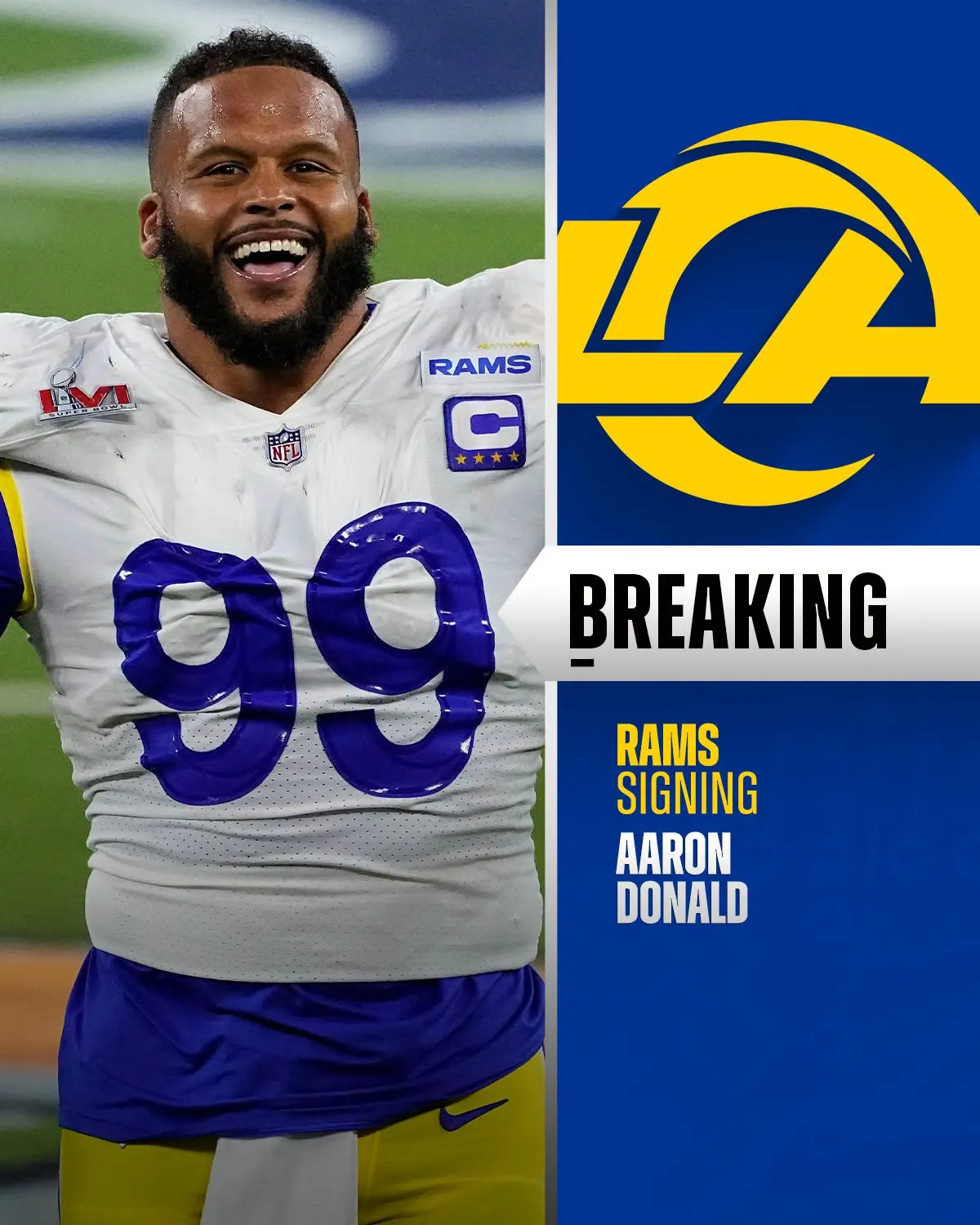
The main takeaway from the Rams’ disgusting loss to the Seahawks is simple, brutal, and unavoidable that this team needs Aaron Donald back even today. Or at least it needs someone—anyone—who can restore what used to be the Rams’ defining trait which is a defense that makes opponents miserable.

I’ll own my part in this too. I misread what this defense was. I talked myself into believing that a young pass-rush pairing—Jared Verse and Byron Young—could collectively give you something close to what Aaron Donald gave you by himself. Even saying that out loud tells you the entire story: it takes two men just to approximate the impact of one generational wrecking ball. Donald wasn’t just a player. He was the identity. He was the intimidation. He was the problem every offense had to solve before they even bothered thinking about their own play-calling menu.

And Sunday night, it was obvious because without that interior terror, without that constant collapse, without that sense that the Rams defense is going to hit you in the mouth, the entire thing becomes soft. And once it’s soft up front, everything behind it gets exposed. Which is exactly what happened.

The Cornerback Situation Wasn’t “Bad.” It Was Ridiculous and so Bad that they Both Need to Go.

What was worse than the front? The cornerbacks. I get it is the hardest position to play in Football. I have said that sentance alot this year. But, these arte guys are just bad and I’m not even sure who gets the biggest share of the blame: is it the coordinator? Is it positional coaching? Is it the raw talent on the roster? Is it a mix of all of it? Because what we watched was not “they got beat by a great receiver.” What we watched was repeated, systemic breakdown.

There were sequences where the Seahawks’ top target—the top receiver in the league by yardage this season—was left wide open not once, not twice, not even three times… but four plays in a row. Four. Plays. In. A. Row. And the chain ended the way it always ends when you keep giving free releases and free space: touchdown, with the nearest defender basically spectating from five feet away like he bought a ticket.

I don’t care who you are playing. If you are an NFL defense in a conference championship, you do not get to “oops” your way through four straight coverage busts on the same guy. You blanket him. You bracket him. You cloud him. You roll coverage his direction. You press. You reroute. You make someone else beat you. You do something besides repeatedly leaving the No. 1 weapon alone like it’s a preseason scrimmage.

And it wasn’t just one receiver, either. It was the entire structure. Seattle looked like they had the answers before the Rams even lined up the question.

The Ugly Part: Seattle Didn’t Have to Work for Anything

From the first set of downs, I said it: this looked bad. And it never got better.

Even when the Rams took the lead, the defense responded by letting Seattle stroll down the field like it was a walkthrough. There was a touchdown drive where—after the first two plays—the only “stop” the Rams got was a Seahawks receiver dropping the ball while standing wide open. That was the best defensive play for long stretches of the game: a drop. Not a sack. Not a forced throw. Not a tipped ball. Not a punch-out. A drop.

That is not Rams football. That is not professional defense.

Seattle went down the field repeatedly without resistance. They didn’t look stressed. They didn’t look rushed. They didn’t look like they were being forced into uncomfortable decisions. They looked comfortable, organized, and unbothered—like they knew the Rams couldn’t stop anything anyway.

And That’s Why I’m Bringing Up the -7 Yards Game

Because this is the Rams. This franchise is supposed to be built on sick defenses. The Rams have an actual history of turning an opponent’s offense into a humiliation highlight reel.

Let’s remind everyone what “Rams defense” used to mean.

On November 4, 1979, the Los Angeles Rams held the Seattle Seahawks to negative seven (-7) total yards. Not “held them under 200.” Not “forced three punts.” Negative. Seven. Total. Yards. The Rams won 24-0 in Seattle, and that game has lived in NFL lore as one of the most suffocating defensive performances ever recorded.

Think about how insane that is: the Seahawks finished with positive rushing yards but got obliterated so badly in the passing game—primarily because of sacks—that their net offensive total went below zero. That is the Rams standard when we talk about “Rams defense.” That’s the DNA. That’s the legacy. That’s the expectation that comes with the horns on the helmet.

And I’m not even getting into the Fearsome Foursome years and the way those defenses defined brutality for an entire era. The point is simple: this franchise knows what dominance looks like. It has worn dominance like a crown before.

Jack Youngblood’s legendary display of toughness involved playing not just half a game, but three full playoff games — including Super Bowl XIV and the Pro Bowl — with a broken left fibula.

The Injury and the “Gutsiest Performance” as the injury occurred in the second quarter of the NFC Divisional Playoff game against the Dallas Cowboys on December 23, 1979, when Youngblood fell awkwardly over an offensive lineman.

“Tape It Up”: After realizing the severity of the injury, Youngblood told the team doctor to “tape this dadgum thing up” and returned for the second half. He even sealed the Rams’ 21–19 victory with a crucial sack of Roger Staubach in the closing moments.

Three Games, One Leg: He went on to play every defensive snap in the next two games — the NFC Championship against the Tampa Bay Buccaneers, a 9–0 Rams win, and Super Bowl XIV against the Pittsburgh Steelers.

The Pro Bowl: One week after the Super Bowl, he also played in the 1980 Pro Bowl in Hawaii on the same injured leg, a feat that stunned teammates and cemented his legend.

Legacy of Toughness is gone as Youngblood’s decision to play through the pain, his leg fitted with a special plastic brace, is widely regarded as one of the gutsiest performances in NFL history. Known for remarkable durability, he missed only one game in his entire 14-year career — a Rams record 201 consecutive games played. His toughness earned him the nickname “the John Wayne of football,” famously given by coach John Madden.

So when you watch Seattle go from their own 20 to the Rams’ 20 in what feels like twenty seconds—multiple times—it’s not just a bad night. It feels like sacrilege.

Seattle ran the ball whenever they wanted. It was five yards a pop like it was a special teams drill. The first time I can remember them getting truly stoned—no gain, negative, something that actually felt like a “statement stop”—it was late in the half. And by then the entire tempo of the game had been set.

That is how you lose playoff games: you let the other team dictate pace, live in second-and-manageable, and call the whole playbook. The Seahawks weren’t “finding openings.” The openings were just there.

And, of course Special Teams Added Gasoline to the Fire as yes, we have to talk about the Xavier Smith disaster. Falling down on your own, in a massive moment, in front of millions, is bad enough. But then trying to play hero-ball and field the ball anyway? What the fuck is wrong with you? He needs to go too. That sequence wasn’t just a mistake—it was a collapse of basic situational discipline. And it came after another fumble that he recovered himself. He looked like a deer in headlights until he was benched, and by that point the damage was real.

The issue is this, in championship games, you can survive a mistake if your defense can answer with a stand, a takeaway, a sack, a tone-setting series. The Rams defense did none of that. So every error became fatal.

Stafford and Nacua Were Good Enough to Win. Here’s the part that should make Rams fans sick: Matthew Stafford played well enough to get to the Super Bowl. Puka Nacua played like a star. That underhanded little shovel/flip to Puka for the first down? That’s the Stafford stuff I love—creative, confident, veteran, taking what the defense gives you and still making it look like art.

But it didn’t matter. Because you can score points all night and still lose when your defense is basically a turnstile.

And that’s the nightmare now, the Rams offense can be championship-level for another year or two if Stafford stays healthy and the line holds up. The window is not closed. The window is wide open.

The problem is the defense is so far from the standard that it’s dragging a Super Bowl-capable offense into a knife fight with no blade.

The Offseason Needs Are Not Complicated either. You don’t need to overthink it. You don’t need to play cute. You don’t need to pretend this is a “few tweaks” situation.

  1. Cornerbacks and coverage talent have to be upgraded.
    If both corners are free agents? Let them walk. Replace the room. This cannot be the group again.
  2. Get the best defensive lineman available in the draft.
    The Rams are picking in the top ten. Use that kind of pick on someone who changes games. Someone who collapses pockets and forces offenses to speed up.
  3. Keep the offense intact and plan for the QB future without panicking.
    Stafford should play another year. He looked capable. The Rams can develop a succession plan, but the urgent, screaming priority is defense.
  4. Trim the roster where it’s obvious.
    If Atwell is gone, fine. If you can keep Havenstein on a reasonable deal, great. Higbee is worth keeping if the price makes sense, but the Rams do have bodies at tight end. None of those decisions matter if the defense stays this weak.

My Hard Truth

I’m not just saying the Rams played horrible. I’m saying I realized, in real time, that they simply are bad on defense—and I didn’t want to believe it because it’s the Rams and the Rams are “supposed” to defend.

The games where the defense looked respectable were the games against inferior teams or offenses that couldn’t punish mistakes. The well-coached teams, the organized teams, the teams with real passing structure? They carved the Rams up. They lived in the 30s where honestly, every game now is starting to feel like indoor football—every game is a track meet, every game has 35 points each, the kicking is confusing and it makes no sense to mer at least and overall, the Rams are trying to win shootouts without any defensive backbone.

BTW, I did not see one great defensive play in this game. One sack by Fiske came late but that was it. Not one huge play. No moment where you felt the Rams imposed anything. No series where they turned the tide. No sack that mattered. No takeaway. No hit that changed a drive.

Seattle walked to the red zone like it was routine.

That’s why this loss hurts more than just “we were close.” The offense proved the Rams can still contend. The defense proved the Rams cannot finish. At the same time, it’s worth noting that no team displayed full-blown greatness this year. Still, after watching this defense in the Championship game, I do not believe the Rams belonged in the Super Bowl. It was a debacle on every level. It was embarrassing. It was horrible.

And if this franchise wants to get back to being what it is supposed to be—if it wants to honor the legacy of defenses that once held Seattle to negative yards—then the 2026 plan is simple:

Stop pretending this unit is “almost there.”
Build a defense that actually scares someone again.

POST GAME: A Defensive Collapse That Exposed the Rams’ Greatest Offseason Need. The Los Angeles Rams came within one possession of the Super Bowl. The offense delivered, Matthew Stafford delivered, Puka Nacua delivered — and yet the season ended one step short because the defense did not simply bend, it broke entirely. The NFC Championship loss to Seattle was not just a painful defeat. It was a spotlight shining directly on the most urgent truth facing this franchise: the Rams’ defense is nowhere near championship caliber in its current form.

The lasting image from Sunday night is not Stafford’s sharp throws or Nacua’s relentless route running. It is Seahawks receivers standing alone in open space, untouched, uncontested, unbothered — play after play after play. There was a time when Rams defenses dictated games. Sunday reminded everyone how far away this unit is from those standards.

For years, the identity of the Rams was built around destructive defensive dominance. Aaron Donald collapsing pockets, offensive coordinators terrified to run interior concepts, quarterbacks rushing throws before routes developed. That presence is gone, and against Seattle it became painfully obvious that no combination of young edge rushers can replicate what one generational interior force provided. Jared Verse and Byron Young are promising talents, but needing two players to approximate one legend says everything about the void left behind.

Even more alarming was the state of the secondary. The Seahawks’ top receiver spent much of the game operating in what looked like open practice conditions. Multiple snaps in a row saw the same target left completely uncovered, culminating in a touchdown where the nearest defender was yards away. That is not simply poor execution — that is systemic failure in communication, scheme, or personnel. Whether the blame lies with coaching or roster construction, the result was the same: Seattle walked down the field at will.

Jaxon Smith-Njigba’s performance was not a surprise. He led the league in receiving yards this season and has emerged as one of the NFL’s premier young receivers. But elite players should be challenged, bracketed, doubled, forced to earn every yard. Instead, he was gifted them. No disguise. No adjustment. No response. The Seahawks did not out-scheme the Rams — they exploited a unit that could not adapt.

The run defense told a similar story. Seattle consistently gained chunk yardage on early downs, setting up easy passing situations and neutralizing any pass rush threat. Stops behind the line were rare. The Seahawks controlled tempo, possession, and rhythm, and the Rams never found a counterpunch. It looked less like a championship defense and more like a unit hoping for mistakes rather than creating disruption.

Ironically, the best defensive play of the night came not from a Ram, but from a Seahawk dropping a perfectly thrown pass. That cannot happen in a conference championship. Championship defenses create turning points. This one watched them slip by.

And that is what makes this loss so frustrating — the offense did its job. Stafford was composed, creative, and accurate. His underhanded flick to Nacua for a critical conversion was vintage brilliance. Nacua continued his historic rise, attacking coverage and making contested catches look routine. The Rams scored enough points to win. In most playoff games, that offensive output would send a team to the Super Bowl. But when a defense cannot produce a single momentum-changing play, even elite offense becomes irrelevant.

This is not a matter of one bad night. Throughout the season, strong offenses exposed the Rams’ defensive limitations. Inferior opponents were contained; competent, well-coached teams moved the ball with alarming ease. That trend reached its breaking point in the biggest game of the year.

The offseason roadmap is clear.

The secondary must be rebuilt. Starting-caliber cornerbacks are non-negotiable priorities. The free-agent market and early draft capital must be directed toward coverage players who can actually hold up against top-tier receivers. The current group simply cannot.

The defensive line also needs reinforcements, particularly inside. With a top-ten draft pick available, the Rams should target the best defensive lineman on the board. Interior disruption changes everything — coverage, blitz design, run fits, and third-down efficiency. This defense desperately needs a new centerpiece.

On offense, the foundation remains strong. Stafford still has command of this system and showed he can stay healthy and productive. Nacua is already among the league’s elite. The supporting skill positions are solid, with room for minor refinements. The quarterback succession plan will need attention soon, but that is not today’s crisis. Today’s crisis is defense.

The Rams also enter the offseason with flexibility — cap space, draft assets, and an established coaching structure. That combination offers hope. This is not a team entering decline; it is a contender with a glaring weakness. Address that weakness decisively, and the Rams remain in the Super Bowl conversation next season.

But there is no sugarcoating Sunday’s lesson. A championship roster cannot survive a defense that allows receivers to run uncovered, backs to gain free yardage, and quarterbacks to operate untouched. The Rams did not lose because of one mistake. They lost because their defensive structure collapsed under playoff pressure.

The good news is clarity. The path forward is obvious. Build the defense back into a weapon. Restore the identity. Reclaim the standard.

Because if the Rams field even a competent defense next season, with this offense already in place, the road back to the NFC Championship — and beyond — will be wide open.

And this time, they cannot afford to leave anyone uncovered.

01kfb1s5cetyx6qxbdeg

On the Rampage: Rams Walk the Tightrope, Survive the Bears, and Stare Down Seattle

If you’re trying to decide whether to be furious or impressed after the Rams’ latest playoff win, congratulations — you’re reacting correctly. Sunday night’s 20–17 overtime victory over the Chicago Bears was the purest form of Rams football in 2026: brilliant, baffling, self-inflicted, and ultimately victorious.

This was a game that never should have reached overtime. It was also a game the Rams absolutely deserved to win. Somehow, both things are true.

Let’s start with the contradiction at the heart of it all: the Rams defense.

How do you properly process a unit that commits one of the most amateur, jaw-dropping breakdowns imaginable — and then turns around and makes the single biggest play of the game? How do you get angry when the same defense that nearly ended your season is the exact reason you’re still alive?

Late in regulation, the Rams had the Bears exactly where they wanted them. Up seven, with just over three minutes remaining, this was the moment for a composed, professional close. A strong team with a reliable offense runs the ball, drains the clock, and leaves no doubt.

Instead, the Rams went three-and-out.

The Bears got the ball back, and what followed defies logic, coaching, and decades of football fundamentals. On a broken play in a snowstorm, Caleb Williams scrambled backward roughly 30 to 40 yards, fading away under heavy pressure, and launched a desperation heave that somehow resulted in a touchdown. Not tipped. Not contested. A Bears receiver standing eight to ten feet clear in the end zone.

It was staggering. Completely staggering.

There is no defensive scheme on earth where that should happen. Not in the NFL. Not in college. Not on a Friday night field lit by car headlights. Not on the Elementary School Playground I played on as a kid did that ever happen. That kind of Hail Mary coverage failure simply does not exist until it did, courtesy of the 2026 Rams.

That single play forced overtime and left Rams fans staring at their screens in disbelief. A season that should have continued comfortably now hung by a thread.

And then the emotional whiplash arrived.

Because in overtime, the same defense that authored that historic breakdown immediately redeemed itself. On the Bears’ first possession, safety Kam Curl read Caleb Williams perfectly, stepped in front of the throw, and intercepted the pass. Just like that, momentum flipped again. One mistake nearly ended everything. One interception saved it all.

That’s playoff football at its most brutal and beautiful.

Offensively, the Rams were both effective and exasperating. Kyren Williams was outstanding, rushing for 87 yards and scoring both Rams touchdowns. Every time the Rams committed to the run, the offense looked balanced, physical, and in control of the game’s tempo.

And every time they abandoned it, the offense sputtered.

The pattern was maddeningly familiar. One drive featuring three straight runs and a first down, followed by the next drive leaning into pass-heavy play-calling and another quick punt. In cold, snowy conditions against a defense selling out to pressure, the Rams consistently made things harder than they needed to be.

Matthew Stafford, however, delivered when it mattered most. He finished with 258 passing yards and authored one of the most important throws of the night: a clutch third-down completion to Puka Nacua in overtime that pushed the Rams into field-goal range. Stafford didn’t need to be perfect — he needed to be decisive — and that’s exactly what he was.

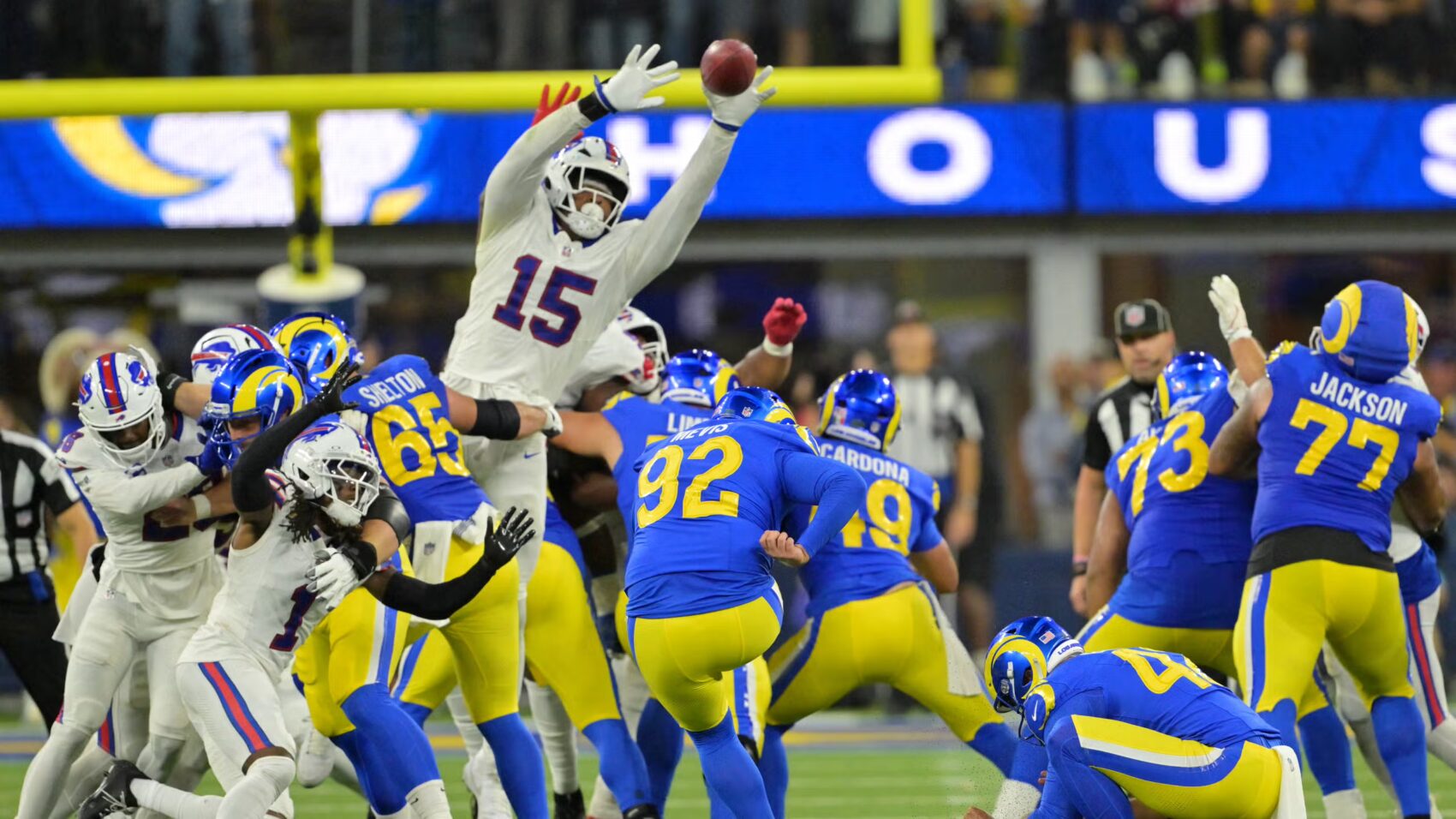
The Los Angeles Rams’ dramatic 20-17 overtime victory over the Chicago Bears in the NFC Divisional Playoff on January 18, 2026, was sealed by a player whose calm execution belied a season of special teams turmoil: rookie kicker Harrison Mevis.

Mevis’ Decisive, Composed Moment

After Rams safety Kam Curl intercepted Bears QB Caleb Williams in overtime, the offense moved the ball into field goal range. The moment the field goal unit took the field, the pervasive anxiety among Rams fans was palpable. This was more than just a routine kick; it was the potential resolution to a season-long saga of kicking woes.

Amid this tense backdrop, Harrison Mevis, a relative newcomer to the team, delivered with remarkable composure. He calmly drilled the 42-yard field goal with 3:19 left in the extra period, a clean, true kick that ended the Bears’ season and launched the Rams into the NFC Championship.

A Season of Kicking Calamity at its best.

Mevis’ game-winning boot was impactful because it came against a backdrop of persistent and severe special teams issues that had plagued the Rams all year. The team experienced significant inconsistency and turnover at the kicking position, turning even the most routine attempts into nerve-wracking events all year.

Earlier in the season, the Rams had initially placed their confidence in rookie kicker Joshua “Karty” Karty, but he had his own struggles. Karty’s early-year difficulties, marked by missed kicks and wavering confidence, contributed significantly to the “special teams calamity” narrative that defined much of the Rams’ 2025-2026 campaign.

This instability had conditioned fans to brace for disaster every time the field goal unit appeared. Against that history of failure and anxiety, Harrison Mevis, game-winning kick was a vital moment of stability and possibly the most important one of the entire season.

Harrison Mevis, nicknamed the “Thiccer Kicker,” built a record-setting college career at the University of Missouri and played professionally in the UFL before joining the Rams mid-season. He is listed at 6-foot-0 and 245 pounds, which is considered large for an NFL kicker and the source of his famous nickname. 

Mevis was a dedicated kicker and punter throughout his high school and college careers, also playing soccer as a goalie. 

  • High School: He attended Warsaw Community High School in Indiana, where he was an all-conference selection in both football and soccer. His older brother also kicked at the high school, and they once shared a school record for longest field goal.
  • College: He played for four seasons at the University of Missouri, where he set program records for career field goals made (86) and total points (405). A highlight of his college career was a game-winning, 61-yard field goal against Kansas State in 2023, which set an SEC record.
  • Pre-NFL Pro: After going undrafted in the 2024 NFL Draft, Mevis signed with the Carolina Panthers’ practice squad but was waived. He then excelled in the United Football League (UFL) with the Birmingham Stallions, making 20 of 21 field goals in the regular season, before signing with the Jets in the summer of 2025 and eventually joining the Rams. 

Mevis’ solid build of 6-foot-0 and 245 pounds led to the nickname “the Thiccer Kicker” at Missouri, a moniker he has fully embraced. He views the nickname positively, believing it helps instill confidence in his teammates that he is a reliable player who can handle high-pressure situations.

On the other side, Caleb Williams was equal parts spectacular and flawed. He threw for 257 yards, accounted for two touchdowns, and made one of the most ridiculous throws in recent playoff memory to force overtime. He also threw three interceptions, including the fatal one in overtime. That stat line perfectly captures a rookie quarterback learning, in real time, how thin the margin for error is in January.

Chicago’s season deserved better than a gut-punch ending, but the Rams ultimately made one more play when it counted.

Now comes Seattle.

Rams–Seahawks games are never normal. They’re always tense. They’re always ugly. They’re almost always decided by three points or fewer. The last loss to Seattle stung badly — right up there with the Eagles loss earlier this year — and no one in that locker room has forgotten it.

The weather should be manageable. The matchup is fair. And if the Rams actually commit to what works — running the ball, protecting the football, and avoiding catastrophic breakdowns — they should beat Seattle. Not just survive them. Beat them.

They can beat them big if they show up locked in.

But Sunday night was another reminder that this Rams team insists on testing itself before delivering the payoff. They survived Chicago. They survived their own mistakes. They squeaked through the Carolina Panthers game after playi9ng not so great football over the last five weeks.

Now comes the moment where survival is no longer enough.

Because there will be no room for another miracle mistake next week. I dont have the nerves for it. I want to see some good football and not a game filled with mistakes.

Overtime Summary

The overtime period was short but decisive.

  • The Bears received the kickoff but their drive was cut short when safety Kam Curl intercepted a pass from quarterback Caleb Williams near midfield.
  • Taking over at their own 22-yard line, the Rams drove down the field, with Matthew Stafford completing key passes to Davante Adams and Puka Nacua to get within field goal range.
  • Rams kicker Harrison Mevis then kicked a 42-yard field goal with 3:19 left in the extra period to seal the victory and send the Rams to the NFC Championship game. 

Game Details

The game was forced into overtime after a dramatic, last-minute touchdown by the Bears.

  • Chicago tied the game 17-17 with just 18 seconds remaining in regulation on a spectacular, off-script 14-yard touchdown pass from Caleb Williams to tight end Cole Kmet.
  • Rams running back Kyren Williams was a key player throughout the game, rushing for 87 yards and scoring two touchdowns, including the one that gave the Rams a 17-10 lead in the fourth quarter.
  • Caleb Williams threw for 257 yards and two touchdowns but had three interceptions, with the final one in overtime proving most costly. 
88124372007-wc-larcar

On The Rampage: Rams Begin Their Retribution Tour With Wild Card Thrill

The Los Angeles Rams didn’t just win on Saturday night. They started a mission — one fueled by unfinished business, lingering stings, and the kind of payback only January football delivers. In a thrilling 34–31 victory over the Carolina Panthers at Bank of America Stadium, the Rams officially launched Phase One of their retribution tour, taking a page — from Donald Trump’s “playbook”: settle scores, assert dominance, and make everyone remember that losses are temporary, but reckoning is permanent.

For Rams fans, this game was more than a win. It was the first step in payback season — and the taste of it was welcomed.

Game Summary: A Wild Card Rollercoaster

The Rams came out swinging, quickly building a 14-0 lead, as quarterback Matthew Stafford connected with his top targets and Kyren Williams powered the running game. Puka Nacua was a constant nightmare for Carolina’s secondary, moving the chains and making critical catches.

The Rams’ defense recorded just one official sack on Panthers quarterback Bryce Young during the Wild Card game, with a “near safety” occurring that was missed by a millisecond or a millimeter.

Defensive Pressure vs. the Panthers was rough. Although only the one sack was logged — credited to nose tackle Poona Ford — the Rams applied consistent pressure throughout the game. On the other side of the ball, quarterback Matthew Stafford faced multiple pressures, including a first-half hand injury when his throwing hand struck a pass rusher’s forearm.

The Los Angeles Rams defense registered a 45.5% pressure rate on Panthers quarterback Bryce Young during yesterday’s Wild Card game. The defensive front was consistently in Young’s face, forcing him out of the pocket and leading to four straight incompletions on the Panthers’ final drive to seal the Rams’ victory.

Overall, the Rams’ defense generated 11 total pressures on Stafford, spread across several key players.

Rams Defensive Statistics (vs. Panthers, Jan 10, 2026)

Statistic Count/RateDetails
Sacks1Registered by the Rams defense.
Quarterback Hits8The number of times Young was hit.
Total Pressures20+ (approx.)Pressure rate was 45.5%, showing consistent disruption.
Near Safety1One play resulted in or was close to a safety.

The Panthers’ defensive plan to pressure Stafford early in the game initially created some disruption, but the Rams’ offensive line adjusted quickly, effectively picking up blitzes and keeping their quarterback protected when it mattered most.

But the Panthers refused to roll over. They clawed back, capitalizing on Rams mistakes — including a blocked punt, a dropped touchdown, and several costly penalties — to take a late fourth-quarter lead.

That’s when Stafford, battling through a painful finger injury, orchestrated a 71-yard game-winning drive, capped by a 19-yard touchdown pass to tight end Colby Parkinson with just 38 seconds left. The Panthers had one final chance, but a fourth-down pass was dropped, sealing a hard-fought Rams victory and advancing Los Angeles to the divisional round.

Final Score: Rams 34, Panthers 31.

Phase One: complete.

Key Player Highlights: Stafford, Parkinson, Nacua

Colby Parkinson is the clear game ball recipient. His clutch touchdown and consistent route-running made him the difference-maker when it counted most. As the physical target in the red zone, Parkinson delivered exactly what the Rams needed to start their retribution story. The other tight end Terrance Ferguson was listed as inactive (sat out) against the Panthers. He was a late scratch for the game due to a hamstring injury. With Ferguson out, the Rams’ available tight ends included Tyler Higbee, Colby Parkinson, Davis Allen, and Nick Vannett.

Matthew Stafford threw for 304 yards and three touchdowns despite injuring his right index finger early in the game. X-rays later confirmed no broken bones or dislocation, and Stafford remained the cool hand under pressure, engineering two late fourth-quarter touchdown drives, including the decisive score to Parkinson. “Never a doubt — No. 9 is with us,” said wide receiver Puka Nacua after the game, capturing the locker room sentiment perfectly.

Speaking of Nacua, he dominated the stat sheet with 10 receptions for 111 yards and a touchdown, consistently moving the chains and keeping the Rams’ offense balanced and dangerous.

Kyren Williams contributed 57 rushing yards and a touchdown, setting the tone with his physical running in key moments. On the Panthers’ side, Chuba Hubbard totaled 46 yards and two touchdowns, while Bryce Young threw for 264 yards and a touchdown — showing that the Panthers fought every step of the way.

Kevin Dotson’s absence continues to impact the Rams’ offensive line and running game. The opportunities for the running backs to make quick decisions immediately after Williams or Corum receive the ball are limited without him. While the Rams are executing many run plays effectively, defenders often stack the line right away, disrupting others. Sometimes on 3rd and 4th down plays which really hurts the team.

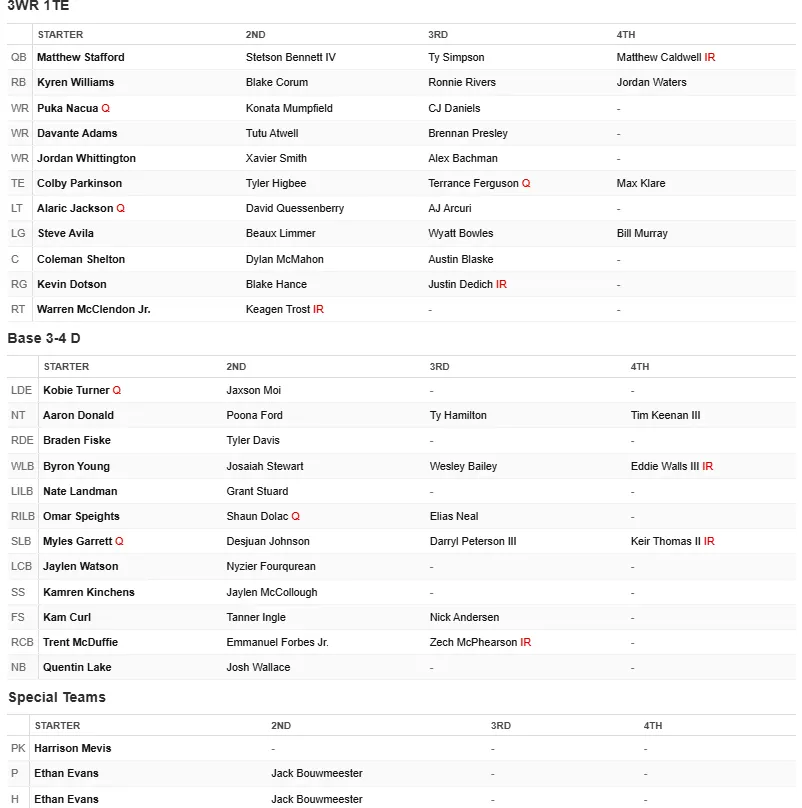
Dotson’s absence is particularly significant because he was ranked among the top guards in the NFL this season. Justin Dedich has been filling in as the starting right guard during his absence.

Kevin Dotson: Right guard, out with an ankle injury.
Justin Dedich: Started at right guard in place of Dotson for the Wild Card game.
Steve Avila: Plays left guard (opposite Dotson) and is a key part of the interior line.
Alaric Jackson & Warren McClendon Jr.: Primary left tackle and right tackle, respectively.
Coleman Shelton: Starting center for the Rams.

Even without Dotson, the offensive line provided solid protection for Matthew Stafford during the Rams’ 34–31 victory over the Panthers. Head coach Sean McVay noted that Dotson is “making good progress,” suggesting a potential return if the Rams advance further in the playoffs.

The offensive line, even without Dotson for the Wild Card game, provided solid protection for Matthew Stafford in their 34-31 victory over the Panthers. Head coach Sean McVay mentioned that Dotson is “making good progress,” suggesting a potential return if the Rams advance further in the playoffs.

Discipline Issues and McVay’s Takeaways

Head coach Sean McVay acknowledged the team’s mistakes, highlighting nine accepted penalties for 83 yards — a significant contrast to their usual disciplined performance. Notable infractions included:

  • Personal fouls: Nate Landman’s helmet-to-helmet hit gave Carolina first-and-goal at the 3-yard line, leading to a touchdown.
  • Taunting: Desjuan Johnson’s penalty on a kickoff gave the Panthers favorable field position at the 46-yard line.
  • Holding: Justin Dedich’s offensive holding on a second-and-three converted into first-and-20, contributing to the blocked punt sequence.

McVay was blunt: “We need to be more poised. There’s a lot to clean up.” But he also emphasized that finding a way to win in tough circumstances is what playoffs are about.

Injuries: Stafford, Others, and Panthers Update

Stafford’s finger injury was a key storyline. He bent it back after hitting a defender’s arm but played through the pain, misfiring on some throws before finishing with two late touchdown drives. X-rays came back negative, confirming no fractures or dislocations, and he is expected to be ready for the next playoff game.

Rams inactives included Kevin Dotson (ankle), Jordan Whittington (knee), Josh Wallace (ankle), and Darious Williams (ankle). On the Panthers’ side, left tackle Ikem Ekwonu suffered a ruptured patella tendon, a significant injury that could affect his future availability.

The Road Ahead: Playoff Scenarios and Retribution Map

The Rams’ next opponent depends entirely on the 49ers vs. Eagles game and so does the plan for true retribution this year:

  • Eagles win: Rams travel to Seattle to face the No. 1-seeded Seahawks — a team they split with in the regular season, both games decided by a single point. The Seahawks are a natural target for retribution after this season’s matchups.
  • 49ers win: Rams head to Chicago to face the No. 2-seeded Bears — another step in the mission of payback and playoff dominance.

If the bracket breaks favorably, the Rams’ ultimate retribution could be Phase Three: facing the Philadelphia Eagles, one of the teams that not only beat them this year but did so in games the Rams should have won. Every matchup, every step forward, is about settling unfinished business.

The Rams are not here to apologize, clean up a narrative, or earn forgiveness. They are here for retribution — to settle scores, make up for past losses, and assert their dominance in the playoffs.

Phase One — defeating the Panthers on the road — is in the books. Phase Two looms, and it only works if the Eagles win, with either the Seahawks or Bears waiting. And Phase Three? For that to happen, we have to assume the Eagles will first beat the 49ers and then overcome the Bears. Only then can this full retribution plan come to fruition, setting up the ultimate reckoning with every team that has left a mark on the Rams’ season — the ones to whom we handed victories earlier in the year.

The message is clear: survive, advance, and take payback seriously. The Rams are coming, and they will not be denied.

Key Player Statistics

PASSING C/ATTYDSTDsINT
Matthew Stafford (LAR)24/4230431
Bryce Young (CAR)21/3626410
RUSHING ATTYDSTDs
Kyren Williams (LAR)13571
Chuba Hubbard (CAR)16462
RECEIVING RECYDSTDs
Puka Nacua (LAR)101111
Jalen Coker (CAR)91341
One Handed

On The Rampage was Fugly for Three Quarters, Ruthless When It Mattered — Rams Secure No. 5 Seed in 37–20 Win — I Welcome Going To Carolina This Week

There are wins… and then there are wins that meet the standard.

Unless the Rams are winning by 30 or 40, I do not consider it a true statement game — and Sunday’s 37–20 victory over the Arizona Cardinals lived in uncomfortable limbo for most of the afternoon. Yes, the Rams ultimately pulled away. Yes, the win secured the No. 5 seed in the NFC Playoffs. And yes — it was still far uglier than it ever needed to be.

For nearly three quarters, this game was an emotional tax on Rams fans that should have been paid off by halftime.

A Game That Should Have Been Over Early — Wasn’t. There was an expectation heading into this matchup that Sean McVay was rolling out the full arsenal. That did not happen. What unfolded instead was a strangely sluggish, mistake-prone offensive showing that allowed a 3-14 Cardinals team to hang around far longer than acceptable.

Dropped passes. Miscommunications. Missed opportunities. Drives that stalled for no reason other than execution failures.

At one point in the third quarter, the Rams were trailing — and the frustration boiled over for good reason. Easy catches were clanked off hands, including misses by tight ends and wideouts who will be expected to deliver in January. Matthew Stafford, meanwhile, occasionally reverted to those puzzling half-throws — balls floated five yards in front of open receivers, creating unnecessary incompletions and momentum killers.

When you are paid millions of dollars to perform eight months a year — and your professional shelf life is often seven seasons or fewer — attention to detail is not optional. It is the job.

Catching the football is the job. Catch the Ball and you know what I mean, I mean the ones my nephew would catch if thrown to him should be caught by the professional’s on the Rams team during those 8 months.

The Adams Void Is Still Real. This game once again highlighted how much Davante Adams is missed within this offense. His absence forces Stafford to attempt tighter, more dangerous throws to Atwell and Smith, shrinking windows and magnifying mistakes. The Rams are simply at their best when two elite wide receiver outlets are on the field.

We have seen this formula before — Cooper Kupp paired with Odell Beckham Jr. produced championship football. Now, Puka Nacua is that cornerstone, but he still needs a second gravitational force to fully unlock the offense.

Puka, of course, remains unreal.

Ten receptions. 76 yards. Another highlight-reel, intentional one-handed touchdown grab — because of course he did. He continues to look like a receiver who simply does not drop footballs, regardless of how difficult the attempt. And as always, he played with infectious energy, high-fiving fans along the first rows of the stands like a kid living his dream.

But Puka needs help.
And this offense needs Adams.

The Turning Point: Flip the Switch, End the Game

OK. Now. Once the Rams finally decided to play real football, the game ended quickly.

After Arizona briefly grabbed a 20–16 lead in the third quarter, Los Angeles responded with ruthless precision:

• Stafford to Colby Parkinson — 21-yard touchdown
• Stafford to Tyler Higbee — 22-yard touchdown
• Stafford to Parkinson again — 1-yard touchdown

They finally all caught the ball. They caught every pass finally in that 4th quarter without missing any and in essence, earning their money. It is not hard if you do the work.

That is 21 unanswered points, fueled by defensive stops, pressure packages, and a quarterback who suddenly remembered he is still one of the most dangerous passers in football.

The defensive backs were consistently left hung out to dry. On multiple occasions, they were isolated in one-on-one coverage that directly led to Arizona’s biggest plays. There were no safeties in sight on two of the Cardinals’ touchdowns, and to be honest, Jacoby Brissett delivered several excellent passes that no defender realistically could have reached.

Witherspoon and Curl did miss a few plays, but they also play the most difficult position in football. Witherspoon, in particular, clearly knew he made mistakes — you could see it on his face on the sideline.

Stafford finished with 259 yards and four touchdowns, passing Dan Marino for seventh all-time in career touchdown passes — a milestone quietly buried beneath the chaos of the first three quarters.

Tyler Higbee returned with authority despite a few early drops. He finished the game as the Rams’ leading receiver in yardage, catching five of his six targets for 91 yards and a touchdown, including a critical fourth-quarter score that slammed the door shut.

Higbee did have an early drop and missed a difficult catch just before halftime in the Rams’ 37–20 win over the Cardinals. However, overall, he delivered a strong performance. His final catch rate for the game was an impressive 83.3%.

His overall performance was considered a success in his return from a six-game injury absence and he proved to be a reliable target for quarterback Matthew Stafford when the team pulled away in the second half. 

Finally, the defense erased Arizona in the fourth quarter, allowing only 50 yards of offense and forcing multiple punts and a turnover on downs.

When the Rams turned it on — it was over.

Which is exactly the problem.

They didn’t need three quarters to do it.

Which is exactly the problem.

Officiating Wasn’t the Story — Execution Was. This was not a ref-ball game. There were no controversial flags, no momentum-changing calls, no blown challenges. The only penalties that stood out were the kind that scream lack of focus — delay-of-game situations and sloppy procedural mistakes that simply should not exist in January football. The ones when they can’t even get the play off because of something stupid.

This loss of precision is fixable — but it must be corrected immediately.

Playoff Path: Carolina Awaits. Now, the Rams head to Carolina for the Wild Card round — and it is a matchup that should be handled decisively. I welcome everything about this game. Including having to travel to Charlotte.

Weather will not be a factor. Talent will be. And if the Rams show up focused and complete, this is a game they should win comfortably. The blueprint is already visible with our pressure defense, efficient Stafford, Puka being Puka, and tighter execution across the board.

But they cannot afford another three-quarter warm-up act in the postseason.

January football does not forgive sloppiness.
January football ends seasons.

The Rams are talented enough to make a deep run — but only if they start playing like a team that understands how rare this window really is.

Because fugly wins still count…

But championships demand dominance. We need to get back to dominating. After all, the commissioner practically pleaded with the team because we were winning so easily — and now the entire league feels like it is on equal ground. That is my new conspiracy theory that I am feeding you readers, but in reality, there is no true frontrunner.

If you consider Denver and Seattle to be the No. 1 seeds and, in essence, the top teams, they are also winning in fugly ways. This postseason is wide open. And if the Rams play the way we did before last month ended, we will crush every team we face.

Overall, they need to execute the full game plan — which means catching the football and eliminating illegal procedure penalties. Get the play off. That is the easiest thing to do in football. Please stop messing that up. Make no mistakes. In essence, executing the game plan means catching the ball, protecting it without fumbling, and not throwing passes directly into defenders’ chests. It is not a high bar to meet if you do the work.

01kctm1tc7yn0rbb33xd

The Rams Lost One Time Since 1937 in NFL Games When Ahead by 15+ in Fourth Quarter (323 total), Until Last Night’s Debacle vs Seattle SeaPussies… I mean, Seahawks

Rams Hand Seattle a Gift in a Collapse That Will Be Debated for Years. There are losses that sting, and then there are losses that leave an entire base staring at the screen wondering how something so routine became so catastrophic. I think I stared at the screen after that game last night for 4 to 7 minutes in utter disbelief. What unfolded against Seattle was not just a bad night or an unfortunate bounce. It was a historic breakdown layered with poor execution, exhausted personnel, questionable strategy, and an officiating decision that will live in Rams lore whether anyone likes it or not.

The Rams entered the fourth quarter with a commanding 16-point lead, a position that has essentially been automatic throughout franchise history. Prior to this game, Los Angeles had lost just once when holding a lead of that size late. That reality alone underscores how rare and shocking this outcome was. Teams do not casually erase that kind of deficit against a prepared opponent unless help is offered, intentionally or otherwise.

For most of the night, the Rams looked in control. Outside of an early Seattle touchdown, the flow of the game tilted heavily toward Los Angeles. The offense moved the ball, the defense generated pressure, and the Rams steadily built what felt like a safe cushion. Even when Seattle briefly held a 7–6 edge, the imbalance on the field was obvious. This was a game the Rams were dictating.

Then the fourth quarter arrived, and everything unraveled.

The offense went ice cold at the worst possible time. Three consecutive three-and-outs flipped field position and momentum entirely. Possessions that could have drained clock and suffocated Seattle instead gave the Seahawks life. A missed field goal only compounded the problem, leaving points on the field when the margin for error was shrinking. When a team stops sustaining drives, the defense pays the price, and that is exactly what happened.

The Rams’ defense, already dealing with personnel losses, simply ran out of gas. Missing key offensive linemen forced adjustments that limited the running game, and without Dontae Adams, the margin for offensive error narrowed further. By the time Seattle mounted its late push, the Rams’ defense had been on the field far too long, a familiar pattern in losses this season. Fatigue does not show up on the stat sheet, but it shows up in missed tackles, slower reactions, and breakdowns at critical moments.

The turning point, and the play that will be argued about long after this season ends, came on Seattle’s two-point conversion attempt. What appeared in real time to be an incomplete pass was ruled, after review, a backward throw. The ball had been tipped at the line, altering its trajectory, and play was effectively treated as dead by everyone on the field. The eventual recovery in the end zone felt less like football instinct and more like chaos benefiting one side. He picked up the ball is all he did because it was incomplete pass.

Technically correct rulings do not always align with common sense or competitive fairness, and this was one of those moments. The ball traveled directly along the line, was tipped, and was initially ruled incomplete. Players were already transitioning to the next sequence. The fact that the play was retroactively turned into a live-ball score is the type of decision that fuels frustration not just with one call, but with how often officiating now determines outcomes. The player merely picked up the ball and walked off the field. Everyone knew it was a pass. Darnold knew it was a pass. The player who picked up the ball knew it was incomplete. That is why the Seahawks are pussies. They do not mind winning in shady ways.

Those fans, by the way, are tools. What is the deal with people taking their shirts off during bad weather and at games? Have you ever noticed that none of them are ever shredded or chiseled? Case in point, last night I saw beer-bellied weirdos from Seattle standing in the rain with their shirts off. Regardless, I have drifted away from the actual topic because none of that absolves the Rams.

You cannot allow a punt return touchdown in that situation. You cannot go nearly fifteen minutes without scoring when trying to close out a divisional opponent. You cannot rely on officials to rescue you from execution failures. The Rams did more than enough to give this game away before the whistle ever became part of the story.

Overtime only reinforced the sense of inevitability. Even after Matthew Stafford delivered a brilliant touchdown strike to Puka Nacua, Seattle responded. The decision to go for two and end it was aggressive, confident, and effective. That is what happens when momentum fully flips.

Lost in the frustration was one of the most impressive throws of Stafford’s season, a no-look touchdown that reminded everyone why this offense can still be dangerous. Unfortunately, moments like that fade quickly when they come in a loss of this magnitude.

The larger picture, however, still matters. The Rams now know exactly what lies ahead. With games remaining against Atlanta and Arizona, both outside the playoff hunt, the path is clear even if it is difficult. Winning out is no longer optional. Whether it takes three or four playoff victories after that, this team’s margin for error has been eliminated.

If there is one takeaway, it is that no contender this season will coast. Every team that wants a championship will have to earn it the hard way, and on a multi-game winning streak. The Rams are still capable of that run, but games like this make the road steeper than it ever needed to be.

This loss will be remembered not just for the call, but for the sequence of mistakes that made that call matter. Great teams close. The Rams did not, and history will record this night as one of the most painful reminders of that truth. I am still pissed off quite frankly. I think I left out so much. I am not even sure what I wrote here because I am just pissed off.

w640xh480_GettyImages-2251918997

On The Rampage is Surviving the Grind, Thriving in the Chaos as Rams Outlast Lions

Watching the Rams’ 41–34 win over the Lions felt oddly familiar, not because of the opponent or even the stakes, but because of the emotional toll. In many ways, this game unfolded exactly the way expected, yet still managed to be exhausting in real time. You know what is coming, you brace for it, and somehow it is still grueling when you have to live through it play by play. That was this game in a nutshell. It is like living with President Donald J Trump. You know what you are getting and when it happens, its a gruel getting through it.

From the moment kickoff arrived, it felt inevitable that this would turn into a high-scoring, back-and-forth affair. At halftime, when concerns started bubbling up, it was clear where this was heading. Both teams were going to land deep into the 30s, possibly flirting with a 38–35 type of finish. That prediction proved close to the truth. Knowing that outcome I chose ahead of time did not make the process any easier. Watching it unfold was a grind, full of tension, momentum swings, and moments that tested patience.

The Rams tried to establish physical control early, and that part was encouraging. The opening sequence leaned into the run game immediately, with two of the first three plays on the ground. That balance carried into the opening drive, splitting runs and passes evenly, which is exactly how this offense functions best. Then came the nightmare moment with a brutal interception that was entirely on Matthew Stafford. The ball was forced into traffic, or what am I saying, it was thrown at the defemders face and if it even got by this guy, it would have been thrown directly into coverage where Colby Parkinson had defenders draped all over him. Credit is due for the hustle that prevented a defensive touchdown, but the mistake itself was inexcusable.

That turnover set the tone for a chaotic first half. The defense nearly delivered a stop afterward, but Jared Goff dropped a perfect touchdown pass that simply could not be defended. It was one of those plays where execution beats coverage, and the Rams had to absorb it.

Adding to the early frustration was an officiating sequence that encapsulated everything maddening about NFL replay rules. Lions head coach Dan Campbell challenged a spot that was technically non-reviewable. Officials charged him a timeout, only for replay officials in New York to later correct the spot anyway. Campbell was right, the ball was moved, and yet he still lost a timeout. It was the worst possible way to open a game, and it only added to the sense that the first half was slipping sideways.

The Rams entered halftime trailing 24–17 despite clearly being capable of more. The Lions had momentum, and the Rams were dealing with mounting concerns, including injuries. Both starting wide receivers went down at one point. Puka Nacua returned, but Davante Adams did not escape unscathed. With a short week looming and a Thursday night matchup against the Seahawks, Adams’ hamstring injury casts a long shadow. It is increasingly likely the Rams will have to navigate that game without him, which raises the stakes even further.

The second half, however, told a very different story. The defense finally found its footing, making crucial adjustments and shutting down Detroit’s rhythm. Three straight three-and-outs to open the third quarter flipped control of the game. That stretch alone changed everything. The Rams outscored the Lions 24–10 after halftime, including a run of 20 unanswered points that swung the game decisively.

Still, the defensive concerns remain real. Time and again, the Rams were inches away from sacking Goff, only to see him escape and turn broken plays into explosive gains. One missed sack turned into a massive chunk play when a wide receiver broke free and won a one-on-one matchup downfield. That scenario repeated itself far too often. Plan A was getting pressure, and it worked almost every time. The problem was the lack of a Plan B or C when that pressure did not immediately get home. In those moments, coverage broke down, and Detroit capitalized.

When the defense did clamp down, the results were dominant. That second-half performance showed what this unit can be when assignments are sound and pursuit is disciplined. Allowing points is one thing; gifting yards and momentum is another. The Rams must clean up the latter if they want to make a deep run.

Offensively, Stafford was brilliant and infuriating in equal measure. He threw into tight windows all night, sometimes threading the needle beautifully and other times flirting with disaster. His intensity is unmatched. He might be the only quarterback in the league who looks angry immediately after throwing a touchdown. That edge defines him, and it fuels this team. Even after scoring, he is already dissecting the next mistake.

One of the wildest moments came at the end of the first half, when the Rams managed to steal three points with just two seconds remaining. After burning time on an extra play, they still walked away with points, a decision that felt unnecessary yet somehow worked. Those points mattered.

Puka Nacua was a force of nature. Last week he felt like an eager kid. This week he looked like the Hulk. Every catch came with fury, chest pounding, and raw emotion. He played angry, celebrated aggressively, and nearly shoved Sean McVay into the end zone during one exuberant moment. That fire is contagious, and it set the tone for the offense.

The Rams’ running backs deserve immense credit as well. The combination of vision, burst, and toughness has transformed this offense. Their ability to slice through defenses, paired with an excellent offensive line, was not something many saw coming this season. Add in the subtle coaching details, like consistently falling forward for extra yards, and it becomes clear that this unit is well-drilled and relentlessly physical.

There were, of course, moments that threatened to derail everything. A late pass interference call against the Rams was a prime example of officiating overreach. The defensive back made a strong, clean play, yet the flag flew anyway. These subjective calls continue to influence outcomes far too often, especially late in games. That penalty brought the Lions within one score and shifted momentum unnecessarily. The league has to find a better balance that allows defensive backs to actually defend.

Despite all of that, the Rams proved they are the better team. Detroit played as well as it could, but this matchup always felt like it would tilt toward Los Angeles once adjustments were made. The final score reflected that reality, even if the path there was exhausting.

The win clinched a playoff berth and kept the Rams tied with the Seahawks for the best record in the NFC, making this week’s Thursday night matchup even more critical. With Adams likely sidelined, the challenge becomes steeper. But this team has shown resilience, depth, and the ability to adapt.

This was not a comfortable win. It was messy, stressful, and draining. But it was also revealing. The Rams can survive chaos, adjust on the fly, and impose their will when it matters most. That is what good teams do. And as grueling as this game was to live through, it was another reminder that this Rams team is built for exactly these moments.

251207_002_rams_at_cardinals-original

On The Rampage: The Rams Roll Arizona, Reclaim First Place, and Look Like a Team Ready for a Run

If last week’s frustration against Carolina left Rams fans pacing the hallways, muttering to themselves, and replaying all the “almost” moments in their heads, Sunday afternoon in Glendale was the antidote. The Los Angeles Rams didn’t just bounce back — they detonated. They walked into State Farm Stadium, flattened the Arizona Cardinals 45–17, and walked out looking every bit like a 10–3 team that should honestly be 12–1.

What made this win different wasn’t just the scoreboard. It was the rhythm, the demeanor, the tempo, the swagger, and the unmistakable feeling that this team knows exactly who they are. They didn’t panic when things started slowly. They didn’t tighten up after Arizona opened with a touchdown drive. Instead, the Rams did what truly elite teams do: they adjusted, they settled, and then they overwhelmed.

This was a win rooted in talent, toughness, and a whole lot of fun — and that combination is why this Rams team feels dangerous heading into December.

McVay’s Niceness Nearly Becomes a Plot Twist… Again

There are a lot of things you can say about Sean McVay, but one of his quirks — a charming one when his team wins, a maddening one when they don’t — is that he refuses to run up the score or embarrass opponents. Even in a game where the Rams hung 45, the coaching staff clearly throttled down at times. They pulled the starters for the entire fourth quarter, which I expected; however, Jimmy Garoppolo didn’t get to pass the ball and had to hand it off seven or eight times.

But the moment that made us crack up[ the most yesterday was McVay refusing to challenge a clearly blown call on a missed catch that should’ve been reversed in a heartbeat. He let it slide — classic McVay — and two plays later the Cardinals punched in another score. The Rams, unfazed, answered immediately. But still… sometimes you just want McVay to channel his inner Belichick and go full scorched-earth.

Honestly, you can act that way with this team for that exact reason. We will find a way to get points the very next set of downs.

The Start Was Not Ugly Per Se… Yet Suddenly It Was 10–0?

Let’s be real: the first three Rams possessions were clunky. Mistimed throws into the middle of zone coverage, drives that looked like they were learning to walk again after last week’s stumble, and a general sense of “settle down, guys.”

And then — poof — somehow the Rams had 24 points. That’s the beauty of this team. Even when they feel slightly off, the talent level is too high, the offensive line is too powerful, and the big-play ability is too explosive.

The Cardinals initially led 7-0 on an opening drive touchdown, but the Rams scored 21 unanswered points to secure a 24-10 halftime lead and extended their lead in the second half.

Those zone-beating throws that everyone hates? They work. They’ve always worked. They’re how the 49ers built a dynasty with dump-offs and yards-after-catch glory. And again this week, they were right there when Stafford needed them.

The Two-Headed Dragon: Williams and Corum

We knew it was coming. We’ve felt it brewing for weeks. And finally, Blake Corum broke the big one — a 48-yard slicing, darting, vintage-runner touchdown that felt like it was ripped straight out of a Gale Sayers highlight reel.

Between Corum and Kyren Williams, the Rams’ backfield is absolute poetry. Hard cuts, old-school leg drive, vision that looks artificially enhanced, and a burst through the line that has opposing defenses frozen flat-footed.

The stats tell the story — over 200 yards between them — but the eye test says even more. These two are so effective that half the time you can’t even tell which one exploded through the hole for another 12-yard chunk.

And let’s not ignore the obvious: they’re doing it behind one of the best offensive lines in the NFL right now. On a “bad” play, they’re falling forward for six. On most plays, Stafford has the kind of time in the pocket you typically only see in commercials selling new credit cards.

Stafford: The Maestro, The Machine, The Man

We need to say this without hesitation: Matthew Stafford is one of the best quarterbacks to ever wear horns. One of the best the franchise has ever had. One of the best we’ve ever seen, period.

He is deliberate. He is surgical. He is serious — almost comically serious when everyone around him is celebrating like kids.

The contrast is hilarious: Stafford correcting a receiver on a touchdown play, while Puka Nacua skips around like the happiest human alive. One looks like a professor annoyed someone mislabeled a chart; the other looks like recess just started.

But that is the Rams’ identity. That balance of fire and joy. Stafford is the engine. Puka is the spark. And this offense is a machine.

Puka Nacua: Human Joy, Football Menace

There isn’t anyone in the NFL who plays with more enthusiasm than Puka. He’s a wide receiver who runs routes like a kid chasing a balloon across a playground. Then, mid-laugh, he’ll turn around and make a physics-defying, world-pausing catch.

He was spectacular again this week — twisting grabs, contested balls, yards after contact, and two touchdowns that showcased every part of his absurd skill set. But he wasn’t alone. Davante Adams (yes, that Adams) pulled down a few impossible catches of his own.

The Rams spread the ball around like they were hosting a football potluck. And when this offense is distributing touches like that, they are borderline impossible to stop.

Don’t Overlook the Standings: Things Are Getting Weird

Here’s the part that nearly made us choke on our water before kickoff: the Rams entered Sunday at 9–3 and were momentarily listed as a wild card. A wild card.

Thanks to an unexpected Seahawks surge and some NFC weirdness, the Rams needed this win to reclaim first place. I mean only for a few hours but still, it was alrming to see on that TV screen. Now they’re back on top. But the reality check was sobering: this race is tight.

The Broncos and Patriots sitting at 11–2 which is the best record in football today?

And yes — the Rams should be 12–1. The losses to Philadelphia and San Francisco should not have happened. The Panthers loss was a weird anomaly. Credit to Carolina — they hit hard — but the Rams didn’t finish the job. That’s why this stretch matters.

Especially because…

The Stafford–Goff Bowl II Arrives This Week

This week brings the sequel: Stafford vs. Goff in Los Angeles. It’s a matchup the league didn’t know it needed, but we absolutely love it — because earlier this year, some people were claiming Jared Goff had played better than Stafford, which I quickly called BS on and then of course, the best player rose to the surface.

After that? A trip to New England, which just so happens to fall on my birthday — and could be the kind of “birthday gift” game that puts the Rams in commanding position entering the home stretch. I like beating teams with the best record in Football.

And let’s be clear: both games are winnable. Both games are games the Rams will win. Both games are games that will either cement this team as a legitimate Super Bowl contender… or make the NFC race even messier.

This Team Has Fun — and That’s Why They’re Dangerous

The Rams aren’t just good. They aren’t just talented. They’re cohesive. They’re having fun. They are, to put it simply, a team that genuinely enjoys playing football together.

Puka laughing after every catch. Corum and Williams celebrating each other’s big runs. The sideline bouncing. And Stafford — always serious, always correcting, always teaching — grounding the chaos.

It’s the perfect chemistry of discipline and joy. And when a team mixes those two ingredients this late into a season, they become something very, very tough to stop.

maxresdefault

On The Rampage This Week as Rams Crush Buccaneers in Dominant Sunday Night Victory While I Wonder Why They Never Play on Thanksgiving Day

The first time I ever laid eyes on the Rams was during an early-to-mid January 1974 playoff game against the Minnesota Vikings. I didn’t see much—maybe three and a half minutes of actual game action—but that brief glimpse was enough to spark a lifelong fascination with the blue and yellow. What I really remember were the interviews afterward. The team had a black quarterback, James Harris, and seeing him lead the team on national television in that era felt impressive and groundbreaking. I knew it was not the norm because the Roger Staubacks and fran Rakington’s ruled the sports news wires those years. Plus, the Rams never got any news coverage back then. After all, they were a West Coast team. No one paid attention to West Coast Football teams. There were only four West Coast teams then if you count Denver.

The game itself was a close loss for the Rams, but the details of the scoreboard faded compared to the imagery etched into my memory. I also remember that this was around the time they first went with the striking yellow and blue uniforms, which immediately stood out to me. Those bold colors, combined with the energy of the playoff moment and the charisma of the players, cemented my admiration for the team.

It’s amazing to think that even just a few minutes of a broadcast could leave such a lasting impression. That short January moment in 1974 was the start of a love affair with the Rams that has lasted decades—a connection rooted in style, history, and a sense of seeing something new and exciting in the world of football.

Regardless of my daydreaming about the first time I ever saw th Rams play (sorta), the Rams have played on Thanksgiving before, but appearances have been infrequent, with a long drought stretching decades.

I’m wondering if the next time I ever got to watch a Rams game could have feasibly been on Thanksgiving Day. I don’t remember it clearly, but back then, we rarely saw any games outside of the Philadelphia matchups, and even those were hardly broadcast because they didn’t sell out. As a result, most games were never shown on TV.

Rams all-time Thanksgiving games

Date OpponentFinal ScoreLocation
Nov 22, 1945Detroit Lions28–21 WDetroit, MI
Nov 23, 1967Detroit Lions31–7 WDetroit, MI
Nov 25, 1971Dallas Cowboys21–28 LDallas, TX
Nov 27, 1975Detroit Lions20–0 WDetroit, MI

Other Historical Notes

  • St. Louis years: While the team was in St. Louis (1995–2015), the Rams never played on Thanksgiving, largely due to a longstanding local high school game and the NFL’s focus on the Dallas Cowboys as a holiday fixture.
  • Reasons for the drought: Traditionally, the Detroit Lions and Dallas Cowboys are the guaranteed hosts for Thanksgiving games. With these two teams dominating the holiday schedule, opportunities for other franchises have been extremely limited.

I’m wondering if the next time I ever got to watch a Rams game could have feasibly been on Thanksgiving Day in 1975. I don’t remember it clearly, but back then, I rarely saw any games outside of the Philadelphia matchups, and even those were hardly broadcast because they didn’t sell out. As a result, most games were never shown on TV. We had Monday Night Football games which were a big deal.

Regardless of my daydreaming, the Rams Crush Buccaneers in Dominant Sunday Night Victory. The Los Angeles Rams put on a masterclass performance Sunday night, dismantling the Tampa Bay Buccaneers 34–7 in a game that showcased both offensive brilliance and defensive supremacy. With the win, the Rams improve to 9–2, cementing their status as the NFC’s top team, while the Buccaneers drop to 6–5, suffering their third consecutive defeat.

From start to finish, the Rams were in complete control, with quarterback Matthew Stafford delivering a near-perfect performance and the defense suffocating every Tampa Bay offensive attempt.

Stafford Leads Offensive Explosion

MVP-caliber first half: Stafford was unstoppable, completing his first 12 passes and finishing the game with 273 yards and three touchdowns, without a single interception. His early-game dominance reinforced his standing as one of the league’s elite quarterbacks and highlighted the firepower of the Rams’ offense.

Fast start pays dividends: Stafford connected with Davante Adams for two early touchdowns, while Colby Parkinson added another score, giving the Rams a commanding lead in the first half.

Receiving weapons shine: Rookie sensation Puka Nacua led the team with seven receptions for 97 yards, and Adams continued his touchdown streak, hauling in his 11th and 12th of the season, demonstrating why he’s one of the most dangerous receivers in the NFL.

First-half domination: By halftime, the Rams led 31–7, scoring on every offensive drive. Their high-octane attack left Tampa Bay’s defense scrambling and set the tone for the rest of the game.

Defense Steals the Show

The Rams’ defense was equally impressive, turning the game into a one-sided affair.

Early takeaway sets the tone: Cornerback Cobie Durant intercepted a pass intended for Buccaneers tight end Cade Otton and returned it 50 yards for a touchdown, quickly giving Los Angeles a 14–0 lead in the opening quarter.

Pressure from every angle: The Rams’ pass rush was relentless. Jared Verse and Kobie Turner each recorded two sacks, constantly disrupting Tampa Bay’s rhythm.

Stifling performance: The defense held the Buccaneers to just 193 total yards, including only 70 net passing yards. Two first-half interceptions and consistent pressure forced Buccaneers quarterback Baker Mayfield out of the game with a left shoulder injury, with Teddy Bridgewater taking over.

Other Highlights

New kicking presence: Rookie kicker Harrison Mevis made an immediate impact, connecting on both of his field goal attempts, including a clutch 52-yarder in the fourth quarter, addressing a long-standing team weakness.

Honoring a legend: The Rams paid tribute to retired defensive lineman Aaron Donald, recognizing his lasting impact on the franchise and the league during the game.

Second-half management: While the offense slowed down after halftime, the Rams’ defense continued to dominate, keeping Tampa Bay scoreless in the second half and ensuring the win remained secure. Not that it slowed down, it was all about smart game and time management, and honestly, I don’t have much to critique today. The team played a nearly perfect game. The coaching was outstanding yesterday, and the play-calling was excellent—I don’t remember asking for more runs or passes at any point. The defense was nearly flawless. Everything was firing on all cylinders all game long; there was no real letdown.

I like Baker Mayfield, and I felt bad for his team, but I also know what the Rams are capable of this year. I’ve said it many times: this team should be undefeated if they play their game. Not a single team can match them unless they play out of their minds and ferociously, like what happened in the second half of that Eagles game this season while the Rams faltered to the point where they allowed it to happen.

Looking Ahead

This victory reinforces the Rams as serious NFC contenders, demonstrating their ability to dominate top-tier opponents on prime-time stages. Stafford’s performance, combined with a suffocating defense and emerging playmakers like Nacua, signals that Los Angeles is firing on all cylinders. If this team maintains its balance and intensity, the road to the playoffs looks extremely promising.