
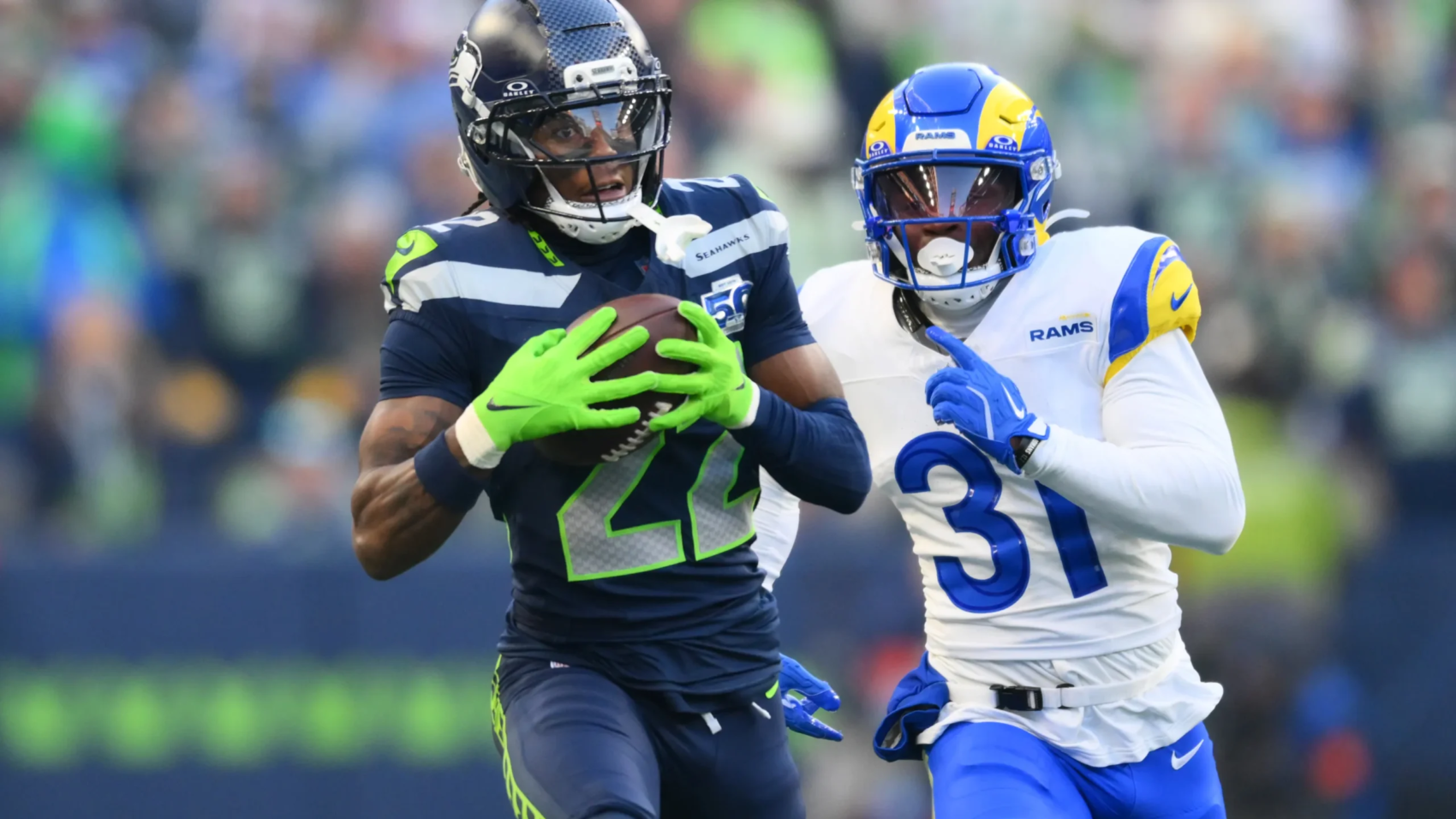
The main takeaway from the Rams’ disgusting loss to the Seahawks is simple, brutal, and unavoidable that this team needs Aaron Donald back even today. Or at least it needs someone—anyone—who can restore what used to be the Rams’ defining trait which is a defense that makes opponents miserable.
I’ll own my part in this too. I misread what this defense was. I talked myself into believing that a young pass-rush pairing—Jared Verse and Byron Young—could collectively give you something close to what Aaron Donald gave you by himself. Even saying that out loud tells you the entire story: it takes two men just to approximate the impact of one generational wrecking ball. Donald wasn’t just a player. He was the identity. He was the intimidation. He was the problem every offense had to solve before they even bothered thinking about their own play-calling menu.
And Sunday night, it was obvious because without that interior terror, without that constant collapse, without that sense that the Rams defense is going to hit you in the mouth, the entire thing becomes soft. And once it’s soft up front, everything behind it gets exposed. Which is exactly what happened.
The Cornerback Situation Wasn’t “Bad.” It Was Ridiculous and so Bad that they Both Need to Go.
What was worse than the front? The cornerbacks. I get it is the hardest position to play in Football. I have said that sentance alot this year. But, these arte guys are just bad and I’m not even sure who gets the biggest share of the blame: is it the coordinator? Is it positional coaching? Is it the raw talent on the roster? Is it a mix of all of it? Because what we watched was not “they got beat by a great receiver.” What we watched was repeated, systemic breakdown.
There were sequences where the Seahawks’ top target—the top receiver in the league by yardage this season—was left wide open not once, not twice, not even three times… but four plays in a row. Four. Plays. In. A. Row. And the chain ended the way it always ends when you keep giving free releases and free space: touchdown, with the nearest defender basically spectating from five feet away like he bought a ticket.
I don’t care who you are playing. If you are an NFL defense in a conference championship, you do not get to “oops” your way through four straight coverage busts on the same guy. You blanket him. You bracket him. You cloud him. You roll coverage his direction. You press. You reroute. You make someone else beat you. You do something besides repeatedly leaving the No. 1 weapon alone like it’s a preseason scrimmage.
And it wasn’t just one receiver, either. It was the entire structure. Seattle looked like they had the answers before the Rams even lined up the question.
The Ugly Part: Seattle Didn’t Have to Work for Anything
From the first set of downs, I said it: this looked bad. And it never got better.
Even when the Rams took the lead, the defense responded by letting Seattle stroll down the field like it was a walkthrough. There was a touchdown drive where—after the first two plays—the only “stop” the Rams got was a Seahawks receiver dropping the ball while standing wide open. That was the best defensive play for long stretches of the game: a drop. Not a sack. Not a forced throw. Not a tipped ball. Not a punch-out. A drop.
That is not Rams football. That is not professional defense.
Seattle went down the field repeatedly without resistance. They didn’t look stressed. They didn’t look rushed. They didn’t look like they were being forced into uncomfortable decisions. They looked comfortable, organized, and unbothered—like they knew the Rams couldn’t stop anything anyway.
And That’s Why I’m Bringing Up the -7 Yards Game
Because this is the Rams. This franchise is supposed to be built on sick defenses. The Rams have an actual history of turning an opponent’s offense into a humiliation highlight reel.
Let’s remind everyone what “Rams defense” used to mean.
On November 4, 1979, the Los Angeles Rams held the Seattle Seahawks to negative seven (-7) total yards. Not “held them under 200.” Not “forced three punts.” Negative. Seven. Total. Yards. The Rams won 24-0 in Seattle, and that game has lived in NFL lore as one of the most suffocating defensive performances ever recorded.
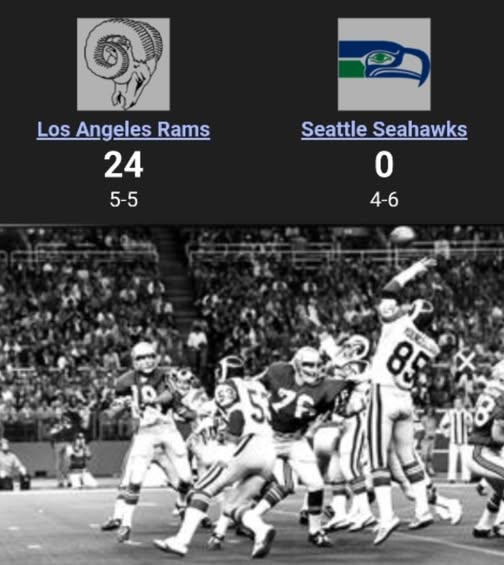
Think about how insane that is: the Seahawks finished with positive rushing yards but got obliterated so badly in the passing game—primarily because of sacks—that their net offensive total went below zero. That is the Rams standard when we talk about “Rams defense.” That’s the DNA. That’s the legacy. That’s the expectation that comes with the horns on the helmet.
And I’m not even getting into the Fearsome Foursome years and the way those defenses defined brutality for an entire era. The point is simple: this franchise knows what dominance looks like. It has worn dominance like a crown before.
Jack Youngblood’s legendary display of toughness involved playing not just half a game, but three full playoff games — including Super Bowl XIV and the Pro Bowl — with a broken left fibula.
The Injury and the “Gutsiest Performance” as the injury occurred in the second quarter of the NFC Divisional Playoff game against the Dallas Cowboys on December 23, 1979, when Youngblood fell awkwardly over an offensive lineman.
“Tape It Up”: After realizing the severity of the injury, Youngblood told the team doctor to “tape this dadgum thing up” and returned for the second half. He even sealed the Rams’ 21–19 victory with a crucial sack of Roger Staubach in the closing moments.
Three Games, One Leg: He went on to play every defensive snap in the next two games — the NFC Championship against the Tampa Bay Buccaneers, a 9–0 Rams win, and Super Bowl XIV against the Pittsburgh Steelers.
The Pro Bowl: One week after the Super Bowl, he also played in the 1980 Pro Bowl in Hawaii on the same injured leg, a feat that stunned teammates and cemented his legend.
Legacy of Toughness is gone as Youngblood’s decision to play through the pain, his leg fitted with a special plastic brace, is widely regarded as one of the gutsiest performances in NFL history. Known for remarkable durability, he missed only one game in his entire 14-year career — a Rams record 201 consecutive games played. His toughness earned him the nickname “the John Wayne of football,” famously given by coach John Madden.
So when you watch Seattle go from their own 20 to the Rams’ 20 in what feels like twenty seconds—multiple times—it’s not just a bad night. It feels like sacrilege.
Seattle ran the ball whenever they wanted. It was five yards a pop like it was a special teams drill. The first time I can remember them getting truly stoned—no gain, negative, something that actually felt like a “statement stop”—it was late in the half. And by then the entire tempo of the game had been set.
That is how you lose playoff games: you let the other team dictate pace, live in second-and-manageable, and call the whole playbook. The Seahawks weren’t “finding openings.” The openings were just there.
And, of course Special Teams Added Gasoline to the Fire as yes, we have to talk about the Xavier Smith disaster. Falling down on your own, in a massive moment, in front of millions, is bad enough. But then trying to play hero-ball and field the ball anyway? What the fuck is wrong with you? He needs to go too. That sequence wasn’t just a mistake—it was a collapse of basic situational discipline. And it came after another fumble that he recovered himself. He looked like a deer in headlights until he was benched, and by that point the damage was real.
The issue is this, in championship games, you can survive a mistake if your defense can answer with a stand, a takeaway, a sack, a tone-setting series. The Rams defense did none of that. So every error became fatal.
Stafford and Nacua Were Good Enough to Win. Here’s the part that should make Rams fans sick: Matthew Stafford played well enough to get to the Super Bowl. Puka Nacua played like a star. That underhanded little shovel/flip to Puka for the first down? That’s the Stafford stuff I love—creative, confident, veteran, taking what the defense gives you and still making it look like art.
But it didn’t matter. Because you can score points all night and still lose when your defense is basically a turnstile.
And that’s the nightmare now, the Rams offense can be championship-level for another year or two if Stafford stays healthy and the line holds up. The window is not closed. The window is wide open.
The problem is the defense is so far from the standard that it’s dragging a Super Bowl-capable offense into a knife fight with no blade.
The Offseason Needs Are Not Complicated either. You don’t need to overthink it. You don’t need to play cute. You don’t need to pretend this is a “few tweaks” situation.
- Cornerbacks and coverage talent have to be upgraded.
If both corners are free agents? Let them walk. Replace the room. This cannot be the group again. - Get the best defensive lineman available in the draft.
The Rams are picking in the top ten. Use that kind of pick on someone who changes games. Someone who collapses pockets and forces offenses to speed up. - Keep the offense intact and plan for the QB future without panicking.
Stafford should play another year. He looked capable. The Rams can develop a succession plan, but the urgent, screaming priority is defense. - Trim the roster where it’s obvious.
If Atwell is gone, fine. If you can keep Havenstein on a reasonable deal, great. Higbee is worth keeping if the price makes sense, but the Rams do have bodies at tight end. None of those decisions matter if the defense stays this weak.
My Hard Truth
I’m not just saying the Rams played horrible. I’m saying I realized, in real time, that they simply are bad on defense—and I didn’t want to believe it because it’s the Rams and the Rams are “supposed” to defend.
The games where the defense looked respectable were the games against inferior teams or offenses that couldn’t punish mistakes. The well-coached teams, the organized teams, the teams with real passing structure? They carved the Rams up. They lived in the 30s where honestly, every game now is starting to feel like indoor football—every game is a track meet, every game has 35 points each, the kicking is confusing and it makes no sense to mer at least and overall, the Rams are trying to win shootouts without any defensive backbone.
BTW, I did not see one great defensive play in this game. One sack by Fiske came late but that was it. Not one huge play. No moment where you felt the Rams imposed anything. No series where they turned the tide. No sack that mattered. No takeaway. No hit that changed a drive.
Seattle walked to the red zone like it was routine.
That’s why this loss hurts more than just “we were close.” The offense proved the Rams can still contend. The defense proved the Rams cannot finish. At the same time, it’s worth noting that no team displayed full-blown greatness this year. Still, after watching this defense in the Championship game, I do not believe the Rams belonged in the Super Bowl. It was a debacle on every level. It was embarrassing. It was horrible.
And if this franchise wants to get back to being what it is supposed to be—if it wants to honor the legacy of defenses that once held Seattle to negative yards—then the 2026 plan is simple:
Stop pretending this unit is “almost there.”
Build a defense that actually scares someone again.
POST GAME: A Defensive Collapse That Exposed the Rams’ Greatest Offseason Need. The Los Angeles Rams came within one possession of the Super Bowl. The offense delivered, Matthew Stafford delivered, Puka Nacua delivered — and yet the season ended one step short because the defense did not simply bend, it broke entirely. The NFC Championship loss to Seattle was not just a painful defeat. It was a spotlight shining directly on the most urgent truth facing this franchise: the Rams’ defense is nowhere near championship caliber in its current form.
The lasting image from Sunday night is not Stafford’s sharp throws or Nacua’s relentless route running. It is Seahawks receivers standing alone in open space, untouched, uncontested, unbothered — play after play after play. There was a time when Rams defenses dictated games. Sunday reminded everyone how far away this unit is from those standards.
For years, the identity of the Rams was built around destructive defensive dominance. Aaron Donald collapsing pockets, offensive coordinators terrified to run interior concepts, quarterbacks rushing throws before routes developed. That presence is gone, and against Seattle it became painfully obvious that no combination of young edge rushers can replicate what one generational interior force provided. Jared Verse and Byron Young are promising talents, but needing two players to approximate one legend says everything about the void left behind.
Even more alarming was the state of the secondary. The Seahawks’ top receiver spent much of the game operating in what looked like open practice conditions. Multiple snaps in a row saw the same target left completely uncovered, culminating in a touchdown where the nearest defender was yards away. That is not simply poor execution — that is systemic failure in communication, scheme, or personnel. Whether the blame lies with coaching or roster construction, the result was the same: Seattle walked down the field at will.
Jaxon Smith-Njigba’s performance was not a surprise. He led the league in receiving yards this season and has emerged as one of the NFL’s premier young receivers. But elite players should be challenged, bracketed, doubled, forced to earn every yard. Instead, he was gifted them. No disguise. No adjustment. No response. The Seahawks did not out-scheme the Rams — they exploited a unit that could not adapt.
The run defense told a similar story. Seattle consistently gained chunk yardage on early downs, setting up easy passing situations and neutralizing any pass rush threat. Stops behind the line were rare. The Seahawks controlled tempo, possession, and rhythm, and the Rams never found a counterpunch. It looked less like a championship defense and more like a unit hoping for mistakes rather than creating disruption.
Ironically, the best defensive play of the night came not from a Ram, but from a Seahawk dropping a perfectly thrown pass. That cannot happen in a conference championship. Championship defenses create turning points. This one watched them slip by.
And that is what makes this loss so frustrating — the offense did its job. Stafford was composed, creative, and accurate. His underhanded flick to Nacua for a critical conversion was vintage brilliance. Nacua continued his historic rise, attacking coverage and making contested catches look routine. The Rams scored enough points to win. In most playoff games, that offensive output would send a team to the Super Bowl. But when a defense cannot produce a single momentum-changing play, even elite offense becomes irrelevant.
This is not a matter of one bad night. Throughout the season, strong offenses exposed the Rams’ defensive limitations. Inferior opponents were contained; competent, well-coached teams moved the ball with alarming ease. That trend reached its breaking point in the biggest game of the year.
The offseason roadmap is clear.
The secondary must be rebuilt. Starting-caliber cornerbacks are non-negotiable priorities. The free-agent market and early draft capital must be directed toward coverage players who can actually hold up against top-tier receivers. The current group simply cannot.
The defensive line also needs reinforcements, particularly inside. With a top-ten draft pick available, the Rams should target the best defensive lineman on the board. Interior disruption changes everything — coverage, blitz design, run fits, and third-down efficiency. This defense desperately needs a new centerpiece.
On offense, the foundation remains strong. Stafford still has command of this system and showed he can stay healthy and productive. Nacua is already among the league’s elite. The supporting skill positions are solid, with room for minor refinements. The quarterback succession plan will need attention soon, but that is not today’s crisis. Today’s crisis is defense.
The Rams also enter the offseason with flexibility — cap space, draft assets, and an established coaching structure. That combination offers hope. This is not a team entering decline; it is a contender with a glaring weakness. Address that weakness decisively, and the Rams remain in the Super Bowl conversation next season.
But there is no sugarcoating Sunday’s lesson. A championship roster cannot survive a defense that allows receivers to run uncovered, backs to gain free yardage, and quarterbacks to operate untouched. The Rams did not lose because of one mistake. They lost because their defensive structure collapsed under playoff pressure.
The good news is clarity. The path forward is obvious. Build the defense back into a weapon. Restore the identity. Reclaim the standard.
Because if the Rams field even a competent defense next season, with this offense already in place, the road back to the NFC Championship — and beyond — will be wide open.
And this time, they cannot afford to leave anyone uncovered.