88356773007-usatsi-28086144

On The Rampage: The Rams Held The Seahawks to -7 Yards One Game to Their Being Zero Resistance Today in The NFC Championship — The Rams’ Defensive Identity Is Gone

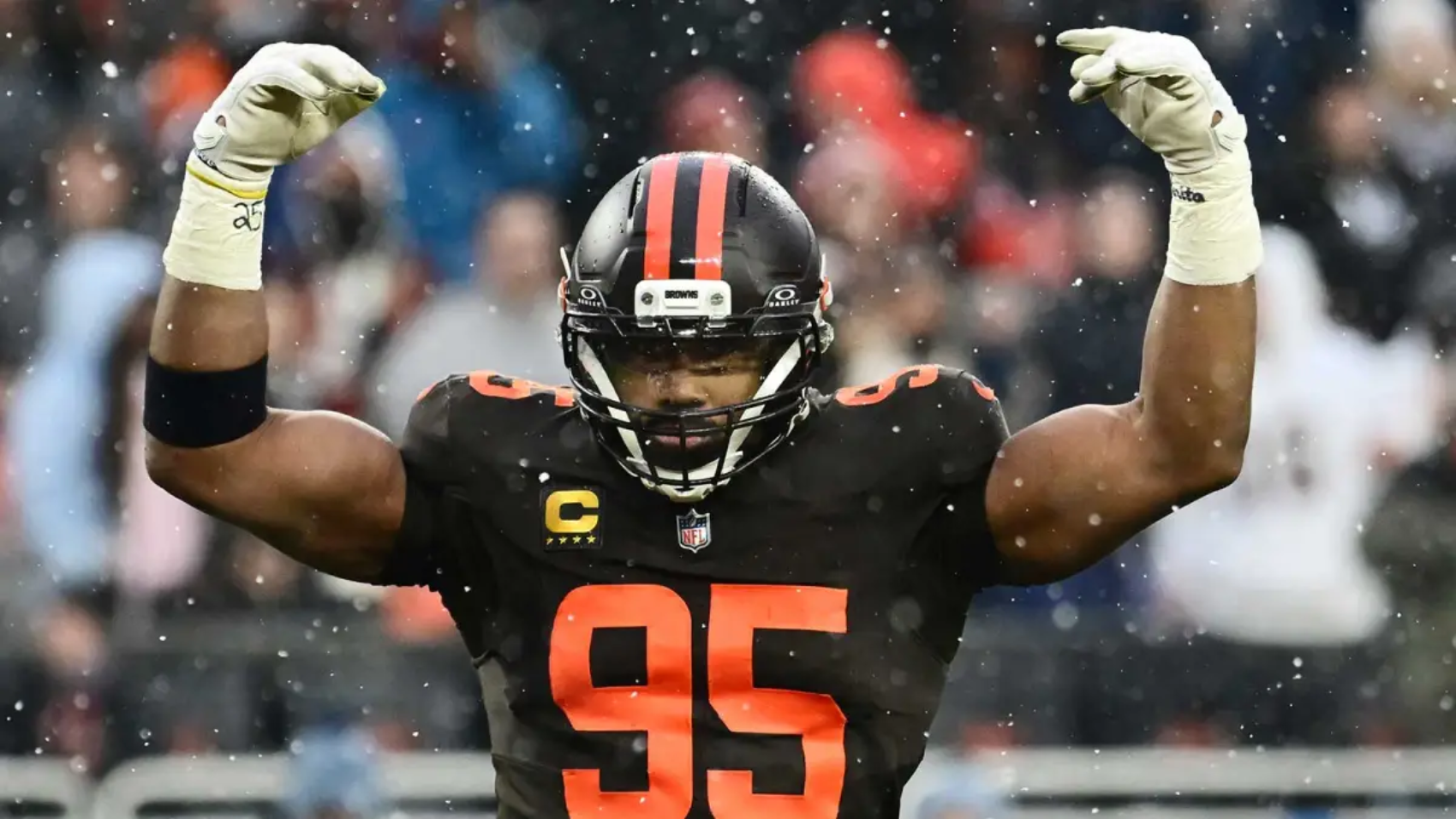
The main takeaway from the Rams’ disgusting loss to the Seahawks is simple, brutal, and unavoidable that this team needs Aaron Donald back even today. Or at least it needs someone—anyone—who can restore what used to be the Rams’ defining trait which is a defense that makes opponents miserable.

I’ll own my part in this too. I misread what this defense was. I talked myself into believing that a young pass-rush pairing—Jared Verse and Byron Young—could collectively give you something close to what Aaron Donald gave you by himself. Even saying that out loud tells you the entire story: it takes two men just to approximate the impact of one generational wrecking ball. Donald wasn’t just a player. He was the identity. He was the intimidation. He was the problem every offense had to solve before they even bothered thinking about their own play-calling menu.

And Sunday night, it was obvious because without that interior terror, without that constant collapse, without that sense that the Rams defense is going to hit you in the mouth, the entire thing becomes soft. And once it’s soft up front, everything behind it gets exposed. Which is exactly what happened.

The Cornerback Situation Wasn’t “Bad.” It Was Ridiculous and so Bad that they Both Need to Go.

What was worse than the front? The cornerbacks. I get it is the hardest position to play in Football. I have said that sentance alot this year. But, these arte guys are just bad and I’m not even sure who gets the biggest share of the blame: is it the coordinator? Is it positional coaching? Is it the raw talent on the roster? Is it a mix of all of it? Because what we watched was not “they got beat by a great receiver.” What we watched was repeated, systemic breakdown.

There were sequences where the Seahawks’ top target—the top receiver in the league by yardage this season—was left wide open not once, not twice, not even three times… but four plays in a row. Four. Plays. In. A. Row. And the chain ended the way it always ends when you keep giving free releases and free space: touchdown, with the nearest defender basically spectating from five feet away like he bought a ticket.

I don’t care who you are playing. If you are an NFL defense in a conference championship, you do not get to “oops” your way through four straight coverage busts on the same guy. You blanket him. You bracket him. You cloud him. You roll coverage his direction. You press. You reroute. You make someone else beat you. You do something besides repeatedly leaving the No. 1 weapon alone like it’s a preseason scrimmage.

And it wasn’t just one receiver, either. It was the entire structure. Seattle looked like they had the answers before the Rams even lined up the question.

The Ugly Part: Seattle Didn’t Have to Work for Anything

From the first set of downs, I said it: this looked bad. And it never got better.

Even when the Rams took the lead, the defense responded by letting Seattle stroll down the field like it was a walkthrough. There was a touchdown drive where—after the first two plays—the only “stop” the Rams got was a Seahawks receiver dropping the ball while standing wide open. That was the best defensive play for long stretches of the game: a drop. Not a sack. Not a forced throw. Not a tipped ball. Not a punch-out. A drop.

That is not Rams football. That is not professional defense.

Seattle went down the field repeatedly without resistance. They didn’t look stressed. They didn’t look rushed. They didn’t look like they were being forced into uncomfortable decisions. They looked comfortable, organized, and unbothered—like they knew the Rams couldn’t stop anything anyway.

And That’s Why I’m Bringing Up the -7 Yards Game

Because this is the Rams. This franchise is supposed to be built on sick defenses. The Rams have an actual history of turning an opponent’s offense into a humiliation highlight reel.

Let’s remind everyone what “Rams defense” used to mean.

On November 4, 1979, the Los Angeles Rams held the Seattle Seahawks to negative seven (-7) total yards. Not “held them under 200.” Not “forced three punts.” Negative. Seven. Total. Yards. The Rams won 24-0 in Seattle, and that game has lived in NFL lore as one of the most suffocating defensive performances ever recorded.

Think about how insane that is: the Seahawks finished with positive rushing yards but got obliterated so badly in the passing game—primarily because of sacks—that their net offensive total went below zero. That is the Rams standard when we talk about “Rams defense.” That’s the DNA. That’s the legacy. That’s the expectation that comes with the horns on the helmet.

And I’m not even getting into the Fearsome Foursome years and the way those defenses defined brutality for an entire era. The point is simple: this franchise knows what dominance looks like. It has worn dominance like a crown before.

Jack Youngblood’s legendary display of toughness involved playing not just half a game, but three full playoff games — including Super Bowl XIV and the Pro Bowl — with a broken left fibula.

The Injury and the “Gutsiest Performance” as the injury occurred in the second quarter of the NFC Divisional Playoff game against the Dallas Cowboys on December 23, 1979, when Youngblood fell awkwardly over an offensive lineman.

“Tape It Up”: After realizing the severity of the injury, Youngblood told the team doctor to “tape this dadgum thing up” and returned for the second half. He even sealed the Rams’ 21–19 victory with a crucial sack of Roger Staubach in the closing moments.

Three Games, One Leg: He went on to play every defensive snap in the next two games — the NFC Championship against the Tampa Bay Buccaneers, a 9–0 Rams win, and Super Bowl XIV against the Pittsburgh Steelers.

The Pro Bowl: One week after the Super Bowl, he also played in the 1980 Pro Bowl in Hawaii on the same injured leg, a feat that stunned teammates and cemented his legend.

Legacy of Toughness is gone as Youngblood’s decision to play through the pain, his leg fitted with a special plastic brace, is widely regarded as one of the gutsiest performances in NFL history. Known for remarkable durability, he missed only one game in his entire 14-year career — a Rams record 201 consecutive games played. His toughness earned him the nickname “the John Wayne of football,” famously given by coach John Madden.

So when you watch Seattle go from their own 20 to the Rams’ 20 in what feels like twenty seconds—multiple times—it’s not just a bad night. It feels like sacrilege.

Seattle ran the ball whenever they wanted. It was five yards a pop like it was a special teams drill. The first time I can remember them getting truly stoned—no gain, negative, something that actually felt like a “statement stop”—it was late in the half. And by then the entire tempo of the game had been set.

That is how you lose playoff games: you let the other team dictate pace, live in second-and-manageable, and call the whole playbook. The Seahawks weren’t “finding openings.” The openings were just there.

And, of course Special Teams Added Gasoline to the Fire as yes, we have to talk about the Xavier Smith disaster. Falling down on your own, in a massive moment, in front of millions, is bad enough. But then trying to play hero-ball and field the ball anyway? What the fuck is wrong with you? He needs to go too. That sequence wasn’t just a mistake—it was a collapse of basic situational discipline. And it came after another fumble that he recovered himself. He looked like a deer in headlights until he was benched, and by that point the damage was real.

The issue is this, in championship games, you can survive a mistake if your defense can answer with a stand, a takeaway, a sack, a tone-setting series. The Rams defense did none of that. So every error became fatal.

Stafford and Nacua Were Good Enough to Win. Here’s the part that should make Rams fans sick: Matthew Stafford played well enough to get to the Super Bowl. Puka Nacua played like a star. That underhanded little shovel/flip to Puka for the first down? That’s the Stafford stuff I love—creative, confident, veteran, taking what the defense gives you and still making it look like art.

But it didn’t matter. Because you can score points all night and still lose when your defense is basically a turnstile.

And that’s the nightmare now, the Rams offense can be championship-level for another year or two if Stafford stays healthy and the line holds up. The window is not closed. The window is wide open.

The problem is the defense is so far from the standard that it’s dragging a Super Bowl-capable offense into a knife fight with no blade.

The Offseason Needs Are Not Complicated either. You don’t need to overthink it. You don’t need to play cute. You don’t need to pretend this is a “few tweaks” situation.

  1. Cornerbacks and coverage talent have to be upgraded.
    If both corners are free agents? Let them walk. Replace the room. This cannot be the group again.
  2. Get the best defensive lineman available in the draft.
    The Rams are picking in the top ten. Use that kind of pick on someone who changes games. Someone who collapses pockets and forces offenses to speed up.
  3. Keep the offense intact and plan for the QB future without panicking.
    Stafford should play another year. He looked capable. The Rams can develop a succession plan, but the urgent, screaming priority is defense.
  4. Trim the roster where it’s obvious.
    If Atwell is gone, fine. If you can keep Havenstein on a reasonable deal, great. Higbee is worth keeping if the price makes sense, but the Rams do have bodies at tight end. None of those decisions matter if the defense stays this weak.

My Hard Truth

I’m not just saying the Rams played horrible. I’m saying I realized, in real time, that they simply are bad on defense—and I didn’t want to believe it because it’s the Rams and the Rams are “supposed” to defend.

The games where the defense looked respectable were the games against inferior teams or offenses that couldn’t punish mistakes. The well-coached teams, the organized teams, the teams with real passing structure? They carved the Rams up. They lived in the 30s where honestly, every game now is starting to feel like indoor football—every game is a track meet, every game has 35 points each, the kicking is confusing and it makes no sense to mer at least and overall, the Rams are trying to win shootouts without any defensive backbone.

BTW, I did not see one great defensive play in this game. One sack by Fiske came late but that was it. Not one huge play. No moment where you felt the Rams imposed anything. No series where they turned the tide. No sack that mattered. No takeaway. No hit that changed a drive.

Seattle walked to the red zone like it was routine.

That’s why this loss hurts more than just “we were close.” The offense proved the Rams can still contend. The defense proved the Rams cannot finish. At the same time, it’s worth noting that no team displayed full-blown greatness this year. Still, after watching this defense in the Championship game, I do not believe the Rams belonged in the Super Bowl. It was a debacle on every level. It was embarrassing. It was horrible.

And if this franchise wants to get back to being what it is supposed to be—if it wants to honor the legacy of defenses that once held Seattle to negative yards—then the 2026 plan is simple:

Stop pretending this unit is “almost there.”
Build a defense that actually scares someone again.

POST GAME: A Defensive Collapse That Exposed the Rams’ Greatest Offseason Need. The Los Angeles Rams came within one possession of the Super Bowl. The offense delivered, Matthew Stafford delivered, Puka Nacua delivered — and yet the season ended one step short because the defense did not simply bend, it broke entirely. The NFC Championship loss to Seattle was not just a painful defeat. It was a spotlight shining directly on the most urgent truth facing this franchise: the Rams’ defense is nowhere near championship caliber in its current form.

The lasting image from Sunday night is not Stafford’s sharp throws or Nacua’s relentless route running. It is Seahawks receivers standing alone in open space, untouched, uncontested, unbothered — play after play after play. There was a time when Rams defenses dictated games. Sunday reminded everyone how far away this unit is from those standards.

For years, the identity of the Rams was built around destructive defensive dominance. Aaron Donald collapsing pockets, offensive coordinators terrified to run interior concepts, quarterbacks rushing throws before routes developed. That presence is gone, and against Seattle it became painfully obvious that no combination of young edge rushers can replicate what one generational interior force provided. Jared Verse and Byron Young are promising talents, but needing two players to approximate one legend says everything about the void left behind.

Even more alarming was the state of the secondary. The Seahawks’ top receiver spent much of the game operating in what looked like open practice conditions. Multiple snaps in a row saw the same target left completely uncovered, culminating in a touchdown where the nearest defender was yards away. That is not simply poor execution — that is systemic failure in communication, scheme, or personnel. Whether the blame lies with coaching or roster construction, the result was the same: Seattle walked down the field at will.

Jaxon Smith-Njigba’s performance was not a surprise. He led the league in receiving yards this season and has emerged as one of the NFL’s premier young receivers. But elite players should be challenged, bracketed, doubled, forced to earn every yard. Instead, he was gifted them. No disguise. No adjustment. No response. The Seahawks did not out-scheme the Rams — they exploited a unit that could not adapt.

The run defense told a similar story. Seattle consistently gained chunk yardage on early downs, setting up easy passing situations and neutralizing any pass rush threat. Stops behind the line were rare. The Seahawks controlled tempo, possession, and rhythm, and the Rams never found a counterpunch. It looked less like a championship defense and more like a unit hoping for mistakes rather than creating disruption.

Ironically, the best defensive play of the night came not from a Ram, but from a Seahawk dropping a perfectly thrown pass. That cannot happen in a conference championship. Championship defenses create turning points. This one watched them slip by.

And that is what makes this loss so frustrating — the offense did its job. Stafford was composed, creative, and accurate. His underhanded flick to Nacua for a critical conversion was vintage brilliance. Nacua continued his historic rise, attacking coverage and making contested catches look routine. The Rams scored enough points to win. In most playoff games, that offensive output would send a team to the Super Bowl. But when a defense cannot produce a single momentum-changing play, even elite offense becomes irrelevant.

This is not a matter of one bad night. Throughout the season, strong offenses exposed the Rams’ defensive limitations. Inferior opponents were contained; competent, well-coached teams moved the ball with alarming ease. That trend reached its breaking point in the biggest game of the year.

The offseason roadmap is clear.

The secondary must be rebuilt. Starting-caliber cornerbacks are non-negotiable priorities. The free-agent market and early draft capital must be directed toward coverage players who can actually hold up against top-tier receivers. The current group simply cannot.

The defensive line also needs reinforcements, particularly inside. With a top-ten draft pick available, the Rams should target the best defensive lineman on the board. Interior disruption changes everything — coverage, blitz design, run fits, and third-down efficiency. This defense desperately needs a new centerpiece.

On offense, the foundation remains strong. Stafford still has command of this system and showed he can stay healthy and productive. Nacua is already among the league’s elite. The supporting skill positions are solid, with room for minor refinements. The quarterback succession plan will need attention soon, but that is not today’s crisis. Today’s crisis is defense.

The Rams also enter the offseason with flexibility — cap space, draft assets, and an established coaching structure. That combination offers hope. This is not a team entering decline; it is a contender with a glaring weakness. Address that weakness decisively, and the Rams remain in the Super Bowl conversation next season.

But there is no sugarcoating Sunday’s lesson. A championship roster cannot survive a defense that allows receivers to run uncovered, backs to gain free yardage, and quarterbacks to operate untouched. The Rams did not lose because of one mistake. They lost because their defensive structure collapsed under playoff pressure.

The good news is clarity. The path forward is obvious. Build the defense back into a weapon. Restore the identity. Reclaim the standard.

Because if the Rams field even a competent defense next season, with this offense already in place, the road back to the NFC Championship — and beyond — will be wide open.

And this time, they cannot afford to leave anyone uncovered.

01kfb1s5cetyx6qxbdeg

On the Rampage: Rams Walk the Tightrope, Survive the Bears, and Stare Down Seattle

If you’re trying to decide whether to be furious or impressed after the Rams’ latest playoff win, congratulations — you’re reacting correctly. Sunday night’s 20–17 overtime victory over the Chicago Bears was the purest form of Rams football in 2026: brilliant, baffling, self-inflicted, and ultimately victorious.

This was a game that never should have reached overtime. It was also a game the Rams absolutely deserved to win. Somehow, both things are true.

Let’s start with the contradiction at the heart of it all: the Rams defense.

How do you properly process a unit that commits one of the most amateur, jaw-dropping breakdowns imaginable — and then turns around and makes the single biggest play of the game? How do you get angry when the same defense that nearly ended your season is the exact reason you’re still alive?

Late in regulation, the Rams had the Bears exactly where they wanted them. Up seven, with just over three minutes remaining, this was the moment for a composed, professional close. A strong team with a reliable offense runs the ball, drains the clock, and leaves no doubt.

Instead, the Rams went three-and-out.

The Bears got the ball back, and what followed defies logic, coaching, and decades of football fundamentals. On a broken play in a snowstorm, Caleb Williams scrambled backward roughly 30 to 40 yards, fading away under heavy pressure, and launched a desperation heave that somehow resulted in a touchdown. Not tipped. Not contested. A Bears receiver standing eight to ten feet clear in the end zone.

It was staggering. Completely staggering.

There is no defensive scheme on earth where that should happen. Not in the NFL. Not in college. Not on a Friday night field lit by car headlights. Not on the Elementary School Playground I played on as a kid did that ever happen. That kind of Hail Mary coverage failure simply does not exist until it did, courtesy of the 2026 Rams.

That single play forced overtime and left Rams fans staring at their screens in disbelief. A season that should have continued comfortably now hung by a thread.

And then the emotional whiplash arrived.

Because in overtime, the same defense that authored that historic breakdown immediately redeemed itself. On the Bears’ first possession, safety Kam Curl read Caleb Williams perfectly, stepped in front of the throw, and intercepted the pass. Just like that, momentum flipped again. One mistake nearly ended everything. One interception saved it all.

That’s playoff football at its most brutal and beautiful.

Offensively, the Rams were both effective and exasperating. Kyren Williams was outstanding, rushing for 87 yards and scoring both Rams touchdowns. Every time the Rams committed to the run, the offense looked balanced, physical, and in control of the game’s tempo.

And every time they abandoned it, the offense sputtered.

The pattern was maddeningly familiar. One drive featuring three straight runs and a first down, followed by the next drive leaning into pass-heavy play-calling and another quick punt. In cold, snowy conditions against a defense selling out to pressure, the Rams consistently made things harder than they needed to be.

Matthew Stafford, however, delivered when it mattered most. He finished with 258 passing yards and authored one of the most important throws of the night: a clutch third-down completion to Puka Nacua in overtime that pushed the Rams into field-goal range. Stafford didn’t need to be perfect — he needed to be decisive — and that’s exactly what he was.

The Los Angeles Rams’ dramatic 20-17 overtime victory over the Chicago Bears in the NFC Divisional Playoff on January 18, 2026, was sealed by a player whose calm execution belied a season of special teams turmoil: rookie kicker Harrison Mevis.

Mevis’ Decisive, Composed Moment

After Rams safety Kam Curl intercepted Bears QB Caleb Williams in overtime, the offense moved the ball into field goal range. The moment the field goal unit took the field, the pervasive anxiety among Rams fans was palpable. This was more than just a routine kick; it was the potential resolution to a season-long saga of kicking woes.

Amid this tense backdrop, Harrison Mevis, a relative newcomer to the team, delivered with remarkable composure. He calmly drilled the 42-yard field goal with 3:19 left in the extra period, a clean, true kick that ended the Bears’ season and launched the Rams into the NFC Championship.

A Season of Kicking Calamity at its best.

Mevis’ game-winning boot was impactful because it came against a backdrop of persistent and severe special teams issues that had plagued the Rams all year. The team experienced significant inconsistency and turnover at the kicking position, turning even the most routine attempts into nerve-wracking events all year.

Earlier in the season, the Rams had initially placed their confidence in rookie kicker Joshua “Karty” Karty, but he had his own struggles. Karty’s early-year difficulties, marked by missed kicks and wavering confidence, contributed significantly to the “special teams calamity” narrative that defined much of the Rams’ 2025-2026 campaign.

This instability had conditioned fans to brace for disaster every time the field goal unit appeared. Against that history of failure and anxiety, Harrison Mevis, game-winning kick was a vital moment of stability and possibly the most important one of the entire season.

Harrison Mevis, nicknamed the “Thiccer Kicker,” built a record-setting college career at the University of Missouri and played professionally in the UFL before joining the Rams mid-season. He is listed at 6-foot-0 and 245 pounds, which is considered large for an NFL kicker and the source of his famous nickname. 

Mevis was a dedicated kicker and punter throughout his high school and college careers, also playing soccer as a goalie. 

  • High School: He attended Warsaw Community High School in Indiana, where he was an all-conference selection in both football and soccer. His older brother also kicked at the high school, and they once shared a school record for longest field goal.
  • College: He played for four seasons at the University of Missouri, where he set program records for career field goals made (86) and total points (405). A highlight of his college career was a game-winning, 61-yard field goal against Kansas State in 2023, which set an SEC record.
  • Pre-NFL Pro: After going undrafted in the 2024 NFL Draft, Mevis signed with the Carolina Panthers’ practice squad but was waived. He then excelled in the United Football League (UFL) with the Birmingham Stallions, making 20 of 21 field goals in the regular season, before signing with the Jets in the summer of 2025 and eventually joining the Rams. 

Mevis’ solid build of 6-foot-0 and 245 pounds led to the nickname “the Thiccer Kicker” at Missouri, a moniker he has fully embraced. He views the nickname positively, believing it helps instill confidence in his teammates that he is a reliable player who can handle high-pressure situations.

On the other side, Caleb Williams was equal parts spectacular and flawed. He threw for 257 yards, accounted for two touchdowns, and made one of the most ridiculous throws in recent playoff memory to force overtime. He also threw three interceptions, including the fatal one in overtime. That stat line perfectly captures a rookie quarterback learning, in real time, how thin the margin for error is in January.

Chicago’s season deserved better than a gut-punch ending, but the Rams ultimately made one more play when it counted.

Now comes Seattle.

Rams–Seahawks games are never normal. They’re always tense. They’re always ugly. They’re almost always decided by three points or fewer. The last loss to Seattle stung badly — right up there with the Eagles loss earlier this year — and no one in that locker room has forgotten it.

The weather should be manageable. The matchup is fair. And if the Rams actually commit to what works — running the ball, protecting the football, and avoiding catastrophic breakdowns — they should beat Seattle. Not just survive them. Beat them.

They can beat them big if they show up locked in.

But Sunday night was another reminder that this Rams team insists on testing itself before delivering the payoff. They survived Chicago. They survived their own mistakes. They squeaked through the Carolina Panthers game after playi9ng not so great football over the last five weeks.

Now comes the moment where survival is no longer enough.

Because there will be no room for another miracle mistake next week. I dont have the nerves for it. I want to see some good football and not a game filled with mistakes.

Overtime Summary

The overtime period was short but decisive.

  • The Bears received the kickoff but their drive was cut short when safety Kam Curl intercepted a pass from quarterback Caleb Williams near midfield.
  • Taking over at their own 22-yard line, the Rams drove down the field, with Matthew Stafford completing key passes to Davante Adams and Puka Nacua to get within field goal range.
  • Rams kicker Harrison Mevis then kicked a 42-yard field goal with 3:19 left in the extra period to seal the victory and send the Rams to the NFC Championship game. 

Game Details

The game was forced into overtime after a dramatic, last-minute touchdown by the Bears.

  • Chicago tied the game 17-17 with just 18 seconds remaining in regulation on a spectacular, off-script 14-yard touchdown pass from Caleb Williams to tight end Cole Kmet.
  • Rams running back Kyren Williams was a key player throughout the game, rushing for 87 yards and scoring two touchdowns, including the one that gave the Rams a 17-10 lead in the fourth quarter.
  • Caleb Williams threw for 257 yards and two touchdowns but had three interceptions, with the final one in overtime proving most costly. 
88124372007-wc-larcar

On The Rampage: Rams Begin Their Retribution Tour With Wild Card Thrill

The Los Angeles Rams didn’t just win on Saturday night. They started a mission — one fueled by unfinished business, lingering stings, and the kind of payback only January football delivers. In a thrilling 34–31 victory over the Carolina Panthers at Bank of America Stadium, the Rams officially launched Phase One of their retribution tour, taking a page — from Donald Trump’s “playbook”: settle scores, assert dominance, and make everyone remember that losses are temporary, but reckoning is permanent.

For Rams fans, this game was more than a win. It was the first step in payback season — and the taste of it was welcomed.

Game Summary: A Wild Card Rollercoaster

The Rams came out swinging, quickly building a 14-0 lead, as quarterback Matthew Stafford connected with his top targets and Kyren Williams powered the running game. Puka Nacua was a constant nightmare for Carolina’s secondary, moving the chains and making critical catches.

The Rams’ defense recorded just one official sack on Panthers quarterback Bryce Young during the Wild Card game, with a “near safety” occurring that was missed by a millisecond or a millimeter.

Defensive Pressure vs. the Panthers was rough. Although only the one sack was logged — credited to nose tackle Poona Ford — the Rams applied consistent pressure throughout the game. On the other side of the ball, quarterback Matthew Stafford faced multiple pressures, including a first-half hand injury when his throwing hand struck a pass rusher’s forearm.

The Los Angeles Rams defense registered a 45.5% pressure rate on Panthers quarterback Bryce Young during yesterday’s Wild Card game. The defensive front was consistently in Young’s face, forcing him out of the pocket and leading to four straight incompletions on the Panthers’ final drive to seal the Rams’ victory.

Overall, the Rams’ defense generated 11 total pressures on Stafford, spread across several key players.

Rams Defensive Statistics (vs. Panthers, Jan 10, 2026)

Statistic Count/RateDetails
Sacks1Registered by the Rams defense.
Quarterback Hits8The number of times Young was hit.
Total Pressures20+ (approx.)Pressure rate was 45.5%, showing consistent disruption.
Near Safety1One play resulted in or was close to a safety.

The Panthers’ defensive plan to pressure Stafford early in the game initially created some disruption, but the Rams’ offensive line adjusted quickly, effectively picking up blitzes and keeping their quarterback protected when it mattered most.

But the Panthers refused to roll over. They clawed back, capitalizing on Rams mistakes — including a blocked punt, a dropped touchdown, and several costly penalties — to take a late fourth-quarter lead.

That’s when Stafford, battling through a painful finger injury, orchestrated a 71-yard game-winning drive, capped by a 19-yard touchdown pass to tight end Colby Parkinson with just 38 seconds left. The Panthers had one final chance, but a fourth-down pass was dropped, sealing a hard-fought Rams victory and advancing Los Angeles to the divisional round.

Final Score: Rams 34, Panthers 31.

Phase One: complete.

Key Player Highlights: Stafford, Parkinson, Nacua

Colby Parkinson is the clear game ball recipient. His clutch touchdown and consistent route-running made him the difference-maker when it counted most. As the physical target in the red zone, Parkinson delivered exactly what the Rams needed to start their retribution story. The other tight end Terrance Ferguson was listed as inactive (sat out) against the Panthers. He was a late scratch for the game due to a hamstring injury. With Ferguson out, the Rams’ available tight ends included Tyler Higbee, Colby Parkinson, Davis Allen, and Nick Vannett.

Matthew Stafford threw for 304 yards and three touchdowns despite injuring his right index finger early in the game. X-rays later confirmed no broken bones or dislocation, and Stafford remained the cool hand under pressure, engineering two late fourth-quarter touchdown drives, including the decisive score to Parkinson. “Never a doubt — No. 9 is with us,” said wide receiver Puka Nacua after the game, capturing the locker room sentiment perfectly.

Speaking of Nacua, he dominated the stat sheet with 10 receptions for 111 yards and a touchdown, consistently moving the chains and keeping the Rams’ offense balanced and dangerous.

Kyren Williams contributed 57 rushing yards and a touchdown, setting the tone with his physical running in key moments. On the Panthers’ side, Chuba Hubbard totaled 46 yards and two touchdowns, while Bryce Young threw for 264 yards and a touchdown — showing that the Panthers fought every step of the way.

Kevin Dotson’s absence continues to impact the Rams’ offensive line and running game. The opportunities for the running backs to make quick decisions immediately after Williams or Corum receive the ball are limited without him. While the Rams are executing many run plays effectively, defenders often stack the line right away, disrupting others. Sometimes on 3rd and 4th down plays which really hurts the team.

Dotson’s absence is particularly significant because he was ranked among the top guards in the NFL this season. Justin Dedich has been filling in as the starting right guard during his absence.

Kevin Dotson: Right guard, out with an ankle injury.
Justin Dedich: Started at right guard in place of Dotson for the Wild Card game.
Steve Avila: Plays left guard (opposite Dotson) and is a key part of the interior line.
Alaric Jackson & Warren McClendon Jr.: Primary left tackle and right tackle, respectively.
Coleman Shelton: Starting center for the Rams.

Even without Dotson, the offensive line provided solid protection for Matthew Stafford during the Rams’ 34–31 victory over the Panthers. Head coach Sean McVay noted that Dotson is “making good progress,” suggesting a potential return if the Rams advance further in the playoffs.

The offensive line, even without Dotson for the Wild Card game, provided solid protection for Matthew Stafford in their 34-31 victory over the Panthers. Head coach Sean McVay mentioned that Dotson is “making good progress,” suggesting a potential return if the Rams advance further in the playoffs.

Discipline Issues and McVay’s Takeaways

Head coach Sean McVay acknowledged the team’s mistakes, highlighting nine accepted penalties for 83 yards — a significant contrast to their usual disciplined performance. Notable infractions included:

  • Personal fouls: Nate Landman’s helmet-to-helmet hit gave Carolina first-and-goal at the 3-yard line, leading to a touchdown.
  • Taunting: Desjuan Johnson’s penalty on a kickoff gave the Panthers favorable field position at the 46-yard line.
  • Holding: Justin Dedich’s offensive holding on a second-and-three converted into first-and-20, contributing to the blocked punt sequence.

McVay was blunt: “We need to be more poised. There’s a lot to clean up.” But he also emphasized that finding a way to win in tough circumstances is what playoffs are about.

Injuries: Stafford, Others, and Panthers Update

Stafford’s finger injury was a key storyline. He bent it back after hitting a defender’s arm but played through the pain, misfiring on some throws before finishing with two late touchdown drives. X-rays came back negative, confirming no fractures or dislocations, and he is expected to be ready for the next playoff game.

Rams inactives included Kevin Dotson (ankle), Jordan Whittington (knee), Josh Wallace (ankle), and Darious Williams (ankle). On the Panthers’ side, left tackle Ikem Ekwonu suffered a ruptured patella tendon, a significant injury that could affect his future availability.

The Road Ahead: Playoff Scenarios and Retribution Map

The Rams’ next opponent depends entirely on the 49ers vs. Eagles game and so does the plan for true retribution this year:

  • Eagles win: Rams travel to Seattle to face the No. 1-seeded Seahawks — a team they split with in the regular season, both games decided by a single point. The Seahawks are a natural target for retribution after this season’s matchups.
  • 49ers win: Rams head to Chicago to face the No. 2-seeded Bears — another step in the mission of payback and playoff dominance.

If the bracket breaks favorably, the Rams’ ultimate retribution could be Phase Three: facing the Philadelphia Eagles, one of the teams that not only beat them this year but did so in games the Rams should have won. Every matchup, every step forward, is about settling unfinished business.

The Rams are not here to apologize, clean up a narrative, or earn forgiveness. They are here for retribution — to settle scores, make up for past losses, and assert their dominance in the playoffs.

Phase One — defeating the Panthers on the road — is in the books. Phase Two looms, and it only works if the Eagles win, with either the Seahawks or Bears waiting. And Phase Three? For that to happen, we have to assume the Eagles will first beat the 49ers and then overcome the Bears. Only then can this full retribution plan come to fruition, setting up the ultimate reckoning with every team that has left a mark on the Rams’ season — the ones to whom we handed victories earlier in the year.

The message is clear: survive, advance, and take payback seriously. The Rams are coming, and they will not be denied.

Key Player Statistics

PASSING C/ATTYDSTDsINT
Matthew Stafford (LAR)24/4230431
Bryce Young (CAR)21/3626410
RUSHING ATTYDSTDs
Kyren Williams (LAR)13571
Chuba Hubbard (CAR)16462
RECEIVING RECYDSTDs
Puka Nacua (LAR)101111
Jalen Coker (CAR)91341
One Handed

On The Rampage was Fugly for Three Quarters, Ruthless When It Mattered — Rams Secure No. 5 Seed in 37–20 Win — I Welcome Going To Carolina This Week

There are wins… and then there are wins that meet the standard.

Unless the Rams are winning by 30 or 40, I do not consider it a true statement game — and Sunday’s 37–20 victory over the Arizona Cardinals lived in uncomfortable limbo for most of the afternoon. Yes, the Rams ultimately pulled away. Yes, the win secured the No. 5 seed in the NFC Playoffs. And yes — it was still far uglier than it ever needed to be.

For nearly three quarters, this game was an emotional tax on Rams fans that should have been paid off by halftime.

A Game That Should Have Been Over Early — Wasn’t. There was an expectation heading into this matchup that Sean McVay was rolling out the full arsenal. That did not happen. What unfolded instead was a strangely sluggish, mistake-prone offensive showing that allowed a 3-14 Cardinals team to hang around far longer than acceptable.

Dropped passes. Miscommunications. Missed opportunities. Drives that stalled for no reason other than execution failures.

At one point in the third quarter, the Rams were trailing — and the frustration boiled over for good reason. Easy catches were clanked off hands, including misses by tight ends and wideouts who will be expected to deliver in January. Matthew Stafford, meanwhile, occasionally reverted to those puzzling half-throws — balls floated five yards in front of open receivers, creating unnecessary incompletions and momentum killers.

When you are paid millions of dollars to perform eight months a year — and your professional shelf life is often seven seasons or fewer — attention to detail is not optional. It is the job.

Catching the football is the job. Catch the Ball and you know what I mean, I mean the ones my nephew would catch if thrown to him should be caught by the professional’s on the Rams team during those 8 months.

The Adams Void Is Still Real. This game once again highlighted how much Davante Adams is missed within this offense. His absence forces Stafford to attempt tighter, more dangerous throws to Atwell and Smith, shrinking windows and magnifying mistakes. The Rams are simply at their best when two elite wide receiver outlets are on the field.

We have seen this formula before — Cooper Kupp paired with Odell Beckham Jr. produced championship football. Now, Puka Nacua is that cornerstone, but he still needs a second gravitational force to fully unlock the offense.

Puka, of course, remains unreal.

Ten receptions. 76 yards. Another highlight-reel, intentional one-handed touchdown grab — because of course he did. He continues to look like a receiver who simply does not drop footballs, regardless of how difficult the attempt. And as always, he played with infectious energy, high-fiving fans along the first rows of the stands like a kid living his dream.

But Puka needs help.
And this offense needs Adams.

The Turning Point: Flip the Switch, End the Game

OK. Now. Once the Rams finally decided to play real football, the game ended quickly.

After Arizona briefly grabbed a 20–16 lead in the third quarter, Los Angeles responded with ruthless precision:

• Stafford to Colby Parkinson — 21-yard touchdown
• Stafford to Tyler Higbee — 22-yard touchdown
• Stafford to Parkinson again — 1-yard touchdown

They finally all caught the ball. They caught every pass finally in that 4th quarter without missing any and in essence, earning their money. It is not hard if you do the work.

That is 21 unanswered points, fueled by defensive stops, pressure packages, and a quarterback who suddenly remembered he is still one of the most dangerous passers in football.

The defensive backs were consistently left hung out to dry. On multiple occasions, they were isolated in one-on-one coverage that directly led to Arizona’s biggest plays. There were no safeties in sight on two of the Cardinals’ touchdowns, and to be honest, Jacoby Brissett delivered several excellent passes that no defender realistically could have reached.

Witherspoon and Curl did miss a few plays, but they also play the most difficult position in football. Witherspoon, in particular, clearly knew he made mistakes — you could see it on his face on the sideline.

Stafford finished with 259 yards and four touchdowns, passing Dan Marino for seventh all-time in career touchdown passes — a milestone quietly buried beneath the chaos of the first three quarters.

Tyler Higbee returned with authority despite a few early drops. He finished the game as the Rams’ leading receiver in yardage, catching five of his six targets for 91 yards and a touchdown, including a critical fourth-quarter score that slammed the door shut.

Higbee did have an early drop and missed a difficult catch just before halftime in the Rams’ 37–20 win over the Cardinals. However, overall, he delivered a strong performance. His final catch rate for the game was an impressive 83.3%.

His overall performance was considered a success in his return from a six-game injury absence and he proved to be a reliable target for quarterback Matthew Stafford when the team pulled away in the second half. 

Finally, the defense erased Arizona in the fourth quarter, allowing only 50 yards of offense and forcing multiple punts and a turnover on downs.

When the Rams turned it on — it was over.

Which is exactly the problem.

They didn’t need three quarters to do it.

Which is exactly the problem.

Officiating Wasn’t the Story — Execution Was. This was not a ref-ball game. There were no controversial flags, no momentum-changing calls, no blown challenges. The only penalties that stood out were the kind that scream lack of focus — delay-of-game situations and sloppy procedural mistakes that simply should not exist in January football. The ones when they can’t even get the play off because of something stupid.

This loss of precision is fixable — but it must be corrected immediately.

Playoff Path: Carolina Awaits. Now, the Rams head to Carolina for the Wild Card round — and it is a matchup that should be handled decisively. I welcome everything about this game. Including having to travel to Charlotte.

Weather will not be a factor. Talent will be. And if the Rams show up focused and complete, this is a game they should win comfortably. The blueprint is already visible with our pressure defense, efficient Stafford, Puka being Puka, and tighter execution across the board.

But they cannot afford another three-quarter warm-up act in the postseason.

January football does not forgive sloppiness.
January football ends seasons.

The Rams are talented enough to make a deep run — but only if they start playing like a team that understands how rare this window really is.

Because fugly wins still count…

But championships demand dominance. We need to get back to dominating. After all, the commissioner practically pleaded with the team because we were winning so easily — and now the entire league feels like it is on equal ground. That is my new conspiracy theory that I am feeding you readers, but in reality, there is no true frontrunner.

If you consider Denver and Seattle to be the No. 1 seeds and, in essence, the top teams, they are also winning in fugly ways. This postseason is wide open. And if the Rams play the way we did before last month ended, we will crush every team we face.

Overall, they need to execute the full game plan — which means catching the football and eliminating illegal procedure penalties. Get the play off. That is the easiest thing to do in football. Please stop messing that up. Make no mistakes. In essence, executing the game plan means catching the ball, protecting it without fumbling, and not throwing passes directly into defenders’ chests. It is not a high bar to meet if you do the work.

venezeula-crisis-1502461948

The Real War Beneath Venezuela: Why Oil — and the Dirtiest Kind — Is Driving the Next Global Power Struggle

For months, public discourse has circled around Venezuela as though the country’s accelerating geopolitical tension is rooted in democracy, sanctions relief, humanitarian concern, or regional stability. None of those explanations survive serious scrutiny. The driving force behind the renewed international interest in Venezuela is far simpler—and far more uncomfortable.

It is oil. I said from day one on The Morning Joe forum or blog or whatever it is, that bombing small ships was meant to escalate this situation in order to seize that oil.

Not good oil. Not easy oil. Not profitable oil in the conventional sense.

Comparison: Venezuela vs. Canada (Keystone Slate)

Feature Venezuelan Extra-HeavyCanadian Bitumen (Keystone/WCS)
Physical StateSlightly more fluid due to warmer underground temperatures.Virtually solid at room temperature; requires more heating/dilution to flow.
ExtractionMostly deep underground; requires steam injection or horizontal drilling.Both surface mining and deep steam injection (SAGD).
Environmental ImpactHighest greenhouse gas emissions per barrel in the world due to flaring and decay.High emissions, but significantly lower than Venezuela’s due to better technology.
TransportationPrimarily by ocean tanker; five-day trip to U.S. Gulf Coast.Primarily by pipeline (like Keystone) or rail; requires extensive land infrastructure.

Why they are direct competitors

Refineries on the U.S. Gulf Coast are essentially “heavy oil addicts.” Because they invested billions in complex equipment to process this specific type of “bad” oil, they must keep their tanks full to remain profitable. 

  • Market Substitution: When Venezuelan production collapsed due to sanctions and mismanagement, Canadian oil became the primary replacement for U.S. refiners.
  • The “Pipeline vs. Tanker” Debate: Proponents of the Keystone XL pipeline argue it would have provided a secure, “cleaner” version of the same heavy oil that the U.S. is now occasionally forced to seek from Venezuela to meet refining demand.
  • Competitive Edge: As of 2026, if Venezuelan production continues to recover, it could actually undercut Canadian oil because shipping it by sea is often cheaper than the high costs and capacity limits of land pipelines. 

In summary, while the oil is the same “type,” the Canadian version is considered a more stable and environmentally “improved” alternative to the Venezuelan version, which suffers from decaying infrastructure and higher carbon intensity. 

What the world is maneuvering over is some of the worst crude on Earth.

Venezuela’s reserves—technically the largest proven oil reserves on the planet—are overwhelmingly composed of extra-heavy, high-sulfur, metal-laden sludge pulled from the Orinoco Belt. This is not “black gold.” It is geological tar. It barely flows. It destroys equipment. It produces more emissions per barrel than almost any other petroleum source in existence. And yet, it has suddenly become strategically priceless.

The reason is not that the oil is valuable on its own. The reason is that the world’s refining system was redesigned over the last four decades to depend on this exact kind of garbage crude—and now it is addicted.

Why Venezuelan Oil Is “Bad” Oil. The Orinoco Belt’s petroleum is geologically young, chemically unstable, and physically hostile to infrastructure. It typically measures between 8° and 10° API gravity—meaning it is barely liquid at reservoir conditions. It contains extreme sulfur concentrations, corrosive metals, and heavy molecular chains that cannot be refined in ordinary facilities.

In practical terms, Venezuelan oil:

  • Must be diluted just to move through pipelines
  • Cannot be refined in standard distillation towers
  • Requires specialized “cracking” equipment to turn sludge into fuel
  • Generates some of the highest lifecycle carbon emissions per barrel in the world

It is the petroleum equivalent of radioactive waste—yet global refining systems have been purpose-built to handle it.

Over the past thirty years, refineries in Louisiana and Texas invested hundreds of billions of dollars into complex cracking units designed specifically to process extra-heavy sour crude. Those refineries are not flexible. They are not interchangeable. They are “locked” into heavy oil feedstock to remain profitable.

This created a structural addiction.

When Venezuelan production collapsed under sanctions, mismanagement, and infrastructure decay, the United States replaced it almost entirely with Canadian oil sands bitumen—the same type of sludge, delivered via pipeline and rail rather than tanker.

This substitution kept Gulf Coast refining alive.

But it also created a geopolitical problem: Canada became the primary life support system for America’s heavy-oil refining architecture.

Which brings us to Keystone.

Keystone Was Never About “New” Oil, Keystone XL was never about creating demand. It was about securing a cleaner, more stable, more predictable version of the same “bad oil” that Venezuelan fields produce.

Chemically, Canadian bitumen and Venezuelan extra-heavy crude are near twins. Both are tar-like, high-sulfur, difficult to refine, and carbon-intensive. The difference is not what they are—it is how they are handled.

Canada modernized. Venezuela decayed.

Canada invested in emissions reduction, infrastructure maintenance, spill containment, and ESG governance. Venezuela dismantled technical expertise, allowed refineries to collapse, burned off natural gas as waste, and allowed pipelines to rot.

As of 2026, Canadian heavy oil produces less than half the emissions per barrel of Venezuelan crude.

Which means the oil itself is not the core problem.

The system managing it is.

Why Venezuela Is Suddenly “Back on the Table”. Venezuela’s refining infrastructure is in catastrophic condition. Its major complexes—Amuay and Cardón—operate at roughly 20 percent capacity. Gas flaring is rampant. Oil spills are routine. Diluent imports are unreliable. PDVSA lost much of its technical workforce. The country bleeds production efficiency.

Yet the world is still circling Venezuela because it holds one strategic advantage:

It can ship heavy oil by sea cheaper than Canada can ship it by land.

If Venezuela’s production recovers, its tanker-based logistics could undercut pipeline-constrained Canadian supply. That single cost differential is enough to redraw energy trade flows.

Which means Venezuelan oil is no longer just “bad oil.”

It is competitive bad oil.

And competitive bad oil destabilizes alliances.

The Hidden Upgrade War, behind the scenes, Venezuela is not trying to “modernize” for sustainability. It is trying to make its sludge saleable.

This has triggered a quiet arms race in upgrading technology:

  • Synthetic crude upgraders that convert tar into 32° API oil
  • Hydrogenation processes that remove sulfur and metals
  • Aquaconversion systems that partially refine oil underground
  • Steam injection and in-situ chemical flooding to improve extraction
  • Downhole catalytic processing that upgrades crude before it ever reaches the surface

These systems are capital-intensive, technologically complex, and politically dependent on Western partnerships—exactly why Chevron, Eni, and Repsol are now re-embedded inside Venezuela.

This is not recovery.

It is strategic rearmament of oil capacity.

This Is Not About Energy — It Is About Refining Survival

Heavy-oil refineries cannot pivot to light sweet crude. They cannot easily retool. They cannot afford to idle.

They need sludge.

So the geopolitical competition is not about oil demand—it is about refinery feedstock survival. Whoever controls heavy crude controls the refining core of the Western fuel system.

That is the war beneath Venezuela.

Not democracy. Not humanitarian relief. Not ideology.

It is about who feeds the machines that keep gasoline flowing.

And the machines demand the dirtiest oil on Earth.

Which is why Venezuela—despite producing some of the worst petroleum on the planet—has once again become one of the most dangerous strategic chess pieces in global energy politics.

download

On The Rampage: The Rams Didn’t Just Lose — They Exposed Everything That’s Been Rotten All Season — They Are Not Even Trying Anymore

We spoke this year about the losses that sting. We could speak about losses that humble you. And then there are losses that rip the mask off an entire organization and expose every structural crack, every conditioning flaw, every coaching miscalculation, and every ounce of misplaced optimism that has been propping up a team pretending to be something it simply is not. The team is not even trying now.

Monday night’s 27–24 collapse against the Atlanta Falcons was not just another loss in the standings. It was a referendum on what this Rams team has become. And the verdict was devastating. They are not even trying.

Yes, the Rams technically “almost won.” Yes, they mounted a second-half rally or more of a late third-quarter and fourth-quarter rally. Yes, they clawed back from a 21–0 halftime embarrassment to tie the game late. None of that matters. Because the way they started, the way they were dominated physically, the way they were hit, the way they were out-coached, and the way they were out-conditioned tells you everything you need to know about where this team truly stands.

This team has not merely regressed.

This team has quit.

The season may as well be over because this year went from us being a so called powerhouse stated by me many times, to a team that is not even trying any more.

The 21–0 Hole Was Not Bad Luck — It Was a Blueprint for Failure — The Team is not Even Trying.

Let’s start with the opening half, because that is where this game was truly lost.

The Rams were shut out in the first half for only the third time in Sean McVay’s entire tenure — a staggering statistic when you consider this offense entered Week 17 leading the NFL in scoring and yards per game. Instead of playing like the league’s most explosive unit, they played like a preseason roster trying to survive.

Matthew Stafford opened the night by handing Atlanta the game on a silver platter after the first two sets of downs went by in 8 seconds. Two early interceptions — including a humiliating pick-six by Jessie Bates III — instantly put the Rams in a 14–0 hole before they even had a chance to establish rhythm. Stafford would finish with three interceptions, officially putting an end to any MVP conversation and reinforcing what Rams fans already know that when this team is rattled, Stafford becomes part of the problem, not the solution.

But Stafford did not fail alone. He was hung out to dry by a shattered offensive line that simply did not belong on the same field as an NFL team.

DJ Humphries and the Offensive Line Disaster

With Alaric Jackson and Kevin Dotson sidelined, the Rams were forced to roll out a makeshift offensive line that was immediately exposed as a liability which I get sucks but this is the Pro’s and therefore you need to step up big time. If you cannot pplay on a pro team at the highest level, do anything else but play on the Rams team.

D.J. Humphries’ performance was nothing short of catastrophic. It was unreal that this guy is in the NFL today.

He allowed constant pressure, surrendered multiple sacks, missed critical blocks, and committed drive-killing penalties that directly erased game-changing plays. Two massive Puka Nacua receptions were wiped out — one that would have set up a first-and-goal, and another that would have been a touchdown. On a critical fourth-down attempt, Humphries missed his block entirely, resulting in a loss and a turnover on downs.

This was not just a “rough night.” This was a warning flare.

The Rams do not have trustworthy depth at tackle and itys bad. Its worse than last year when we were not deep. That is a terrifying reality heading into the postseason.

Without Dotson, the run blocking collapsed as well. Short-yardage push disappeared. The offense became predictable. Drives died early. Three-and-outs piled up. Time of possession evaporated.

Rob Havenstein is currently on the Rams’ injured reserve (IR) list. He was not activated for the Week 17 game against the Falcons, and his return this season remains uncertain.

Havenstein was placed on injured reserve in mid-November due to ankle and knee bursitis. He has missed the last five games and was confirmed by head coach Sean McVay to be unavailable for the Week 17 matchup against the Falcons.

While a return from IR is possible—players must miss a minimum of four games and Havenstein is now eligible to return—he has not progressed enough in his recovery to be considered game-ready. His potential return for the final regular season game in Week 18 or the playoffs remains unclear, and there is speculation that this could be his final season with the team due to recurring injury concerns.

In his absence, Warren McClendon Jr. has been starting at right tackle and has performed well.

The Rams did not control the game. They did not dictate tempo. They simply tried to survive.

And then the defense completely unraveled.

Bijan Robinson Turned the Rams into a Highlight Reel just like when Saquon Barkley did the same for his reel.

While the Rams stumbled, Bijan Robinson put on a clinic.

He gashed the Rams for 195 rushing yards, 229 total yards from scrimmage, and two touchdowns — including a demoralizing 93-yard touchdown run late in the second quarter that put the Rams down 21–0 just before halftime.

The Rams’ defense would barely touch him, almost petting his body instead of actually tackling him. The Rams defenders would fall on their faces, grazing him before he ran downfield every time.

The Falcons compiled 219 rushing yards overall.

That is not a “missed assignment” problem.

That is a conditioning problem.
That is a physicality problem.
That is a culture problem.
And, it is a Coaching problem.

You do not allow 219 rushing yards unless your defense is being dominated at the point of attack, out-conditioned late, and mentally checked out.

The Rams were not just losing — they were being pushed around.

Coaching, Conditioning, and a Soft Identity

This loss was not simply about injuries. Injuries happen. Good teams overcome them. We became deeper as a team this year for that very reason. These players need to step up when given that chance to play.

What happened Monday night exposed a team that is not prepared physically, not prepared mentally, and not being coached with urgency. I saw glimpses of it this year but it was made clear in this game.

Sean McVay’s calm, optimistic, “we’ll be fine” demeanor is no longer leadership—it is negligence. When your team comes out flat, undisciplined, slow, and unmotivated, someone in charge must take accountability. Someone must set the tone. Someone must demand more—and I mean throwing a chair across the locker room floor, knocking over a locker, and yelling at the top of his lungs for the team to wake up type of care—or he needs to go. If this halftime speech was about hope and whatnot, he needs to go and I hate saying it. This team needs to be slapped around while telling it to wake up.

This team does not look angry when it loses.
It looks confused.
It looks bewildered.
It looks defeated.
It looks out of breathe.
It looks like kids chewing their mouth pieces instead of keeping it unbitten into for gods sakes.

By the third quarter, you could see it on their faces.

They had already accepted the outcome.

The irony is the team then came back and almost won.

Puka Nacua Was Ignored, and the Refs Didn’t Help

One of the most baffling coaching failures of the night was the decision to not feature Puka Nacua early. The Rams’ most dangerous offensive weapon was not even targeted in the first half. When the ball finally went his way, it resulted in explosive plays — most of which were erased by penalties.

And yes, the officiating was atrocious. The Rams have been openly targeted since Nacua called out the officiating earlier this season. Any marginal contact against the Rams is flagged. Any blatant hold on Rams receivers is ignored. Games are being altered by inconsistent enforcement, and this one was no exception.

But the Rams did not lose because of the refs. They still could have and should have won.

They lost because they let themselves get punched in the mouth and did nothing to stop it. They certainly did not come to play in any way where they threw the punches in the mouths, so to speak. I honestly wanted to turn off the game to watch something more pleasant, like episodes of Law & Order: Special Victims Unit, because that is how this game was—watching something about rape and child pornography would have been more tolerable than watching the Rams this week.

A Hollow Comeback Does Not Fix a Broken Foundation

Yes, Jared Verse’s blocked field goal returned for a touchdown sparked a rally. Yes, the Rams clawed back. Yes, they tied the game.

But make no mistake — the comeback did not erase the reality.

They still lost.

Verse played horribly outside of that play and maybe one to two others.
They still trailed 21–0.
The running game was a gruel.
Puka had like 29 yards in almost three-quarters.
They still allowed nearly 200 rushing yards.
They still threw three interceptions.
They still relied on miracle moments to stay alive.

Zane Gonzalez’s 51-yard game-winner simply finished what the Rams had already handed Atlanta.

The Bigger Problem: This Team Is Wasting Its Window

This roster has championship-level talent.
Puka Nacua. Davante Adams. Matthew Stafford. A capable defense. Ironically, the front line on Offense is one of the best in the League. The defense when they come to play is one of the top defenses if not the top defense in the league.
The ingredients are there.

But the Rams are not playing like contenders. They are playing like a team that shows up expecting to win instead of preparing to dominate.

They are under-conditioned. The defense cannot play 40 minutes.
They are undisciplined. Stick to a game plan and execute it.
They are out-coached. The three and outs in 5 seconds must stop.
They are mentally soft. Stop bniting on that mouth piece. Take it out of your mouth like an adult and watch the game you are playi8g instead of sulking.

And worst of all — they are predictable now whereas this year, they were not that even remotely.

This team could have won every game on its schedule. Instead, they have handed multiple games away. The Seahawks. The Eagles. Now the Falcons. Even the other losses had us in it at the very end and we could have won it or we lost in the last second.

Every loss has been self-inflicted or we could have still won them all literally.

Final Reality Check (For Me)

The Rams are now stumbling into the postseason with zero momentum, serious offensive line concerns, defensive conditioning issues, and a coaching staff that appears content with “almost.”

And “almost” does not win Super Bowls.

Until this team gets angry.
Until they get physical.
Until they get conditioned.
Until the coaching staff stops selling hope and starts demanding accountability —

They are not contenders.

They are a talented team pretending to be one.

And the league has officially figured that out.

I have zero hope right now for the team to win the Super Bowl. Even if they beat the Cardinals, it won’t change that opinion. They honestly needed to win by 50-something to whatever against the Falcons, or it was not a victory to me, and the same goes for the Arizona game next week. If they do not beat them by 35 to 50 points, it will not change my opinion. Only when they dominate once again for 40 minutes next week and in the Wild Card as a goddamn 6th seed—mind you, after being the #1 seed last week—will I change my opinion. They look beatable, and when a team looks beatable to me, that means a well-coached team that comes to play will beat the Rams. Until then, I’ve got nothing outside of being pissed the fuck off today.

webp

Corporations Are People, My Friend: Betting on Climate Failure — and What It Says About Corporate Responsibility

Investment decisions matter — not just for financial markets, but for the climate. In 2025, venture capital and private equity investors made headlines

Source: Corporations Are People, My Friend: Betting on Climate Failure — and What It Says About Corporate Responsibility

economic-performance-by-presidential-party-since-1990-v0-5pm32tk7iwpf1

Corporations Are People, My Friend: Why the Data Already Proves Which Party Governs Better and Why is This so Hard For The Dem’s?

For all the money, consultants, polling, and media infrastructure surrounding the modern Democratic Party, there remains a staggering and almost inexplicable

Source: Corporations Are People, My Friend: Why the Data Already Proves Which Party Governs Better and Why is This so Hard For The dem’s?